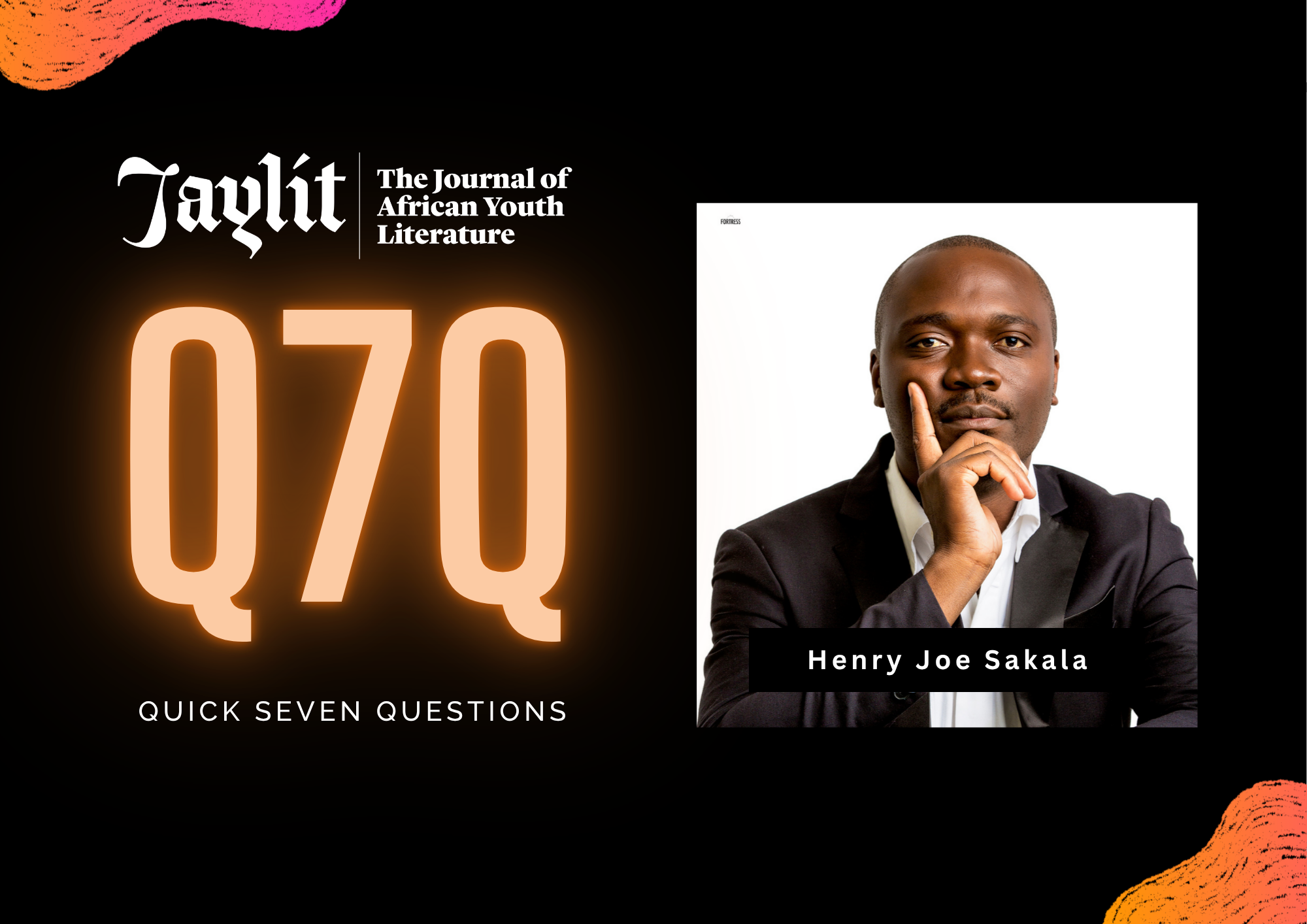
Henry Joe Sakala is one of six Zambian writers shortlisted for the 2025 Ubwali Hope Prize, presented by Ubwali Literary Magazine in partnership with Shenandoah. The Prize celebrates the best of Zambian prose and poetry. One winner is selected each year, receives an honorarium of $500, is featured in the fall issue of Shenandoah, has future publication in the Journal of African Youth and Literature (JAY Lit) and a year-long virtual writing mentorship with Mubanga Kalimamukwento.
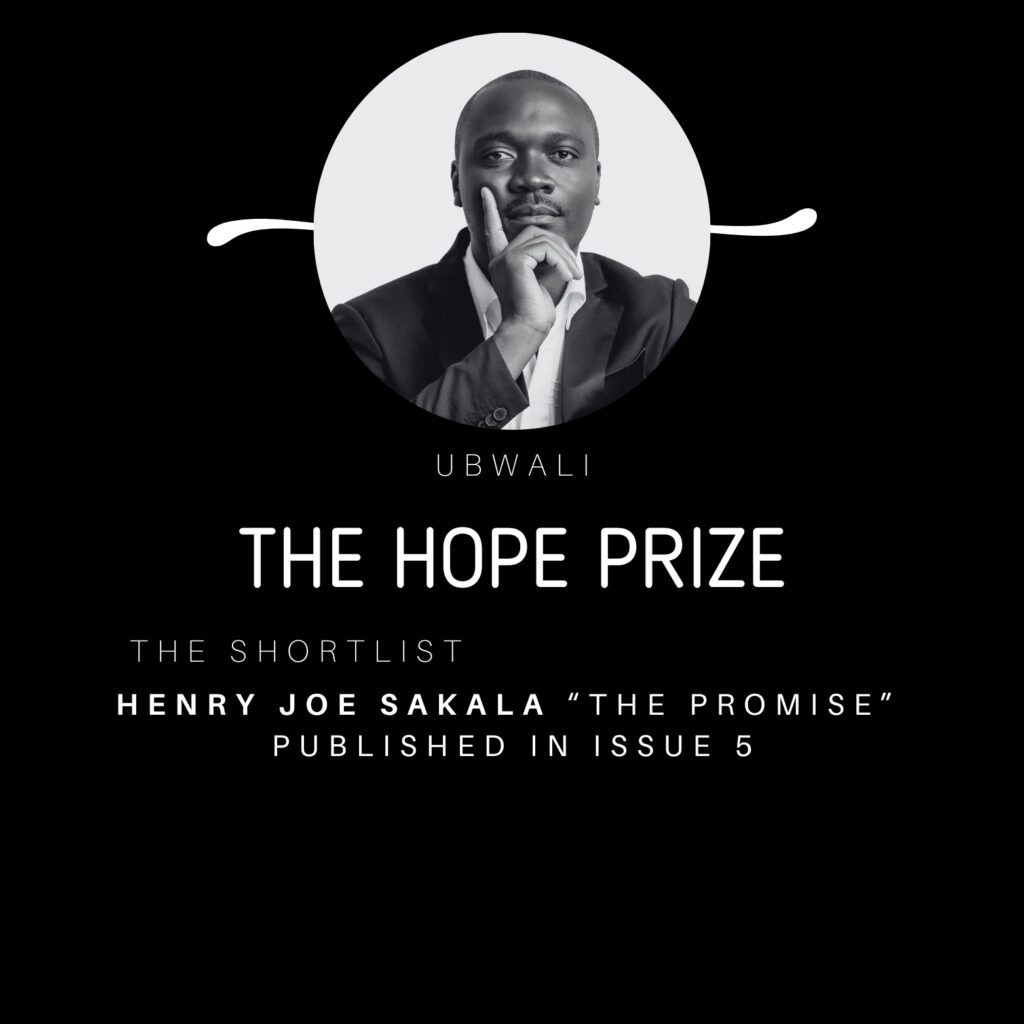
Henry Joe Sakala was shortlisted for his short story, “The Promise”, published in Issue 5 of Ubwali Literary Magazine. The short story can be read here.
Below is our “Quick Seven Questions” interview with Henry Joe Sakala.
Enjoy!
~
Q1 – Who is Henry Joe Sakala?
I love to describe myself as simply a creative person, a storyteller. I fell in love with stories at a tender age way back in the 80’s, and from that time to date, I have been telling stories in all shapes and sizes. I write for theatre, film, poetry, books, TV, and newspapers as well. I’m also an actor and producer and director both in theatre and film. Oh, I write music too. Although I can’t sing.
I was born in Ndola, grew up in Kitwe and Lusaka. I come from a family of creatives, my siblings are all artistic in one way or the other. I guess we all get it from our father who was into arts in his younger years. I did my primary school at Rokana Primary School in Kitwe, and secondary adventure was at Libala Secondary School. I’m a trained Journalist and communications specialist. I did my studies at Evelyn Hone College and Atlantic International University. I’m currently pursuing a postgraduate diploma in Teaching Methodology. I’m married to Linda Muwowo, an artiste and literature expert whose critic and literary eye has helped shape many of my stories. I have two children, Wongani and Tamanda, but as you know in an African setup, I’m a father to many in the family… an uncle, and grandfather…
Q2 – What is the inspiration behind “The Promise”?
Observation and empathy played a key part in motivating the writing of this story. For a large part of my youthful years when I worked for MUVI TV, I was exposed to families who made a living out of crushing stones at the quarry. I saw how many would break those stones to fill a sack to make a little money to fend for her family and to send a son or a girl child to school. As a journalist, I did several stories about those families and it was painful to learn that that was their only source of livelihood. Today, that quarry has been taken over by a company; today those families have been removed from there and I wonder: Where is that mother and her child? Did the mother fulfil her promise to her child? These and many more thoughts led to the creation of this story, “The Promise”. Inspired by real-life experiences and observations about hope, but also weaving in issues of loyalty, and the emotional weight of commitment. I wanted to create a story that feels authentic and relatable while still carrying strong dramatic tension.
Q3 – What hopes did you have for the story when you were submitting it to Ubwali Literary Magazine?
Well, as a writer I’m always happy when my work is published because, then, I know that it will be distributed to a reader or readers out there! So when Ubwali approached me for a story, I was happy and my hope was that it would make it into the magazine.
Q4 – What does ending up on the Ubwali Hope Prize shortlist mean to you?
I had heard about the Ubwali Hope Prize but didn’t know how stories ended up shortlisted for it. When submitting this story, my focus was getting it out there to readers. The Hope Prize shortlist therefore came as a surprise! It means a lot to me. It means my stories are making an impact. I’m encouraged to continue writing more because being a Zambian writer is challenging, and one of the biggest challenges is the lack of opportunities such as the Hope Prize. We need more to help inspire and encourage more writers to come out of their shells and share their stories.
Q5 – What would winning mean to you?
Winning would mean that the story has connected with people and that’s important because, for me, writing is not about winning awards, but about seeing the work, the story resonates with audiences. This proves or in a way makes me believe that my stories matter. Also winning would be a reminder that the hard work, sacrifices, and passion poured into this story were worth it. It would encourage me to keep telling authentic stories. We need to shine a light on stories like “The Promise”.
Q6 – How has this changed, inspired, motivated, or improved you, the writer?
Well, this whole experience, writing this story, changed me by making me more observant and empathetic toward people’s struggles and emotions. It inspired me to tell stories with greater authenticity and purpose. As a writer, I’ve grown in confidence, and in my understanding that storytelling is not just entertainment. Stories can heal, stories can challenge us, and connect us. I really did enjoy the editing process of this story with Ubwali. I learnt quite a lot. Looking forward to more collaborations.
Q7 – What future plans do you have for your writing?
I have always loved learning and improving my writing, and this continues with me as I work on the many short stories, films, novels and plays that I have lined up waiting to be written. In addition, I love teaching and definitely look forward to teaching someone out there a thing or two about writing compelling stories.
~

Henry is an author, screenwriter, playwright, actor, and film, and theatre director with over 20 years in Zambia’s creative industry. His screenwriting credits appear on Muvi TV, Zambezi Magic and ZNBC, including contributions to Survivors, Brothers, Dancers, and When the Curtain Falls, ZedMan, Mfuti, Mpali, Kopala, and Landlady, Makofi, Zuba, Butuku, and Tikula, Zambia’s only teen drama series. His stage credits appear in Living with the Enemy, The Last Steps, A Judas Affair, Town Boy, Surviving the Wilderness, Without a Kiss, and Love Song for an Impotent Son-in-Law. Sakala won the Best Script at the 2014 April International Theatre Festival, was runner-up at the 2016 Zambian Writers Short Story Competition, was a 2022 Africa Magic Viewers’ Choice Award nominee and a winner of the Best Director in Theatre 2025 Ngoma Awards. He is also the author of Kalulu and the Skin Trick, The Last Steps, Unmasked: A Collection of Short Stories and Poems and Komboni Private Investigator, and his short fiction was published in the Alone Anthology and the Sister Wives Anthology. Henry is the co-founder of the Myaambo Publishing House.