


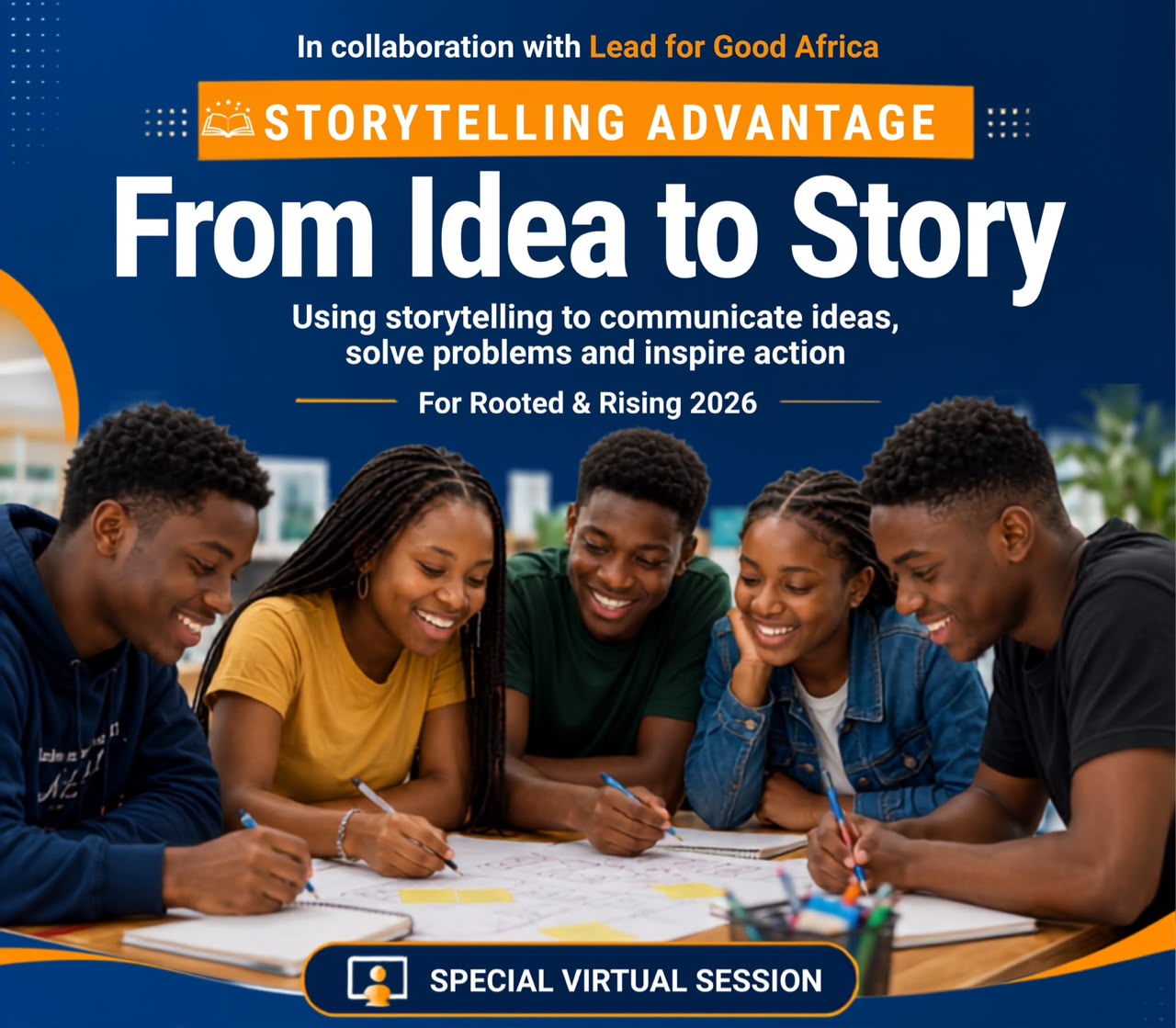
Thirty-one young people took part in a virtual storytelling session as part of Lead for Good Africa’s Rooted & Rising 2026 summer camp in Lagos, exploring how storytelling can help them communicate ideas, understand problems, and think about the people their solutions are intended to serve.
Participants were aged 10 to 17, with most between 12 and 15.
The session, Storytelling Advantage: From Idea to Story, was facilitated on 26 August 2026 by author and storyteller Fausat Omolara Arilewola, creator of the Storytelling Advantage, a storytelling framework and programme that explores how storytelling can strengthen communication, creativity and learning.
Rather than approaching storytelling primarily as fiction or performance, the session introduced it as a practical communication tool that could help young people explain an idea more clearly and show why it matters.
Moving from the solution to the person
A central part of the session encouraged participants not to begin with the solution they wanted to present.
Instead, they were asked to consider the person experiencing the problem first.
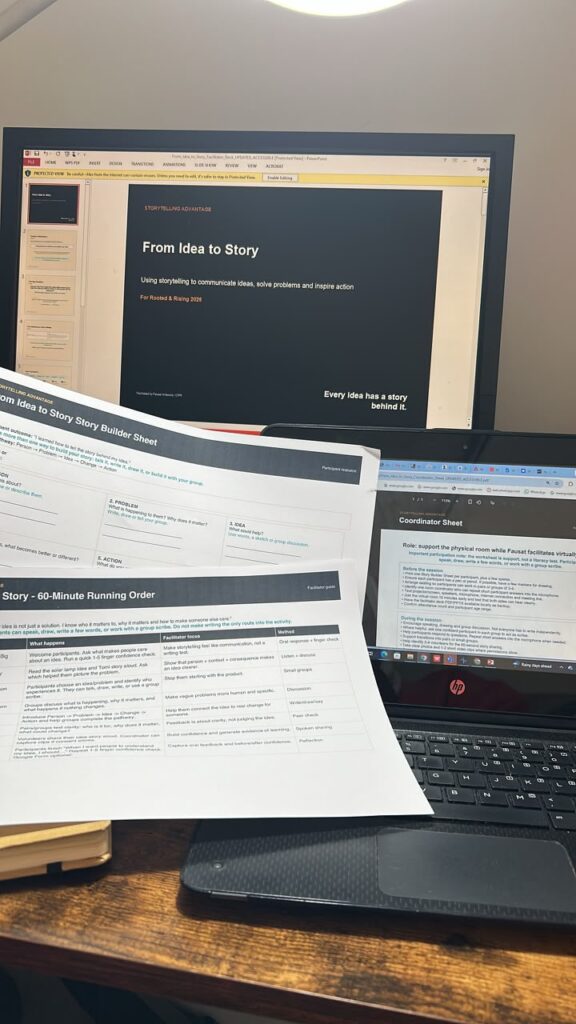
Arilewola introduced a simple framework:
Person → Problem → Idea → Change → Action
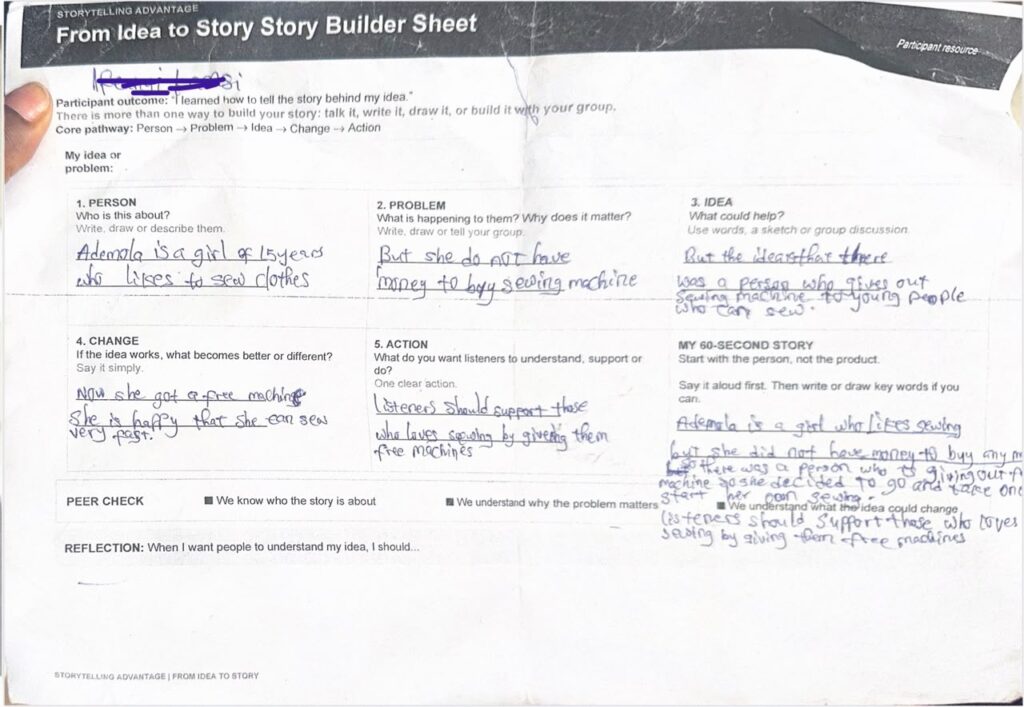
Participants explored who was affected by a problem, what that person was experiencing, what could help, what might change if the idea worked, and what they wanted other people to understand or do.
One example compared a straightforward statement about providing affordable solar study lamps with the story of a 15-year-old student whose evening studies stop whenever electricity goes off.
The difference allowed participants to consider how the human experience behind an idea can help an audience understand why a problem matters.
They were then invited to apply the same thinking to problems and ideas of their own.
Building the story behind an idea
Using a Story Builder Sheet, participants began developing their ideas through the framework’s five stages.
Some focused on challenges affecting young people, schools or communities. Others used ideas connected to problems they had noticed around them.
Rather than asking them simply to describe a product or solution, the activity pushed them to think through questions such as:
Who is this really about?
What is happening to them?
Why does it matter?
What could help?
What becomes different if the idea works?
What should someone listening understand or do?
The aim was to help participants see that communicating an idea is not only about explaining the solution. It also involves helping another person understand the problem, the people affected, and the change the idea could create.
More than one way to participate
The session also allowed participants to approach the activity in different ways.
They could speak, write, draw, discuss their thinking with others, or receive help recording their ideas.
This became particularly important in a group with different levels of reading and writing confidence.
The focus remained on whether participants could understand and communicate the story behind their idea rather than how much they could write on the page.
Completed Story Builder Sheets from the session showed participants working through the five stages in different ways. Some used short phrases, while others developed longer explanations of the problems they had chosen and the changes they hoped their ideas could create.
Participants also discussed their ideas with one another and considered what needed to become clearer before sharing them with an audience.
From having an idea to making it understood
The session ended by bringing the different stages together.
Participants were encouraged to move from simply stating their idea to explaining the person behind it, the problem they experienced, the proposed solution, and the difference that solution could make.
The intended outcome for the session was:
“I learned how to tell the story behind my idea.”
For Arilewola, the session reflects the wider thinking behind the Storytelling Advantage: that storytelling can support more than creative writing.
It can also help young people organise their thoughts, understand different perspectives and communicate ideas in ways that make their meaning clearer to other people.
Fausat Omolara Arilewola who writes under the name Fausat Omolara Ayinla is an author, storyteller and creator of the Storytelling Advantage, a storytelling framework and programme that explores how storytelling can strengthen communication, creativity and learning.


