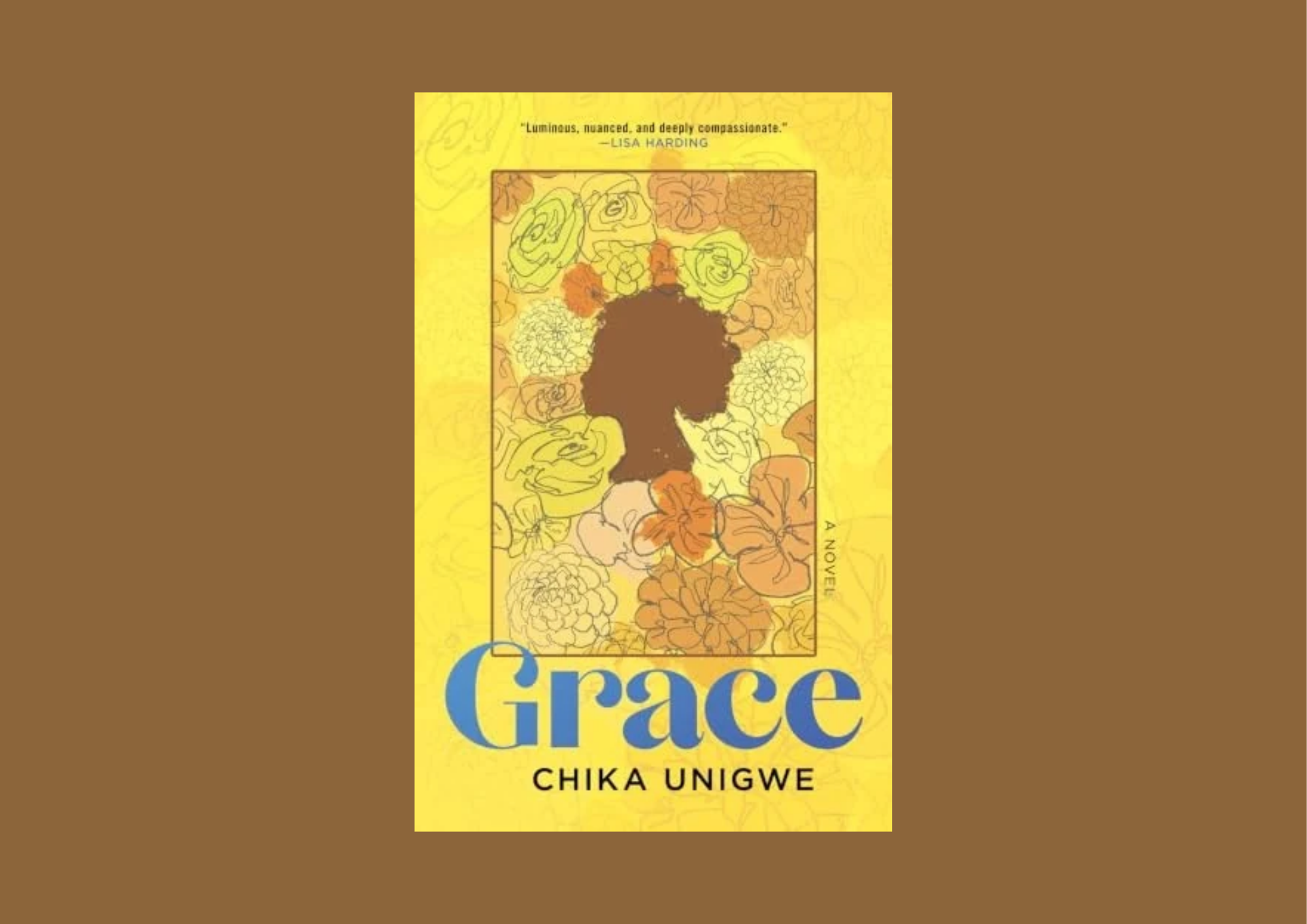
“But was it still happiness if it wasn’t complete? Isn’t happiness like a pregnancy? You either are, or you aren’t.” — Excerpt from the first paragraph of Grace.
Vividly set in Enugu, Nigeria, the story of Grace —the successful owner of a “maternity” clinic, a mother of twin girls, and the dutiful wife of Okika— begins on an ominous, symbolic note. Grace’s life is chronicled by the fuels of a typical African woman’s happiness: money, fame, a thriving career, a loving husband, and happy children. Yet the dark shadows of a past teenage pregnancy won’t stop hovering over her.
Regardless, Grace carefully curates her life on a fragile stand of her work, husband, and children. The curation became her escape from the dark shadows until her “dead” mother, in whose presence she had become a mother at 15, reappears in her life. Her mother’s reappearance unbolts the door to the very dark hole Grace struggles to hide from and threatens everything Grace had curated as she becomes a stranger to her family and is forced to rethink the existence of her “maternity” clinic.
“Things that did not kill you did not necessarily leave you fully alive either. They ate you up until you were a carcass of yourself, until no single moment of your life, no matter how joyful, wasn’t tinged with loss.”
Through Grace’s clinic, a cover for a baby factory, Unigwe explores the theme of child trafficking from a philanthropic perspective. While child trafficking is considered an unethical practice, Unigwe forces her characters and audience to sit with the uncomfortable question of whether child trafficking is inherently bad if it is helpful to everyone involved. With Unigwe’s exploration, one realizes that between black and white lie several shades of grey.
Unigwe’s work explores the dynamism of love and forgiveness through mother-daughter, spouse, and friends’ relationships. As each relationship is tested, especially Grace and her mother’s, one realizes just how the things one has condemned become understandable with time, experience, and exposure. My favourite relationship is the one Grace shares with her housekeeper; a silent, reliable love within boundaries.
This work subtly critiques the systemic degradation across Nigeria’s public system including the education, health and postal system. Unigwe’s Grace also touches on how Nigeria’s patriarchal society is man-sided and forces women to sacrifice, whether they are a helpless teenager or a successful woman.
Grace is well-developed; her past shapes her present, but she chooses to rewrite her future. Grace is rewritten as part victim and part villain, which makes her relatable, emotionally charged, and lovable. While the book revolves around Grace, other characters still exist in their own light. Except for Okika, whose identity is restricted only to Grace’s opinion of him. My favourite character is Ifeatu.
The story of Grace builds slowly in the first part but becomes fast paced in the second. Regardless, Unigwe did a great job keeping the reader on the edge of their seat. Every chapter had a surprising twist. Unigwe’s writing is conversational and descriptive, and it does justice to the emotional scenes in Grace by making the audience sit through the characters’ tension.
If you like a book that takes you through a rollercoaster of emotions – sadness, pity, grief, loss, anxiety, and heartbreak- but compensates for that with a happy ending, you’ll like Grace. If you’re a fan of books that challenge preconceived notions and chronicle difficult themes like teenage pregnancy, you’ll enjoy reading Grace.
On a scale of 1-5, with 5 being the highest, I’ll rate Chika Unigwe’s Grace a 4.

Sakeenah Kareem
Sakeenah Kareem is a poet, storyteller, and book reviewer based in Ibadan, Nigeria. She loves to tell stories that change narratives and she enjoys reviewing proses and literary pieces.