The Architecture of Our Stories
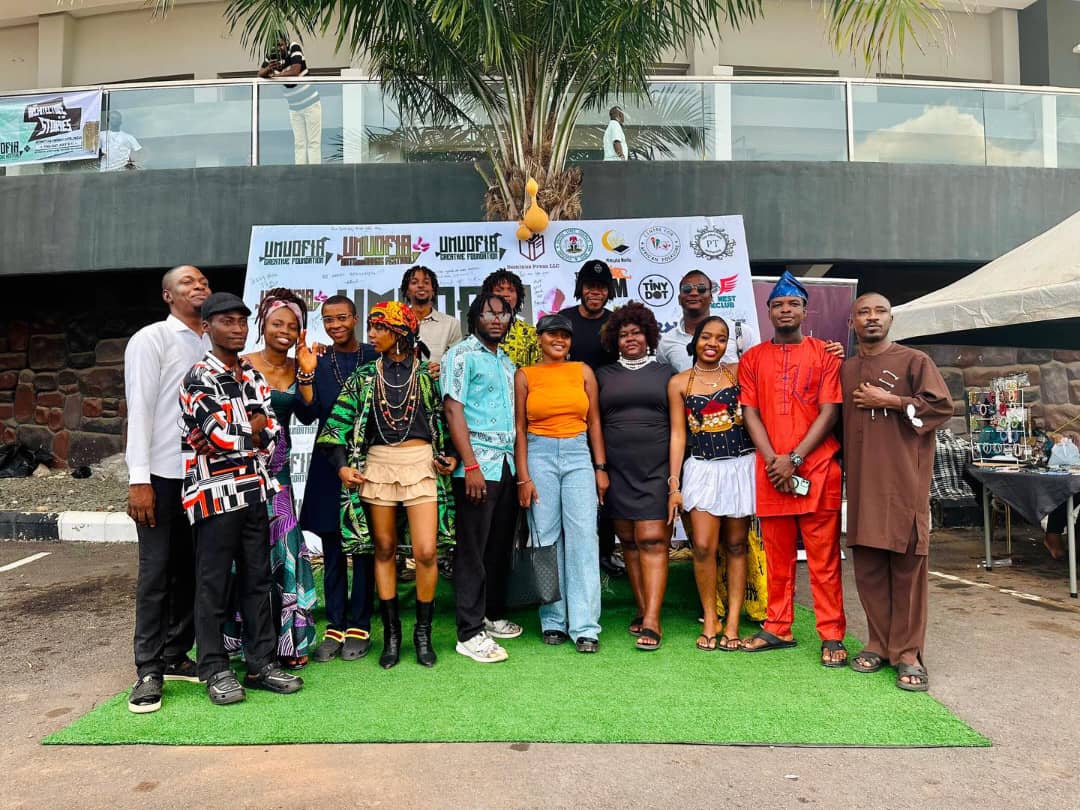
Planning the Umuofia Arts and Books Festival is the gambler’s dream. The risks. The odds. Planning so much with imaginary funds. A fever dream, in essence. This is how the fourth edition’s planning began, in regular fashion. At the first text of “we need to start discussing plans for this year’s festival” by the director, Michael Chiedoziem Chukwudera, my anxiety was reborn. Thus began the lengthy Google meetings, the flamboyant suggestions by new team members, and the guilt we would each feel in our individual lives when we spent long stretches of time not figuring out things about the oncoming festival. And as the days drew near, group chats came alive. Guest profiles, rushed outreaches, subtle cries for financial support. There were moments I wondered if we were running a fool’s errand. The question I asked myself and perhaps the question you’d ask is Why did this matter? Why did we have to gather three days in the middle of the year annually to talk, express, and enjoy art? The answer I have found cannot be told in simple words. I must show it to you.
Opening the fourth edition of the Umuofia Arts and Books Festival was the panel on building communities around the arts, led by Miss Nwangwa, Kosi Aghadinuno, Chideraa Ike-Akaenyi, and Miss Sam-Eze. The matter of whether a creative’s fans were their community rose. Miss Nwangwa so deftly explained how making one’s fans their community was walking into a trap with eyes open. Fans are not your community, she reiterated, explaining that a creative’s community are the individuals who directly contribute or provide critical value to one’s creative output. Next came the A.I. panel with the brilliant essayist, Chimezie Chika, and Chukwudera, the festival director, moderated by Miss Ike-Akaaenyi. The matter was pressing, many were still reeling from the Commonwealth scandal. Some fought against Artificial Intelligence and others emphasized on the creative’s moral judgment in the use of A.I. to create art. There is a fear that A.I. will evolve and displace creatives. It was not a fear hidden in cryptic tweets or subtle sarcasm. It was a conversation, an invitation to bring the interpersonal to the fore. Wrapping this panel, Chukwudera shared warm words with the audience: A true creative knows the joy is in the struggle. We should encourage people to experience the joy in making great art.
When Onyedikachi Johnson took the stage to perform a spoken word piece on the massacres, repeating; People died… stories dun die”, I realized how eerily simple it was that life slithered on at its assumed pace while people’s stories died a sudden death in the hands of an unfeeling system. Next came a book chat on Odili Ujubuonu’s Crows of the Yellow Stream, moderated by the festival manager and Travelease co-founder, Edna Chinaza. The author shared his secrets on invoking his muse. It felt akin to cult knowledge, a thing only accessible to a select few. What did it mean to have a muse? To identify a muse? Someone asked, is a muse a deity, a person, a concept, a thing? Sir Ujubuonu shared with us the concept of Jacob’s ladder. A creative’s Jacob’s ladder could be music, intoxication, cannabis, wild sex (and the hall went loud at last mention). That is how you find your muse, he explained. Find the thing that first triggers your creativity and at the peak, there waits your muse.
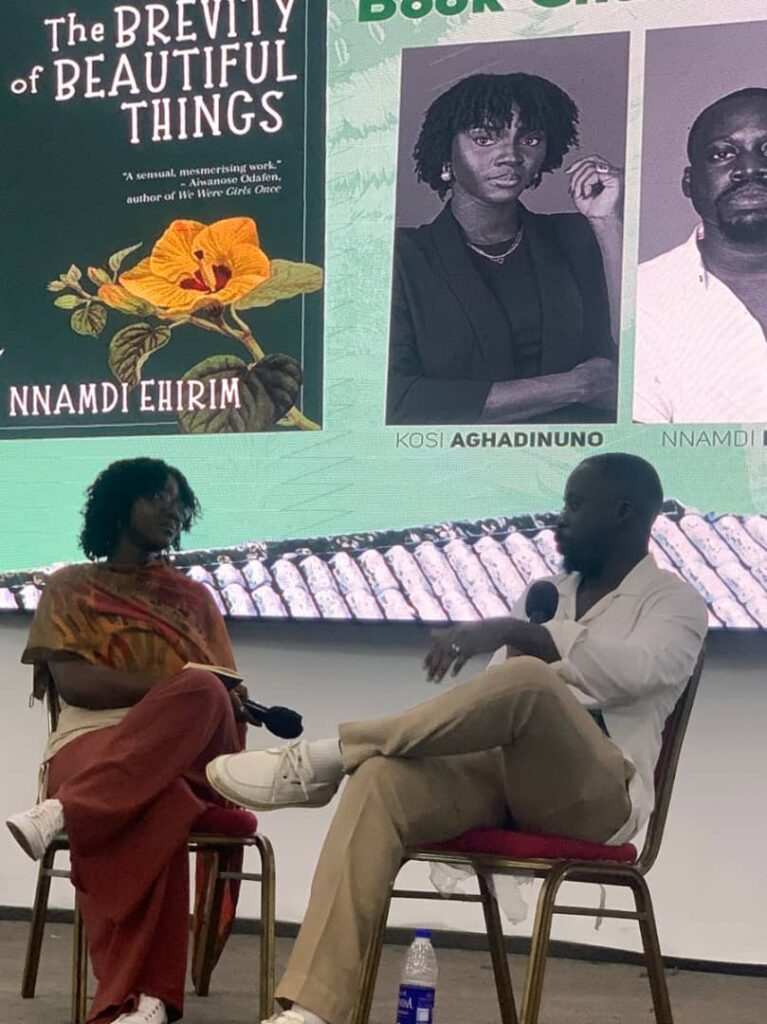
The day wrapped with a book chat on The Brevity of Beautiful Things by the author, Nnamdi Ehirim, and the lovely Kosi. A question I did not know I needed an answer to was raised. Can writers make a living from just writing? Isn’t it the creative’s dream to abandon it all and enjoy a life without the ball and chain of capitalism dragging us behind? Ehirim was quick to answer “No”, explaining that the Nigerian economy is not accommodating for creatives to receive deserving, consistent value for their work. There are, of course, outliers, as it is in every other industry. Still, it is a sobering reality that writers must have a “real” job to build a life by. By the end of Day 1, it did not matter that there were many seats left unseated. It did not matter that in lieu of all unforeseen circumstances, we began three hours after the scheduled time. The logistic errors were a passing fad. What mattered was we were here. We had identified our mountains in discourse and dismantled them at the base. We knew there was work to be done and it had been waiting for a while. We each left with a charge. A charge to act. And this… is my first WHY?
We made a promise to ourselves yesterday – I somehow became comfortable with the audience within the first day. That we’ll make it to the venue early. But every person in that crowd was a concept of their own, a thing to be left mostly unregulated. Still, we began hours later. Guests steadied in a complete assurance of self, I could only admire. The day opened with a full stage takeover by the press team for the unveiling of Harmattan on a Rolling Hills. The minister for culture, arts, and tourism, was live at the scene. The political sycophancy at play almost had the creatives asking; “so when is our own event starting?” It began at noon and dignitaries filed out slowly. The matter of modern cinema and visual storytelling in indigenous traditions was broken into by Chike Nwoke, Chimereogo, Maryann Ilebaye, and the panel’s moderator, Ebube Orji. In the last edition, people explained that blaming the Biafran war for all our misfortunes as Igbo people was outdated. This time, Nwoke shared that we have allowed too many strangers to tell our indigenous stories, highlighting the BBC documentary on Nigerian survivors of the Biafran war. As this may be the case, we cannot say that conversations on the war are outdated when history has been written mostly from one end of the battle camp. Next up was a guided listening experience with Afreada by Miss Chidera Ike-Akaenyi. We listened to two stories on AFREADA Audio. Everyone gave suggestions on how the stories could be told better and they were warmly received. Our celebrity poet, Amu Nnadi, went on stage with Ogadagidi, to deliver one of the most chilling poetry performances of the entire experience.
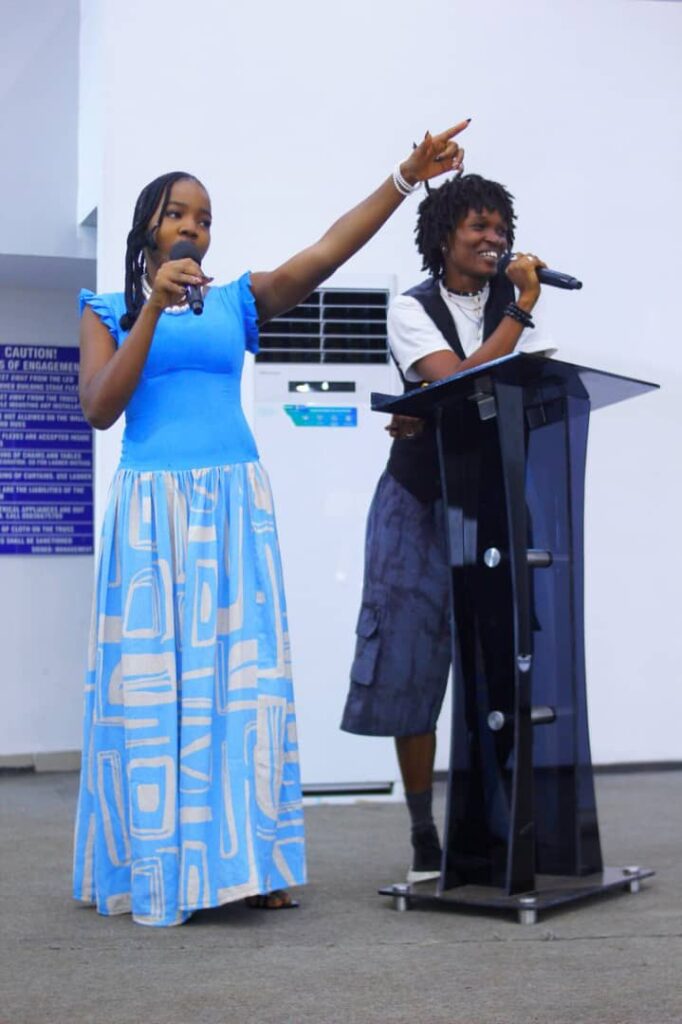
Then came the panel for Women in Academia, STEM, and the gap in political representation, led by Miss Harachi, Miss Nwangwa, and moderated by Adachukwu Onwudiwe. I had been particularly looking forward to this panel. These insightful women discussed how women sometimes championed patriarchy in these spaces, shutting the door tight on other women who are qualified to be in the rooms but not willing to be “one of the guys”. Harachi advocated that there was no need to try to change women who were sunken in their patriarchal beliefs. If these spaces must change, then we must pick our most capable soldiers to push the agenda. A new phenomenon caught feminist media after the popular YouTube film, Love in Every Word, broke records with its viewership. This thing to attain softness as a woman. Adachukwu described it as the Bambam Effect. It reduced the woman to prop. A thing conditioned to speak a certain way, act a certain way, dress a certain way, and laugh in a manner that is womanly, Bambam-like. Harachi disclosed that this is how Nollywood is portraying women, without range. At that moment I thought, to be woman is to be human. There are stubborn women, depressed women, ambitious women, criminal women, women with hoarse voices, women with birth defects, women of different shades and body proportions. If we must portray Woman as human, we must show that she carries range. When the matter of the Igbo tradition being misogynistic rose, Ms. Nwangwa explained that we must have stakeholder engagement amongst our people if we wish to make nuanced arguments about patriarchy in Igbo culture. In simpler terms, she meant: “Join your Umuada”. How else can one critique a thing they are not immersed in? When questions rolled in, the duo reiterated that there is nothing greater for a woman than having agency. In Miss Nwangwa’s exact words, “flex your NO muscles.” I recalled all the times I said “yes” and I became familiar with discomfort and deep regret. If to be woman truly was to be human, then I did not need to explain my no or try to act in the acceptable ways of being woman. I am captain of my ship, master of my soul. When I imagine what it means to be free amongst others existing in their own freedom, I remember Umuofia. This… is my second WHY.
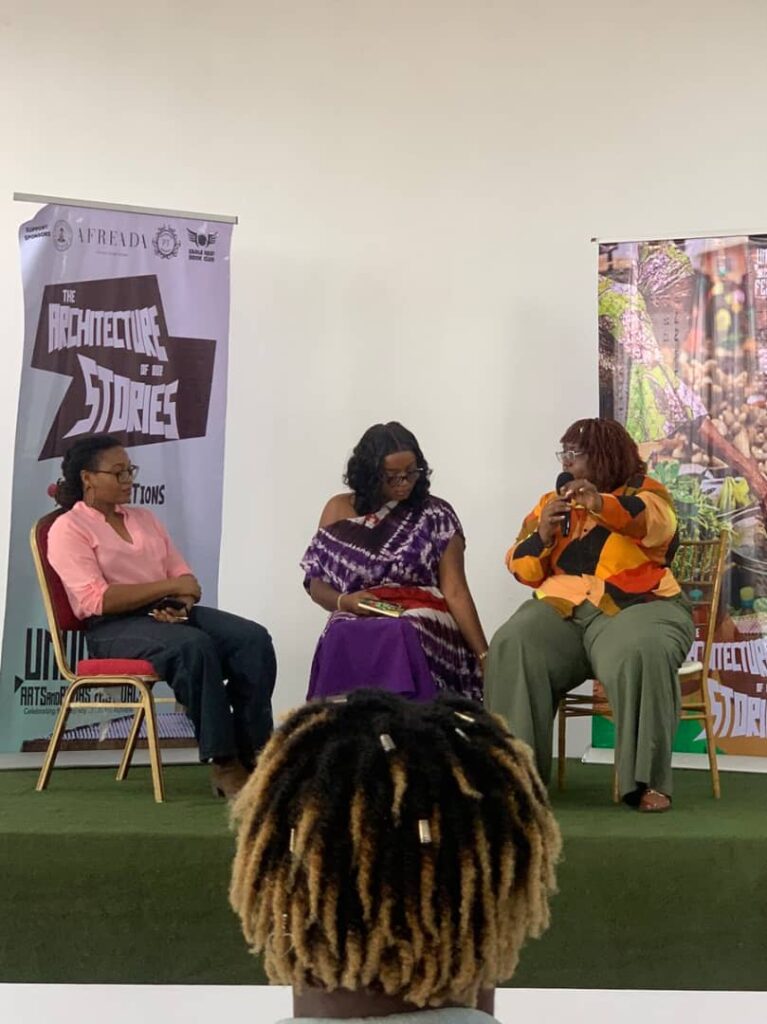
The night of day two, we slept like logs. Most of us, I believe. I placed my outfit step by step – neck piece, Ankara halter neck top, bubble skirt, shoes. I laid flat on my back beside it like a mannequin with a sleepy smile, waiting to be dressed. Usually, the best day is the last day. If you’ve been to these things as many times as I have, you’d understand. The talented singer/songwriter, Inioluwa, pulled out his guitar while I cosplayed crowd control outside and began singing Tems’ Me and You to an almost empty audience. I couldn’t believe my ears. I almost wished to hurry at him and yell that he saved this gem for the evening, when many will be available to listen. At the entrance, I halted. It seemed to be a thing he needed to do. So I smiled and watched.
We opened with poetry, as is custom. Then, some of us took the stage to discuss our favorite parts of Chinua Achebe’s Man of the People to celebrate its sixtieth anniversary. The first panel focused on the literary critic. Chika Chimezie and Azubuike Obi raised different moments in the media where a literary figure had been cancelled or faced heavy backlash from their public stance or criticism. Kosoluchi Agboanike shared that the problem with criticism is that the critic does not want to be critiqued. Azubuike noted that there is no value system in place for good criticism. Following this thought process, should the critic bear a kind of faux humility where he must be paid in unrestrained assent since he has chosen to undertake the onerous task of judgment? I realise that when one wears the garb of a critic, in the mirror, he sees a superior reader.
Then came my book chat with Nnamdi Anyadu. I read his book, A Meal is a Meal, weeks before the festival. Such wonderful piece of literature. I had been looking forward to it for so long. The following panel on the Influencer’s Influence with Ms Nwangwa and booktok influencer, Jennifer Nzekwe, gave us some insight on the book influencing front. The unpaid labour, authors’ unpublished hard work treated like nothing, scripted content curated by a desperate need to amass following. The last panel was a music discussion amongst Inioluwa, producer/vocalist, Jvbal, Artist Manager, Nelo, and moderated by culture journalist, Ebri Kowaki. The one takeaway from this discussion was: Some slavery is necessary in the creative space. This was a learning lesson for most of us. We are mostly eager, seeking the next great thing that will change our lives. Maybe we do not all get to experience Fortuna’s favour in this carnation but how could we ever know if we cannot boldly say we gave it everything we had.
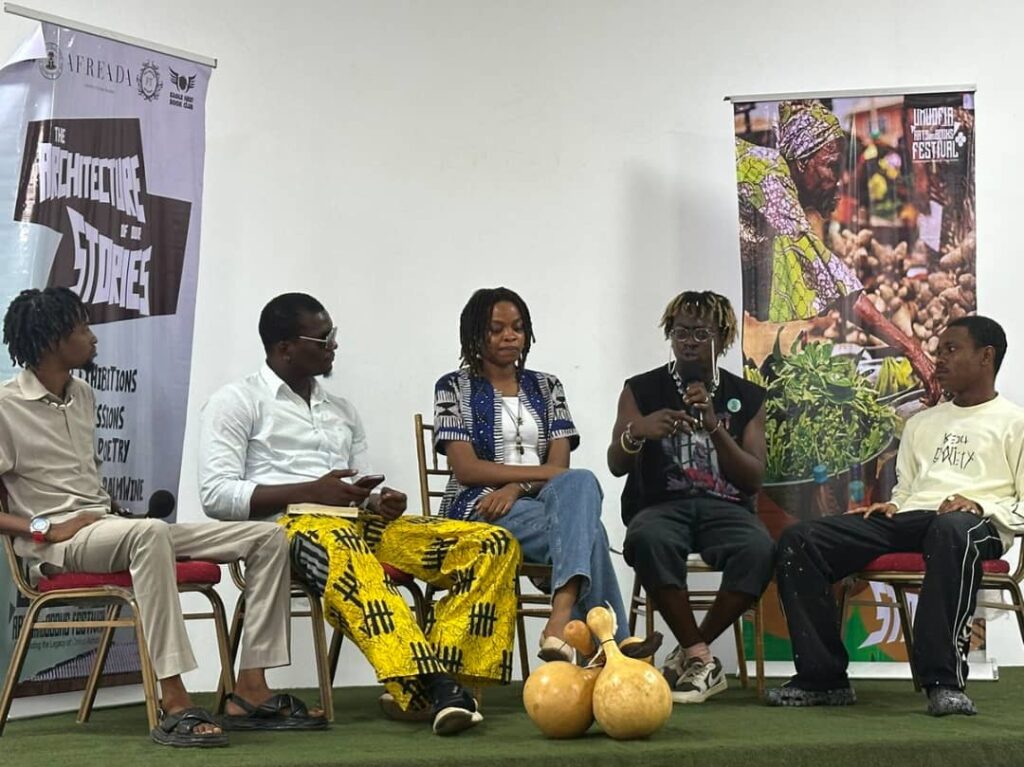
When we were making press videos for the festival, we repeatedly emphasised on tackling the Olodo crisis. Even some exhibitors sending in their videos lazily threw in the phrase in a bid to partake in the media onslaught. I imagined we were only doing it to garner attention, just like everyone else. How could one even battle the Olodo crisis? How do we fight a thing we cannot see? But we did it. We did it! In discussing delicate subject matter surrounding feminism, queerness, the literary community, criticism, music, and the business of the art forms, and the suggestions people raised as I passed the mic from one to another, we were putting the mind frame to work. Iron sharpeneth iron, the holy book popularly says. We were triggering thought processes organically, forcing individuals to question whether they supported or were against a raised opinion, if they had reasons to back their stance, why a thing would stand in a place, how it could be moved, why another should stay in its place. It was not enough that we were in a space filled with unique, creative thinkers. We ignited and set flame to the intellectual negligence that is a mind at rest.
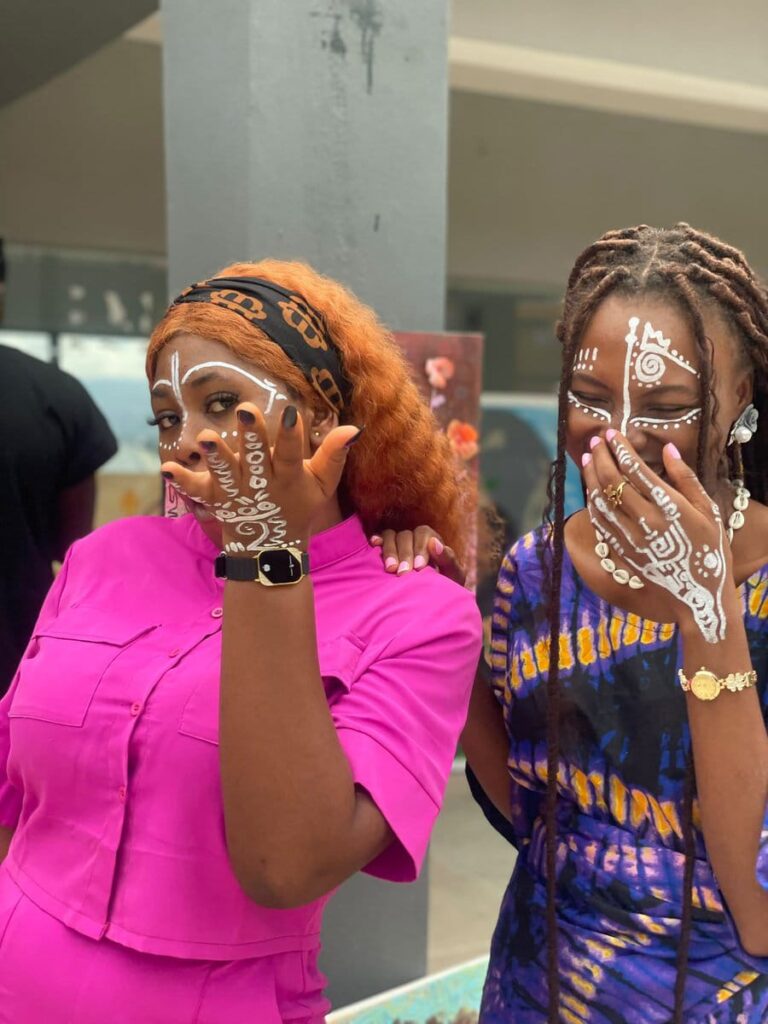
With darkness came the promise of an even better time. I was down three shots by six, hoping to take down some more. Performers took the mic one after the other, building the vibe from an intellectual one hundred to a vibes one thousand. There was the Afro spiritual Moses. Ganiru brought the roof down with his rap song, Time and Chance. Gravitee turned the audience into his hype people the day before. Inioluwa gave us a warming acapella song. When the DJ and Hypemanjazz took over the turn tables, no one was left seated. We were twirling, dancing, singing, and matching steps, laughing oh so intoxicatingly. We formed a circle, dancing around giddy like children. When the DJ started packing up, we moved the party to a tidy bar just down the road. The night was young and we were liberated anew. As tomorrow became today, we could not believe we had returned to life outside Umuofia. It was not as colourful. Everyone reposted their pictures and videos, and I felt like we had been blissfully trapped in creative phantasm for three days. This is my final WHY. This is why I wish to return to Umuofia today, tomorrow, next week. This is why we must gather at Umuofia again next year.
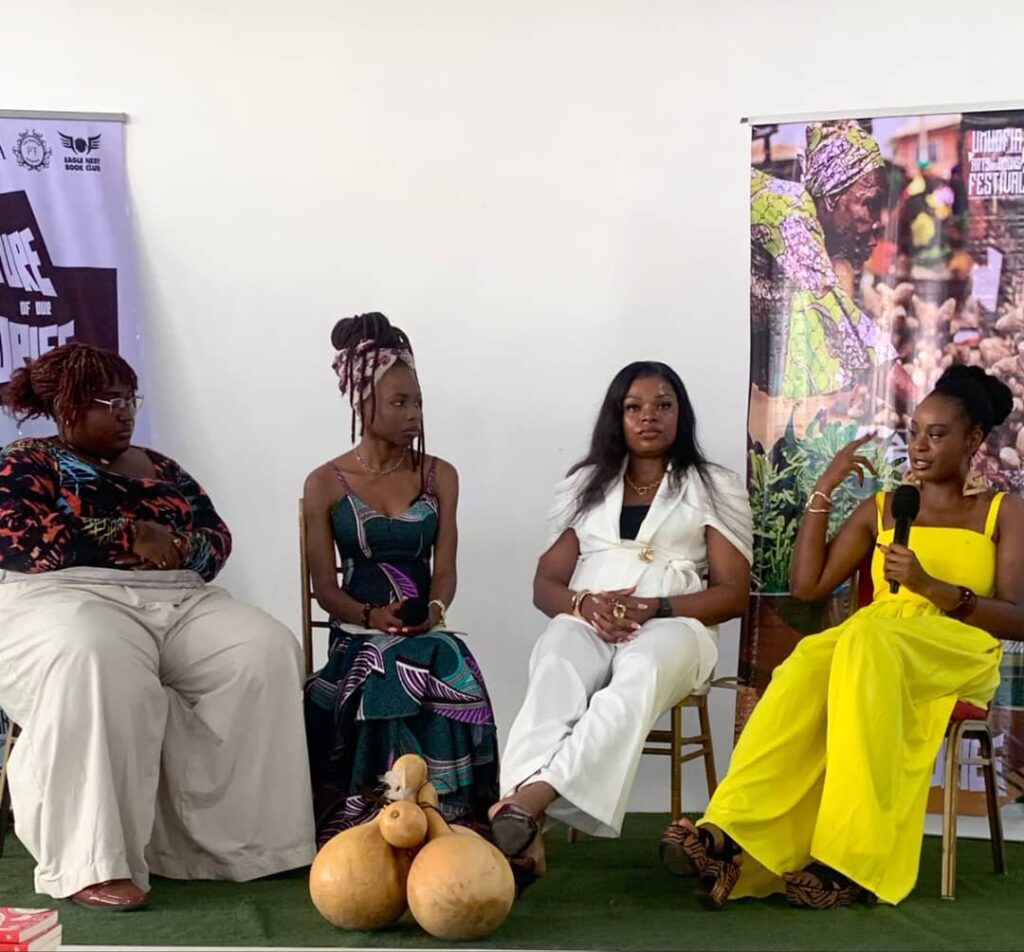
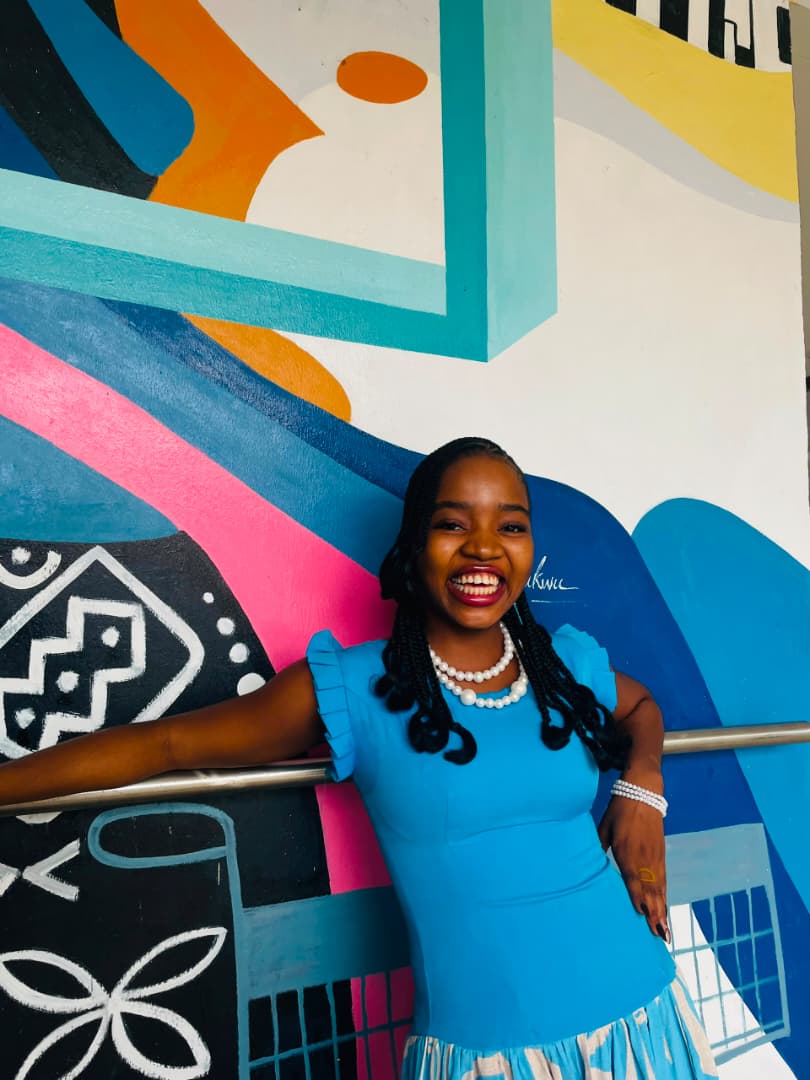
Faithful Chidera Chinedu
Faithful Chidera Chinedu is a writer, editor, and programmes manager for Umuofia Arts and Books Festival. She spends her time enjoying and making great art. Her works can be found in the Kalahari Review, Afrocritik, and elsewhere.