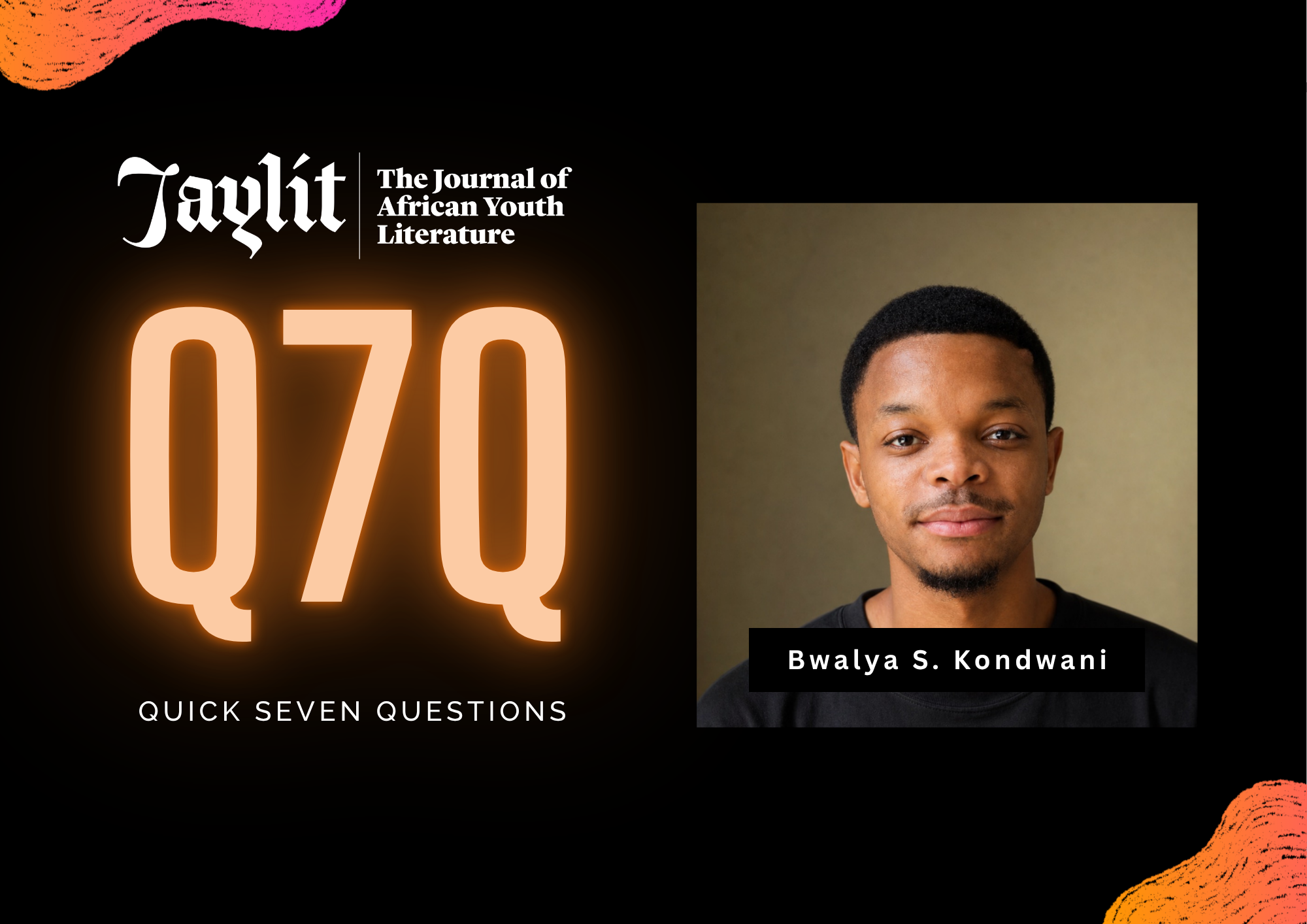
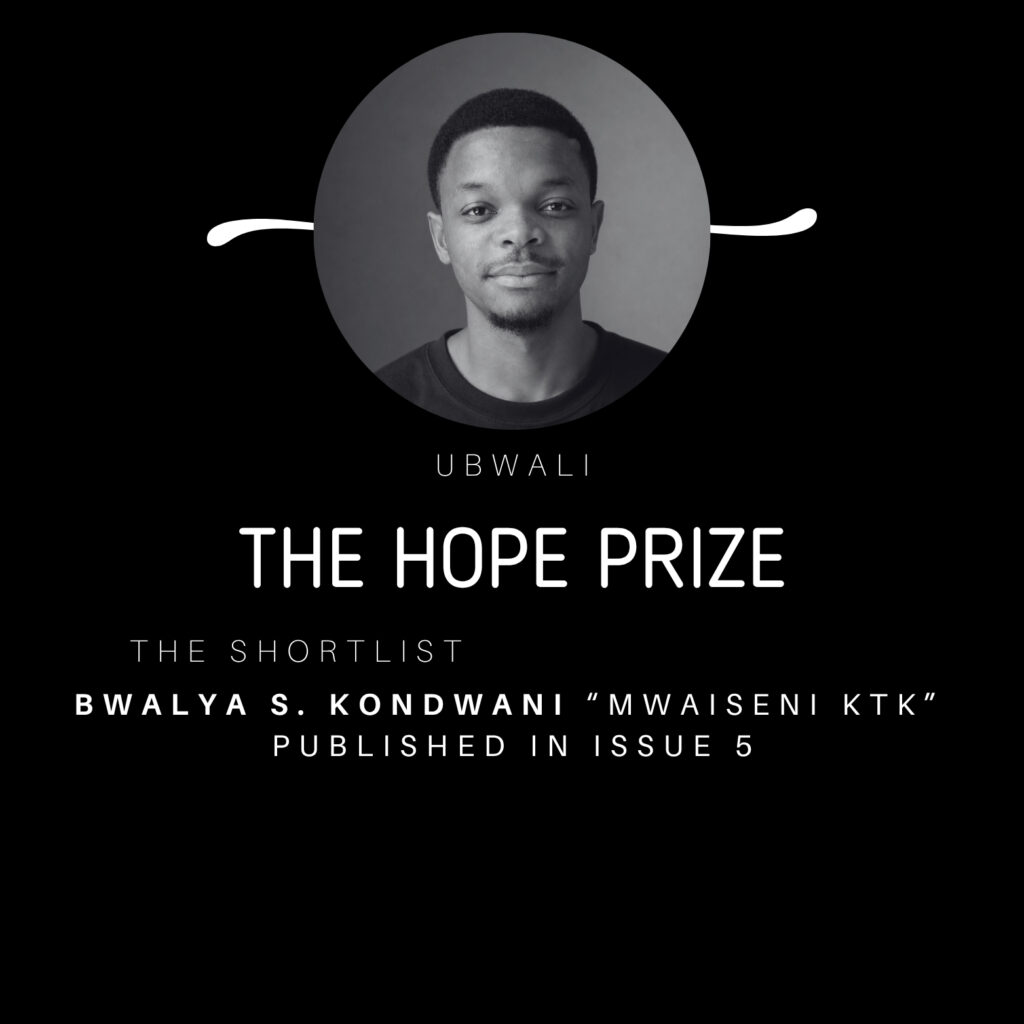
Bwalya S. Kondwani is one of six Zambian writers shortlisted for the 2025 Ubwali Hope Prize, presented by Ubwali Literary Magazine in partnership with Shenandoah. The Prize celebrates the best of Zambian prose and poetry. One winner is selected each year, receives an honorarium of $500, is featured in the fall issue of Shenandoah, has future publication in the Journal of African Youth and Literature (JAY Lit) and a year-long virtual writing mentorship with Mubanga Kalimamukwento.
Bwalya S. Kondwani was shortlisted for his poem, “MwaiseniKTK”, published in Issue 5 of Ubwali Literary Magazine. The poem can be read here.
Below is our “Quick Seven Questions” interview with Bwalya S. Kondwani.
Enjoy!
~
Q1 – Who is Bwalya S. Kondwani?
Bwalya S. Kondwani is a Zambian writer and storyteller from Kitwe, someone deeply fascinated by the parts of the human experience we can only taste through someone else’s retelling of them. I write poetry and fiction that often sit at the intersection of beauty and discomfort, and I think my writing is a bad way to get to know me, because I’m a thousand people when I write. But some parts of it have me in them.
Most of my work is rooted in Zambia, particularly the Copperbelt (most), because I think there are stories here that deserve to be preserved and heard with honesty. I grew up around people whose lives felt cinematic, mine wasn’t always exciting but was around exciting people. Writing became my way of documenting them, mourning them, and sometimes trying to understand them.
At my core, I think I’m just someone trying to find a good story to both entertain and help me understand the world around me.
Q2 – What is the inspiration behind “MwaiseniKTK”?
“MwaiseniKTK” was born from watching Kitwe and its children exist.
Kitwe is loud, beautiful, wounded, funny, dangerous, and resilient, all at once. I wanted the poem to feel like a drive through the city itself, from Black Mountain, to my hood.
The poem was inspired by the young men I’ve seen growing up around me: boys chasing survival in abandoned mines, boys swallowed by drugs, boys whose dreams are constantly interrupted by circumstance. In many ways, the poem is about almost escaping poverty. Almost becoming something.
That last part of the poem where the boy kills his friend? That was actually someone I knew, I’d see this boy go to school everyday, and just like that, everything he’d ever dreamed of ended on a bet.
Black Mountain especially became symbolic to me. It represents hope and desperation at the same time. People go there searching for opportunity, but sometimes it feels like they’re gambling their lives against poverty itself.
“MwaiseniKTK” was my attempt at holding all these truths in one piece.
Q3 – What hopes did you have for the poem when you were submitting it to Ubwali Literary Magazine?
To get published, lol. I had thought of posting it on my socials, but I thought it deserved a bigger audience, and I had a feeling Ubwali could give it that.
And of course, I hoped it would resonate enough to open doors for more conversations about places like this one. The saying “Africa is a country” isn’t just a saying, we’re all so alike. Whatever country you’re in, there’s bound to be a “Kitwe” somewhere.
Q4 – What does ending up on the Ubwali Hope Prize shortlist mean to you?
I see amazing writers with amazing poems on this shortlist, I had hoped to be part of it one day, but I thought it’d have to be with whatever I believed a “better poem” would be. I liked this poem, I just had no idea it was Hope Prize shortlist worthy, lol.
It means a lot because Ubwali Literary Magazine has become an important platform for contemporary Zambian voices. To have my work mentioned alongside other talented writers I genuinely admire is both humbling and motivating.
Q5 – What would winning mean to you?
Winning would be an incredible honour, not just personally, but symbolically.
I think every writer secretly hopes the work they pour themselves into will travel further than they ever imagined. Winning would feel like validation for the stories I choose to tell, especially stories rooted in ordinary Zambian lives.
Practically, it would also motivate me to push harder creatively and take even bigger risks with my writing.
But beyond awards, that would allow the poem to reach an even larger audience, and maybe more people would pay more attention to yours and my Kitwe.
Q6 – How has this changed, inspired, motivated, or improved you, the writer?
This experience has reminded me to trust my voice more.
Sometimes writers feel pressure to imitate what seems internationally acceptable or fashionable, but this recognition came from a poem that is unapologetically local in its imagery and language. That’s encouraging.
Q7 – What future plans do you have for your writing?
Right now, I’m interested in expanding further into fiction, poetry, and spoken word that explores themes of masculinity, mental health, and survival in contemporary Zambia.
Long-term, I’d love to publish larger collections, experiment more with performance-based storytelling, and hopefully contribute to a stronger culture of literary appreciation among younger Zambian creatives.
More than anything, I just want to keep doing what I’ve always done, writing, whether there’s an audience or not.
Thank you once again for the opportunity, and congratulations to the entire Ubwali team for continuing to create spaces where African writers can be celebrated.
~
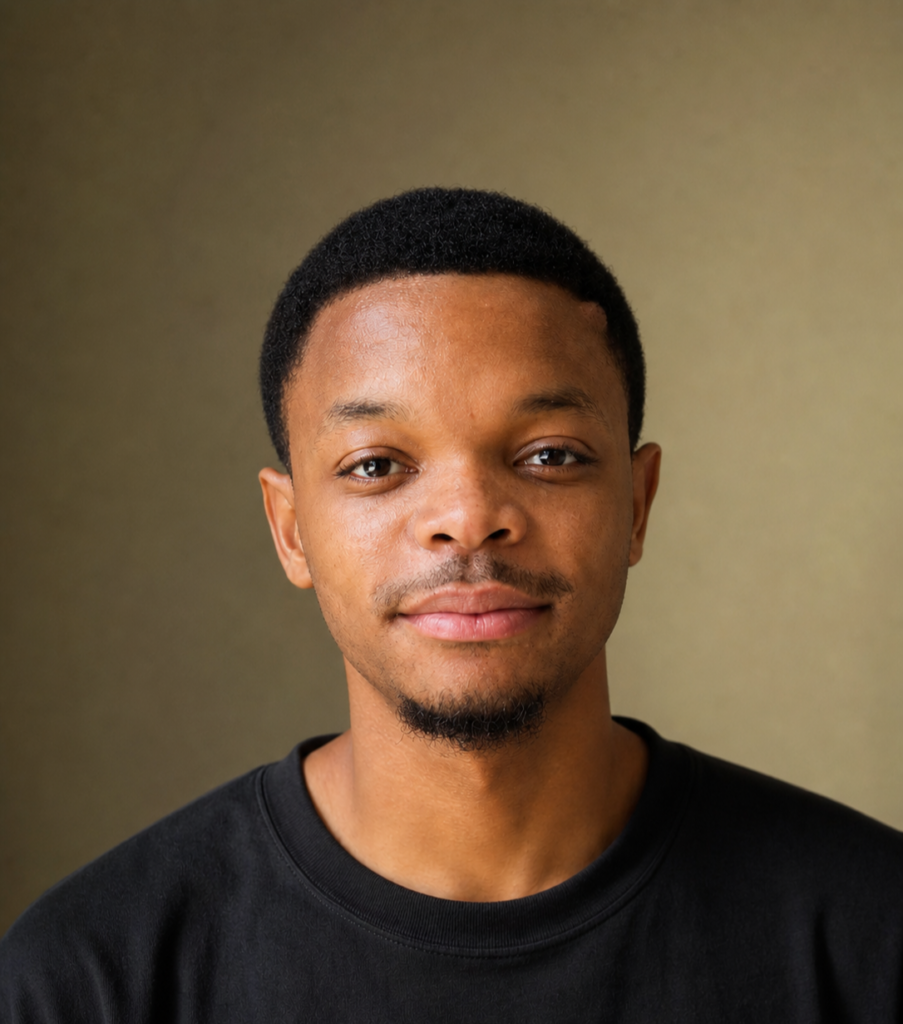
Bwalya S. Kondwani is a Zambian writer, spoken word poet, and medical student at the University of Lusaka. He won the 2023 Myaambo Short Story Prize for Mzimu Wachikondi, later featured in an anthology of the same name, and the 2025 Stanley Umezulike Prize for African Thriller. He was also placed third in the 2025 Wakini Kuria Prize for Children’s Literature at the African Writers Awards. His work has appeared in several anthologies and literary magazines, including Ubwali Literary Magazine, Asterlit, Writers Space Africa, Sotrane Publishers, and MUD Journal. Beyond the page, Bwalya works with The Expression Lab, helping facilitate creative writing and spoken word workshops for students across Zambia. His work often explores human vulnerability, memory, and the emotional weight of lived experience.