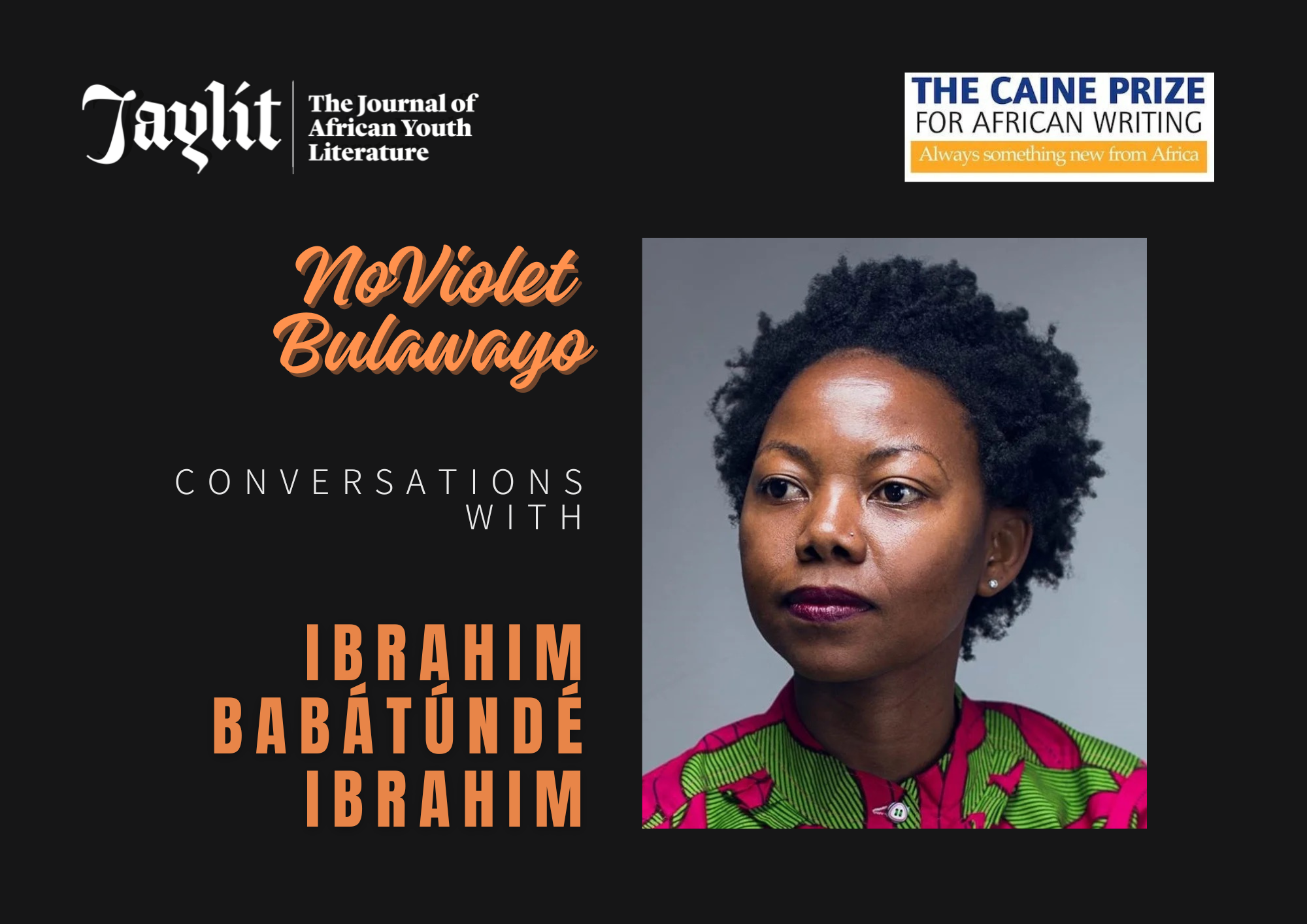
NoViolet Bulawayo first won the Caine Prize for African Writing in 2011 for her short story “Hitting Budapest,” which became the opening chapter of her novel We Need New Names. In 2025, she won the special “Best of Caine” Award for the same story, celebrating the prize’s 25th anniversary and recognizing the most outstanding winning story in its history.
We Need New Names was recognized with the Hurston/Wright Legacy Award, the Pen/Hemingway Award, the LA Times Book Prize Art Seidenbaum Award for First Fiction, the Etisalat Prize for Literature, the Fred Brown Literary Award, the Betty Trask Award, the Barnes and Noble Discover Award (second place), and the National Book Foundation “5 Under 35” Fiction Selection. We Need New Names was also shortlisted for the International Literature Award, the Man Booker Prize, and the Guardian First Book Award. NoViolet earned her MFA at Cornell University, where she currently teaches creative writing.
NoViolet Bulawayo is also the author of Glory, which was longlisted for the Women’s Prize for Fiction, the Aspen Words Literary Prize, and the Rathbones Folio Prize: The novel was also shortlisted for the Booker Prize, making NoViolet Bulawayo the first Black African woman to have both of her novels shortlisted for the award.
In this conversation with JAY Lit editor, Ibrahim Babátúndé Ibrahim, NoViolet discusses, among other things, her writing journey, her writing process, the African literary landscape, and her literary wins, especially the double-Caine Prize winning story “Hitting Budapest”.
Come along for an insightful read!
~
IBRAHIM
Welcome, NoViolet! It’s a pleasure to have you here. No other writer in history has had the honour of winning the Caine Prize for African Writing twice. How was the feeling the first time you won it in 2011 and how does that compare to winning it again as the Best of Caine 2025?
NOVIOLET
Thank you for having me, it’s truly a great honour. The 2011 win helped launch my career, and so will always hold a special meaning – we all know how difficult it can be to get that first breakthrough. This second win carries its own significance; being chosen from among the brilliant winners over the prize’s twenty-five-year history is super humbling, and I’m grateful to the judges for the recognition. The love that also came from Zimbabweans was great to see, I know it’s not just a personal win.
IBRAHIM
And this is all for “Hitting Budapest”. Do you still remember your thoughts, doubts, excitement, insecurities (if any) about this story as you wrote and began submitting it, before it found a home in The Boston Review?
NOVIOLET
I generally treat an early draft as a space for discovery, so there’s not much room for distracting feelings at that stage. The story is the priority, I want it to come on its own terms, without me overthinking it, or interfering through my insecurities, doubt etc. But I’ll admit, once “Hitting Budapest” was accepted for publication, and then shortlisted for the Caine Prize, I did freak out a bit. There was a robust culture of collective reading and critique of shortlisted stories on online platforms, and I especially remember not being prepared for just how much of a big deal the Caine actually was – it was almost overwhelming quite frankly. But of course, I’m not complaining, it’s also what makes the Caine special.
IBRAHIM
This story went on to be the opening chapter of your debut novel, We Need New Names. Much has already been said about it, but tell us more: The inspiration, the hitch, the need for the story to be told…
NOVIOLET
“Hitting Budapest” came out of material I was already working with (as an MFA student at Cornell) but struggling to frame in the right register. This was the novel that eventually became We Need New Names, but the early, early draft was in third person, and told through an adult narrator. Once I found the voice – through “Hitting Budapest” – it felt like I’d unlocked something on a craft level, which made it possible to take the work apart and reimagine it.
We all write from a place of needing to tell a story – the inspiration for me was the heartbreak of seeing my Zimbabwean homeland come undone, and hit what we then thought was rock bottom, this was around 2008. (I say I thought because little did we know then that we hadn’t seen nothing yet). The characters were inspired by a picture that I can still clearly see in my mind’s eye – a couple of kids sitting atop their bulldozed home. I wanted to answer the question of who they were, and I came up with Darling and her friends.
IBRAHIM
With this story and the ensuing novel, we see you in the double light of a short story writer and a novelist. Do you have a preferred form? Which one does what for you?
NOVIOLET
I work in both mediums and love them for their different offerings. The novel for its expansiveness, the space it can afford a writer to be truly free – a quality I especially appreciated in Glory. It allowed me to break rules and invent away, all in the service of telling a “big story,” that at some point grew to over 700 pages. I’ve never felt more freer as a writer. But the short story has its own power – there’s its precision, how it demands that you say exactly what you mean, that you capture a universe and a rhythm, work with a specific structure, and grab the reader in just a handful of pages.
IBRAHIM
The short story is still not as valued and respected in many quarters as it should be. As someone who has had your rise from one, what are your thoughts on this?
NOVIOLET
There certainly is an unfortunate bias that can make the short story feel like it’s less substantial in comparison to the novel, for a number of reasons, including a publishing industry which generally gives more attention to the novel, and the misconception that stories are somehow “easier” to write and therefore can be written by anyone. But the artform is serious and demanding in its own right. I’m currently rereading Lost in the City by Edward P. Jones for the umpteenth time, the mastery never ceases to dazzle.
IBRAHIM
Let’s talk about We Need New Names. It started with a short story, to us readers at least. Was this always the plan, or you finished the story and felt it needed to become a longer work?
NOVIOLET
As mentioned earlier, “Hitting Budapest” came out of a project that was already in development at the time—it’s just that the world happened to see the short story first and understandably assumed that it birthed the novel. Still, the story definitely reshaped the project in the sense that it came with its own voice, mood, and characters – which inspired me to take the project apart and reframe it. Hence, We Need New Names as we know it today.
IBRAHIM
From the outside looking in, Glory had a different story. How does the process for We Need New Names mirror your process for Glory, and your writing in general?
NOVIOLET
Both works are telling the story of a nation in upheaval, but they are essentially different projects, which translated to a unique and individual process for each. Glory, which is the more structurally complex of the two novels, and doesn’t even have an obvious protagonist like Names, was certainly more rigorous in terms of process. It demanded a lot of invention, a rethinking of the novel form, and was just a nightmare to pull off. I loved it.
IBRAHIM
Give us a window into where and how you were before all of this. I mean, before you started getting published. Before you earned the title, ‘writer’? Especially now as you reflect on the journey so far. Did you always know you’d end up here? Were there reasons why you could have been elsewhere? What made you choose this path?
NOVIOLET
Well, I wish I had an interesting backstory but unfortunately, I don’t. I was interested in orature, language, reading and writing from a very early age, so before I was a “writer” I was an active consumer of stories. But I didn’t always know, especially in my youth, that I’d one day be a writer, or that it was even possible. Then I moved to the US to study law at eighteen, and it was during my early college years that I took my first creative writing class and never looked back. If there were reasons to be elsewhere, I dismissed them, there really was no elsewhere at that point.
IBRAHIM
There are many factors that make a successful writing career. What would you say is(are) the most important factor(s) that have led you here?
NOVIOLET
I’d say discipline matters a great deal; talent is important, obviously, but it’s cultivating a robust reading and writing practice that really develops your craft and skill, gives you consistency, and translates to tangible work.
IBRAHIM
Beyond the Caine Prize, you have many more honours to your name, including winning the PEN/Hemingway Award and the LA Times Book Prize Art Seidenbaum Award for First Fiction, and being shortlisted for the Man Booker Prize. What does this mean to you as a writer?
NOVIOLET
It’s humbling to know that my writing is being read carefully, and that it resonates, and I obviously won’t turn away recognition when it comes, but I write for the writing, always.
IBRAHIM
From a model point of view, these honours also mean that you are a figure of inspiration and motivation for young, up and coming writers, in Africa and beyond. Especially as you dedicated your Best of Caine win to future writers, how do you view this role, and how does it reflect in both your writing and other areas of your life?
NOVIOLET
Part of why I write is because I also had role models to look up to as an emerging writer, and so if I’m inspiring or motivating anyone at all, then I’m quietly playing my part as I go about the business of writing. I will mentor, and teach workshops as my time allows, but the main thing I can do as a writer is to produce my best work.
IBRAHIM
A lot has been said about writers speaking up or being quiet in times of injustice. Many say they just want to write without the weight of expectations, others say they agree writers are society’s conscience. What would you say is the role of the writer?
NOVIOLET
The point of my work has always been to look at what is happening, versus away, and speak of it exactly as it is. I don’t get to dictate how the next writer imagines their role, but when evil is at our doorstep as it is now, as it’s always been, depending on whose door we’re talking about, the words of Toni Morrison feel especially resonant: “There is no time for despair, no place for self-pity, no need for silence, no room for fear. We speak, we write, we do language. That is how civilizations heal.”
IBRAHIM
The literary infrastructure in Africa is lean when you compare to what’s obtainable in other climes, but it does still make worldbeaters. How do you imagine we can level up so African writers can have all they need over here and not have to, as many believe is the way to go, relocate to make it?
NOVIOLET
Our literary infrastructure does not have the critical financial support it needs to fully realize it’s promise, but we can’t not applaud the intentional ecosystems that are responsible for the growth and visibility of African literature within the continent and beyond, despite the challenges. What’s most exciting is the push to define African literary culture on its own terms, through the collective efforts of many actors – from literary festivals/fairs (for example Ake, Mocondo, Doek, LitFest Harare, Hargeisa International Book Fair) to publishers like Cassava, Blackbird Books, Narrative Landscape, to writing workshops, including the Caine Prize workshops, residencies, fellowships (STIAS, JIAS), publications like Chimurenga, Lolwe, Isele, Brittle Paper, Omenana, and more. We do have challenges, but it’s still an exciting time for African writing that no longer needs to deal with western gatekeeping.
That said, people – not just writers, will relocate in search of greener pastures, it’s just life. And even in the said greener pastures, most writers hold other jobs as only a small number can entirely live off of their writing alone. It’s not a special then that writers will leave Africa as people pursue livelihoods outside of their witing; the beauty is they can write our stories from wherever.
IBRAHIM
About Zimbabwe specifically, how do you view the present state of its literature? If you have a dream destination in mind, what present day actions do you imagine we need to cultivate in order to get us there?
NOVIOLET
I’m super proud of Zim writers (most of the writing coming out now is published outside the country) but collectively, our output remains relatively small, largely due to infrastructure issues on the ground. To add to this situation was the closure, at the end of 2023, of Weaver Press – Zimbabwe’s most prominent independent publisher, for economic reasons. Weaver shaped Zim’s literary landscape for 25 years, so its loss is significant, and its absence will be felt, but one hopes it’s also occasion for new actors to come in.
In terms of what needs to happen – it’s always been a question of resources. We do have passionate and brilliant minds on the ground, but not the financial capacity to make possible the infrastructure that’s needed for a robust and impactful literary infrastructure.
IBRAHIM
What are you working on at the moment? Could be a book, could be a project. Anything to whet this large appetite you’ve helped teeming fans of your work to build.
NOVIOLET
I’m a strong believer in working quietly, the fans will have to forgive me.
IBRAHIM
What is the best writing advice you’ve ever gotten? Something you wish you had known earlier when starting out as a writer?
NOVIOLET
Taking yourself seriously as a writer is advice I’m always passing to my students. It affects a lot of things – your expectations of yourself, the quality of your work, your attitude toward the writing etc.
IBRAHIM
In an alternate world, where you’re not a successful writer, what other things could you have found fulfilment in? Surprise us please (laughs)
NOVIOLET
Farming. Not that exciting but it’s what I got.
IBRAHIM
Are there any young African writers who are impressing you at the moment? Someone you’d recommend for us to look out for. They don’t have to be known. We could be meeting them for the first time through you.
NOVIOLET
H.B. Asari, who has only published a handful of stories, is a voice to watch.
IBRAHIM
Thank you very much for your time and honesty.
NOVIOLET
Thank you.
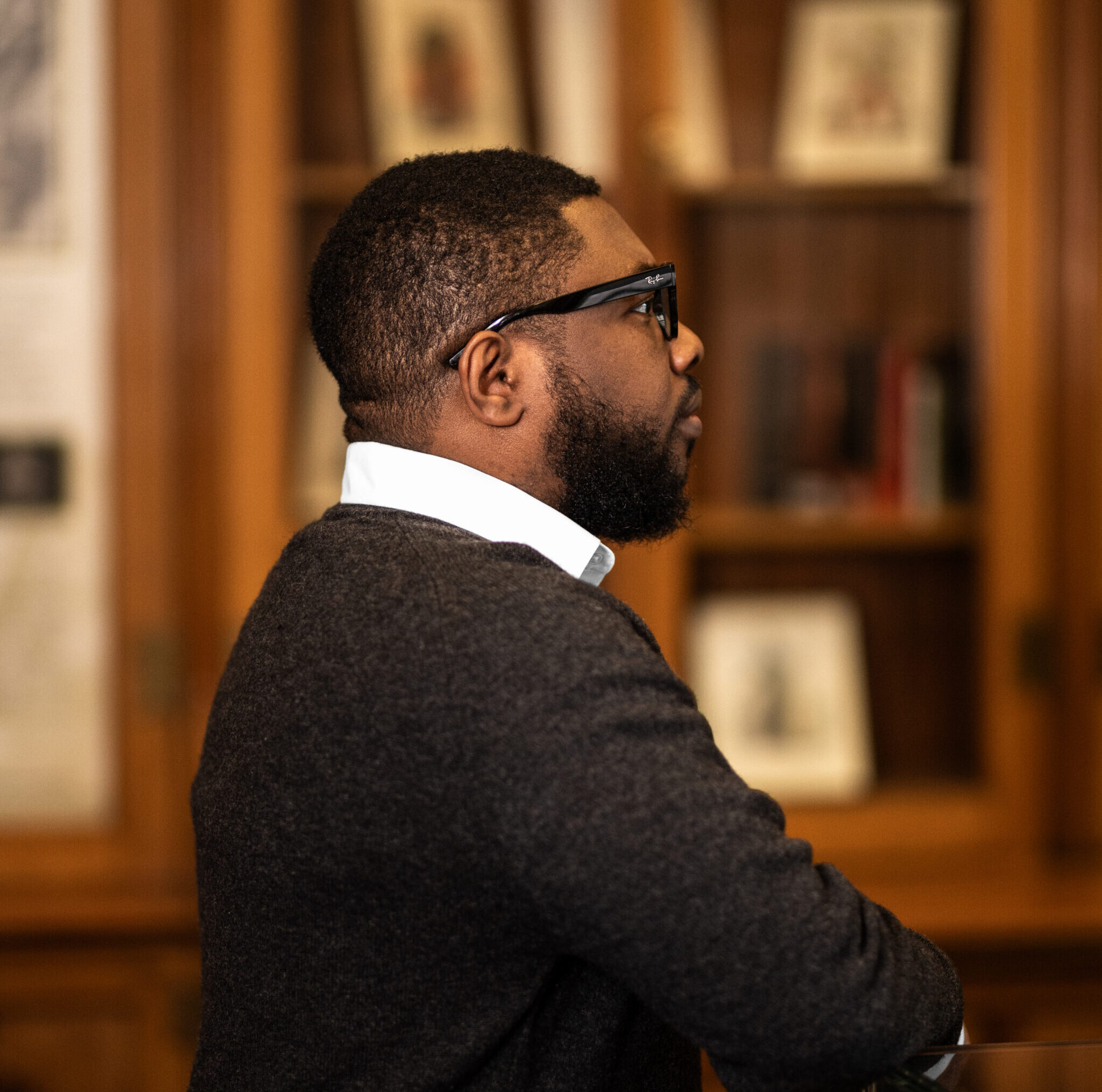
Ibrahim Babátúndé Ibrahim
Ibrahim Babátúndé Ibrahim grew up on his grandmother’s telling of African folklore, from where he developed a passion for literature. In 2019, he left an erstwhile career to focus on writing. His work appears in Transition Magazine, Zone 3, Ake Review, Typehouse, Adi Magazine, JMWW, Necessary Fiction, and elsewhere. Among other honors, Ibrahim has won the American Literary Review Award, the Creative Future Writers’ Award, and the Quramo Writers’ Prize.