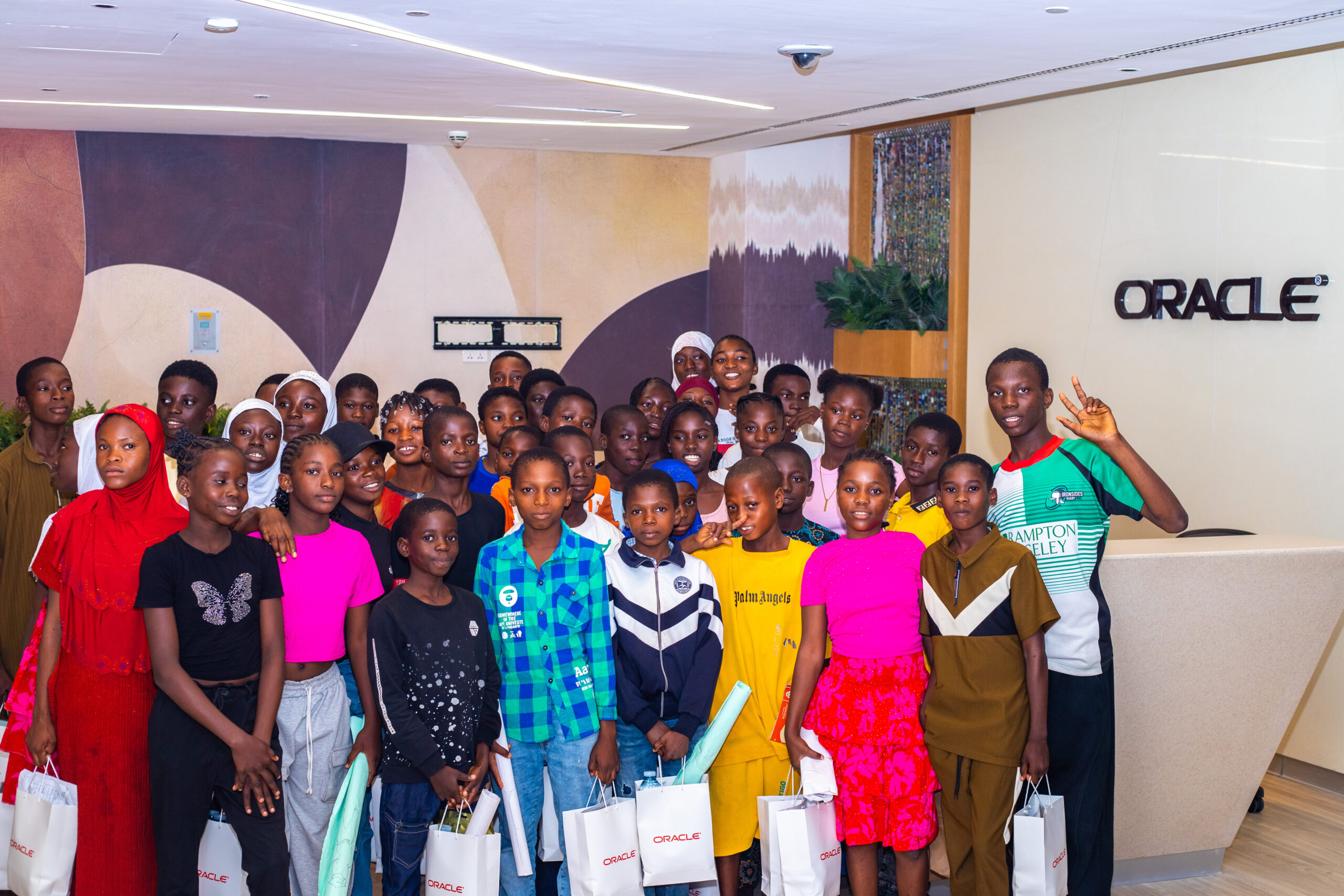
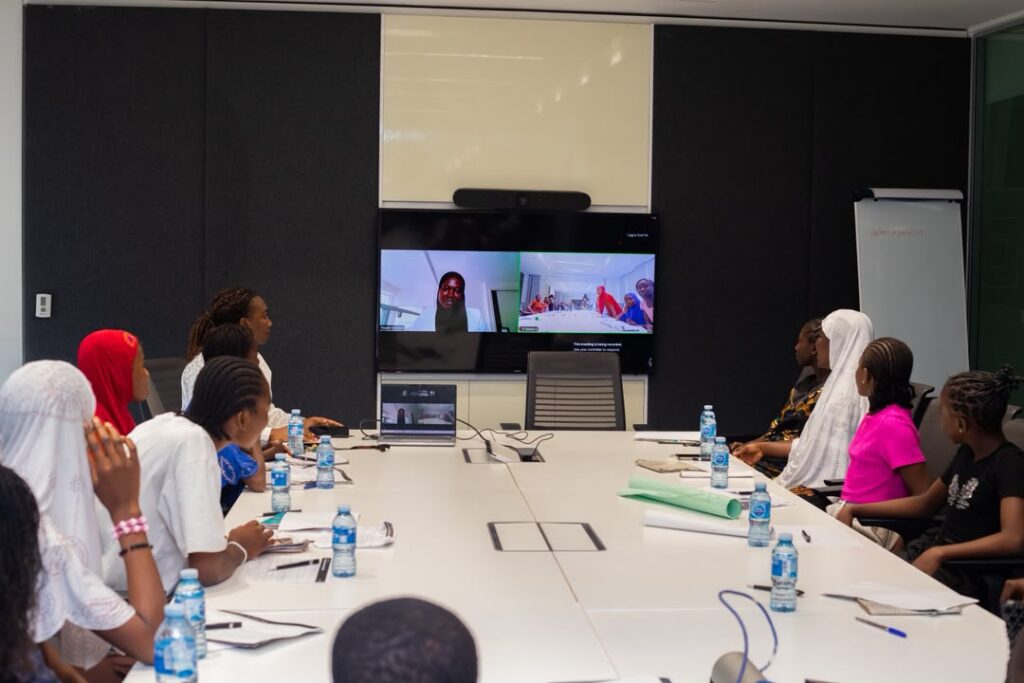
Young people from Lead for Good Africa’s Rooted & Rising 2026 programme took part in a practical storytelling and communication session during an experiential visit to the Oracle office in Lagos on 3 September 2026.
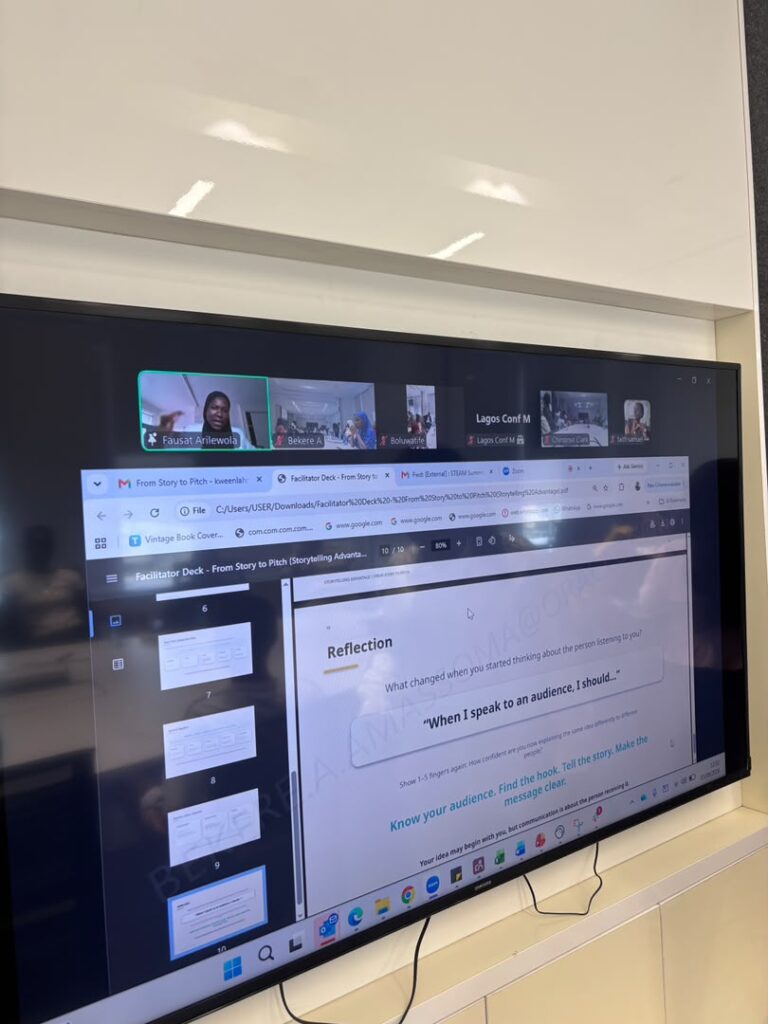
The session, Storytelling Advantage: From Story to Pitch, was facilitated virtually by author and storyteller Fausat Omolara Arilewola, creator of the Storytelling Advantage, a storytelling framework and programme that explores how storytelling can strengthen communication, creativity and learning.
The 25-minute session formed part of the participants’ wider visit to Oracle, where they were exposed to a professional technology environment, career conversations and opportunities to connect some of what they had been learning during the Rooted & Rising summer programme with real-world practice.
From Story to Pitch focused on one question: how does the way an idea is communicated change when the person listening changes?
Building on the story behind an idea
The session followed an earlier Storytelling Advantage workshop delivered as part of Rooted & Rising, From Idea to Story, where participants explored the human story behind an idea through the structure:
Person → Problem → Idea → Change → Action
From Story to Pitch moved the learning forward.
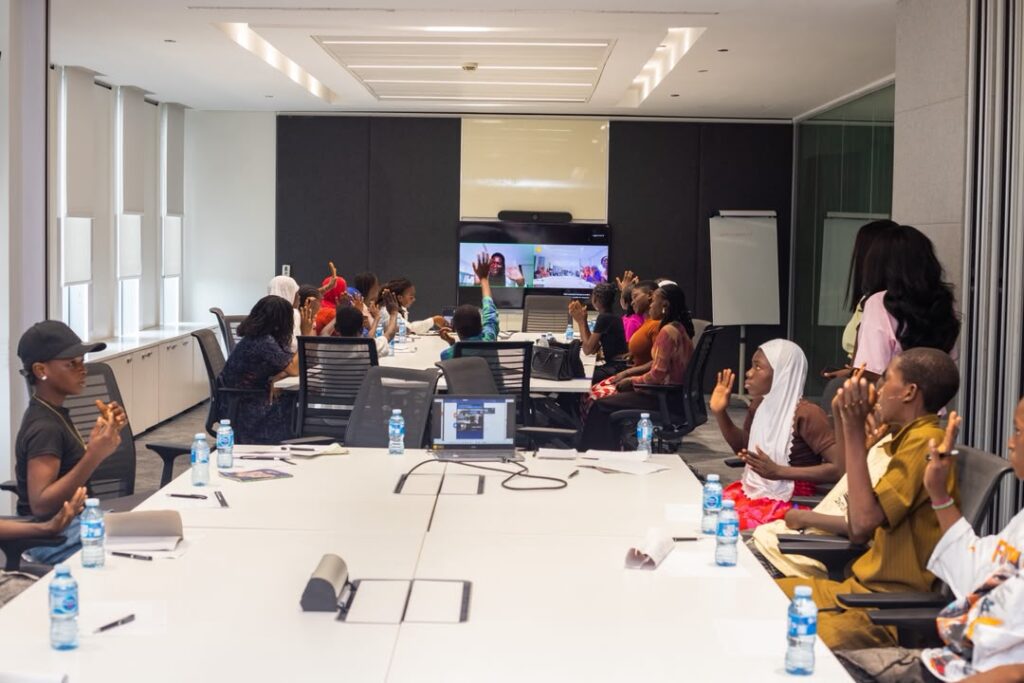
Rather than asking participants to develop new ideas, the session focused on how an existing story could be shaped for a particular audience.
The new structure became:
Audience → Hook → Story → Message → Action
Participants were encouraged to think beyond simply knowing what they wanted to say and instead consider who needed to hear it.
One idea, different audiences
One of the activities asked participants to imagine communicating the same idea to three different people: another young person, a community leader and someone deciding whether to support an idea.
The discussion explored whether the same explanation would work equally well for each audience.
Participants considered what might make an idea feel relevant to another young person, what a community leader might need to understand about the problem, and what someone being asked to support an idea might need to believe before taking action.
The exercise introduced a central principle of the session: knowing the story behind an idea is important, but knowing the audience changes where that story begins, what information receives emphasis and what action is requested.
Finding a reason to listen
The session also explored the role of a hook.
Participants were shown the difference between beginning with a straightforward description of a solution and opening with a question that immediately placed the audience inside the problem.
Using the solar study lamp example introduced during the earlier workshop, a flat opening such as:
“Our project provides affordable solar lamps for students.”
was compared with a story-led question:
“What happens to a student’s education when studying at night depends on whether there is electricity?”
The aim was not to encourage dramatic openings for their own sake, but to show how a strong beginning can give an audience a reason to pay attention to the problem that follows.
The session emphasised that the hook may attract attention, but the story gives that attention somewhere to go.
Turning a story into a pitch
Participants were then introduced to the five elements of the From Story to Pitch structure.
Audience: Who am I speaking to?
Hook: What will make them listen?
Story: What human story helps them understand the idea?
Message: What is the one thing I want them to remember?
Action: What do I want them to understand or do?
The approach encouraged participants to resist the temptation to fit everything they knew about an idea into one presentation.
Instead, they were asked to think about clarity.
A pitch, within the session, was presented not as a faster version of everything someone knows, but as the clearest version of what a particular audience needs to understand.
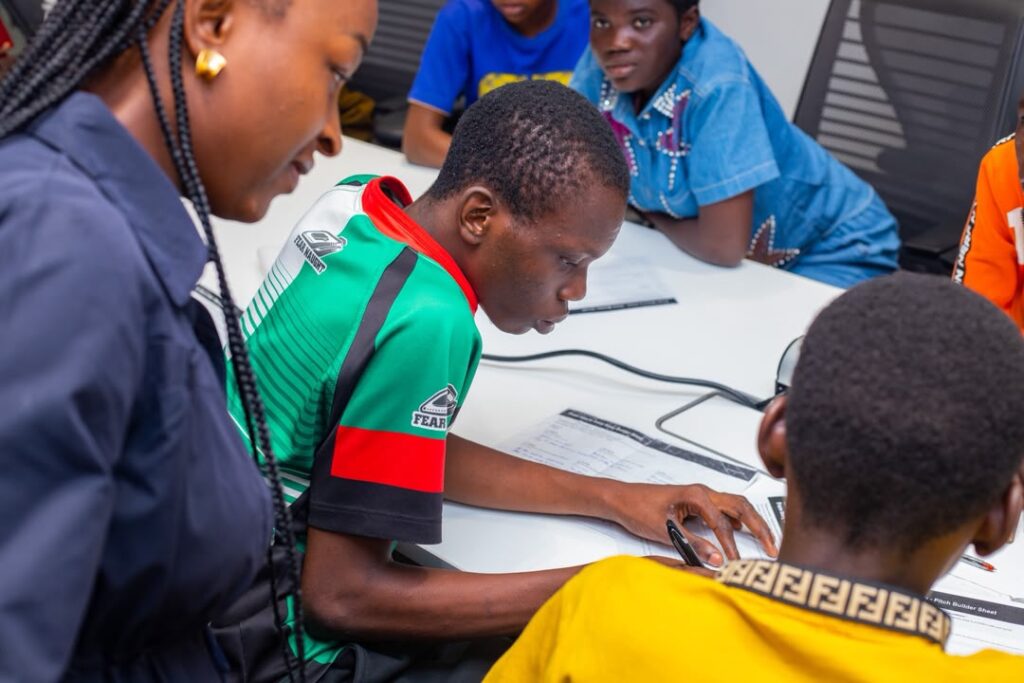
Participants were also encouraged to communicate in ways that worked for them. Speaking, writing key words, drawing and working with others were all built into the activity rather than requiring everyone to prepare a fully written speech.
Pitch it. Listen. Improve.
The session moved from developing a message to testing how clearly that message could be understood.
Participants were invited to share short pitches while the rest of the group listened for four things:
Who was the pitch for?
What was the main message?
What action was being asked for?
What could they remember afterwards?
The feedback was not about deciding whether an idea was good or bad.
Instead, the audience became a practical test of communication. If listeners could not identify the central message or understand what was being asked of them, the speaker had something specific to improve.
This reflected another part of the Storytelling Advantage process: storytelling does not end when something has been created. It can be tested, discussed, improved and then shared again.
Connecting storytelling with communication
From Story to Pitch extended the use of storytelling beyond creative writing and into a setting where young people were already thinking about innovation, leadership, entrepreneurship and future careers.
The session asked participants to recognise that having an idea and communicating that idea are different skills.
An idea may begin with the person who creates it, but communication is ultimately shaped by the person receiving it.
By the end of the session, the intended learning outcome was:
“I learned how to communicate my idea to an audience.”
For Arilewola, the progression from From Idea to Story to From Story to Pitch demonstrates how the Storytelling Advantage can be adapted to help young people move from understanding the human story behind an idea to communicating that idea with greater clarity and purpose.
Fausat Omolara Arilewola who writes under the name Fausat Omolara Ayinla is an author, storyteller and creator of the Storytelling Advantage, a storytelling framework and programme that explores how storytelling can strengthen communication, creativity and learning.