I
The bus left Intercity before the city woke up. Bupe had arrived early and still could not find a seat that didn’t smell of someone else’s overnight journey—old cloth and the particular sourness of sleep held too long in one position. She settled near the window and balanced her notebook on her knees and watched the hawkers moving along the platform outside, holding up airtime cards and groundnut packets and small plastic bags of water as though the bus were a vessel, and they were saving its passengers from thirst.
She had told herself she would write during the 7-hour journey. She had not written anything in three weeks.
The bus filled slowly. A woman with a baby tied to her back sat two rows ahead and the baby stared at Bupe over its mother’s shoulder with the frank, unsettling interest of someone who had not yet learned to pretend. Somewhere near the back, a crate of chickens made their anxious announcement into the rising heat.
The road out of the city unwound through familiar disorder until the city released them and there was only the road and the bush on either side and the sky that opened up in front of them.
An hour out, the road became bad. The bus slowed and juddered and the passengers settled into the silence of people accepting something unavoidable. A pothole sent her notebook sliding and she caught it with both hands and looked up, irritated, and that was when she first noticed the man near the back.
He was sitting with a canvas duffel between his feet and his hands loose on his thighs and he was looking out the window at the same road that was making her miserable, and he looked, she thought, as though he had made a kind of peace with it that she had not.
An hour after that, the road near Mumbwa delivered the bus into a stretch of red mud where the rains had come and then evaporated in a hurry, leaving the ground treacherous. The driver tried twice and then stopped and said, “We push.”
The man with the duffel was already outside. By the time the bus was free he was back in his seat, his forearms reddened with dust up to the elbow. He dried his hands on his trousers and looked out the window again.
Later, she would not remember exactly when, only that the light had changed and she was watching a row of mango trees scroll past. At some point, he had moved from his place across the aisle to the empty seat directly behind her. She heard a sound behind her and turned. He was leaning forward slightly, looking at the notebook open in her lap.
“Books suffer on this road,” he said.
It was such a plain thing to say. She looked at him for a moment and then down at her notebook, the pages faintly wavy from the heat and the movement, the cover beginning to curl at one corner.
“They do,” she said.
He nodded as though this confirmed something, and looked back out the window, and the bus went on through the dust toward Mumbwa, toward the house where her grandmother had once told stories on hot evenings while the smell of woodsmoke drifted in from the fields.
II
His name was Joseph. He was a civilian administrator at Karenda Army Barracks, a posting he had held for four years in what she soon came to understand was a silence so deep you could hear it. He drove a white pickup truck that was not his, operated out of an office the size of a storage room, and filed procurement forms that no one from their head office in Lusaka seemed to urgently require.
They married in the dry season, eight months after the bus. Her friends in Lusaka were polite about it in the way that means they are worried about you. Her closest friend, Thandiwe, took her for lunch at a restaurant where they served things on slate boards and said, very carefully, “He’s kind, I can see that. But Karenda? Bupe, is there actually anything there?”
“There’s Joseph,” Bupe said.
“Yes, but besides that.”
Bupe had eaten her fish and thought about it and decided she didn’t know how to explain what she meant, which was: that she had spent enough time in places where there was a great deal besides the person.
The barracks sat in a fold of forest between Karenda village and a tributary stream that the locals called Kalwanyemba. The compound was twelve houses and an administrative block and a generator that ran from six to ten at night and a feeling of having arrived somewhere that the larger world had simply stopped reaching for. The trees were very old. The nights were extraordinarily quiet. She would lie awake sometimes in the first months, listening to the quality of that silence as though it were a language she had not yet learned.
She began writing beside the Kalwanyemba each evening. Not anything finished—notes, mostly. Observations. The way the reeds along the bank caught the last light. The sound of the water over stones at the ford. A grey heron that appeared on certain evenings and stood motionless in the shallows for twenty minutes before lifting, without any visible reason, straight up into the trees.
Joseph would sometimes appear at the edge of the compound and watch her from a distance and she understood that he was checking she was alright without requiring her to say so, which was one of the things she had not expected to love about him but did.
III
They made the trip to Kabwe in September to visit Joseph’s parents. He drove the motorbike. She sat behind him with her hands at his waist and watched the landscape come and go: the long grass burning amber in the dry season light, the distant smudge of a charcoal fire, a woman carrying a twenty-litre container on her head while talking on a phone.
They stopped when the front tyre softened. Joseph knelt in the dust beside the bike and worked without hurry while Bupe sat on a termite mound at the road’s edge and wrote in her notebook. A group of children appeared from the direction of a village she couldn’t see and watched them from thirty metres with serious faces. One of the children, a girl of perhaps seven in a yellow dress, raised a hand slowly and Bupe raised hers back and the girl considered this for a moment and then turned and ran toward the village and the other children followed.
“Who did you just wave to?” Joseph said, without looking up from the tyre.
“A diplomat,” Bupe said.
He laughed. She had been collecting his laughs since the bus; they were quiet, slightly surprised, as though laughter kept arriving before he had expected it.
When they were moving again, she put her arms around him and rested her chin near his shoulder and thought: this is it. Not an arrival at anything. Just this particular road in this particular light with this particular man, and the dust rising behind them, and the fact that he would not ask her what she was thinking because he understood that some thoughts were only for thinking.
IV
On the way back from Kabwe they stopped at a stretch of road-traders where women sold tomatoes, secondhand clothes and dried goods from plastic basins. An old man sat slightly apart from the others at a folding table with goods arranged in front of him that didn’t fit any obvious category: a carved wooden spoon, two amber bottles of something unlabelled, and a bundle of dried stems topped with a brown cone-shaped structure that Bupe couldn’t identify.
She crouched in front of the table and looked at the cone without touching it. It was the size of a large fist, the colour of dark tea, layered with dried scales like a pinecone but longer, and it had a smell she couldn’t name —not unpleasant, faintly mineral, as though something ancient had dried out slowly over many seasons.
“What is this?” she said.
The old man looked at her. His eyes were steady; they bore the estimating look of someone who has spent a great deal of time sitting at the side of roads watching people pass.
“Those things grow where water refuses to die,” he said.
Joseph, behind her, said: “Bupe,” in the tone that meant he was trying not to laugh.
She bought it anyway. She wrapped it in the cloth she used for her notebook and placed it in the front pocket of her bag and felt it there against her hip for the rest of the ride.
V
Marriage, she found, had its seasons of bewilderment. Moments when she would feel the strangeness of her own life, the distance from everything she had understood herself to be, and a kind of vertigo would take hold: not regret, exactly, but something like it, the awareness of how much a self could change without choosing to.
One evening in early October she walked to the Kalwanyemba later than usual, after dark had already started to press itself against the treeline. She had the cone in her hand, she had been carrying it around the house all week without quite knowing why, turning it over in her palm, running her thumb across the overlapping scales.
She stood at the bank and listened to the water and looked at the reeds moving in a small wind she couldn’t feel from where she was standing.
She was not thinking about the cone. That is what she would remember later: she was not thinking. She was just standing there, and then her arm moved, and the cone made a small arc in the last light and disappeared into the reeds on the far bank.
She stood there for another few minutes. A bat cut across the dimming sky above the stream. The reeds rustled.
She went home and made dinner and didn’t mention it to Joseph. It was not a secret; there was simply nothing to say.
VI
By November there were reeds along the Kalwanyemba that had not been there before.
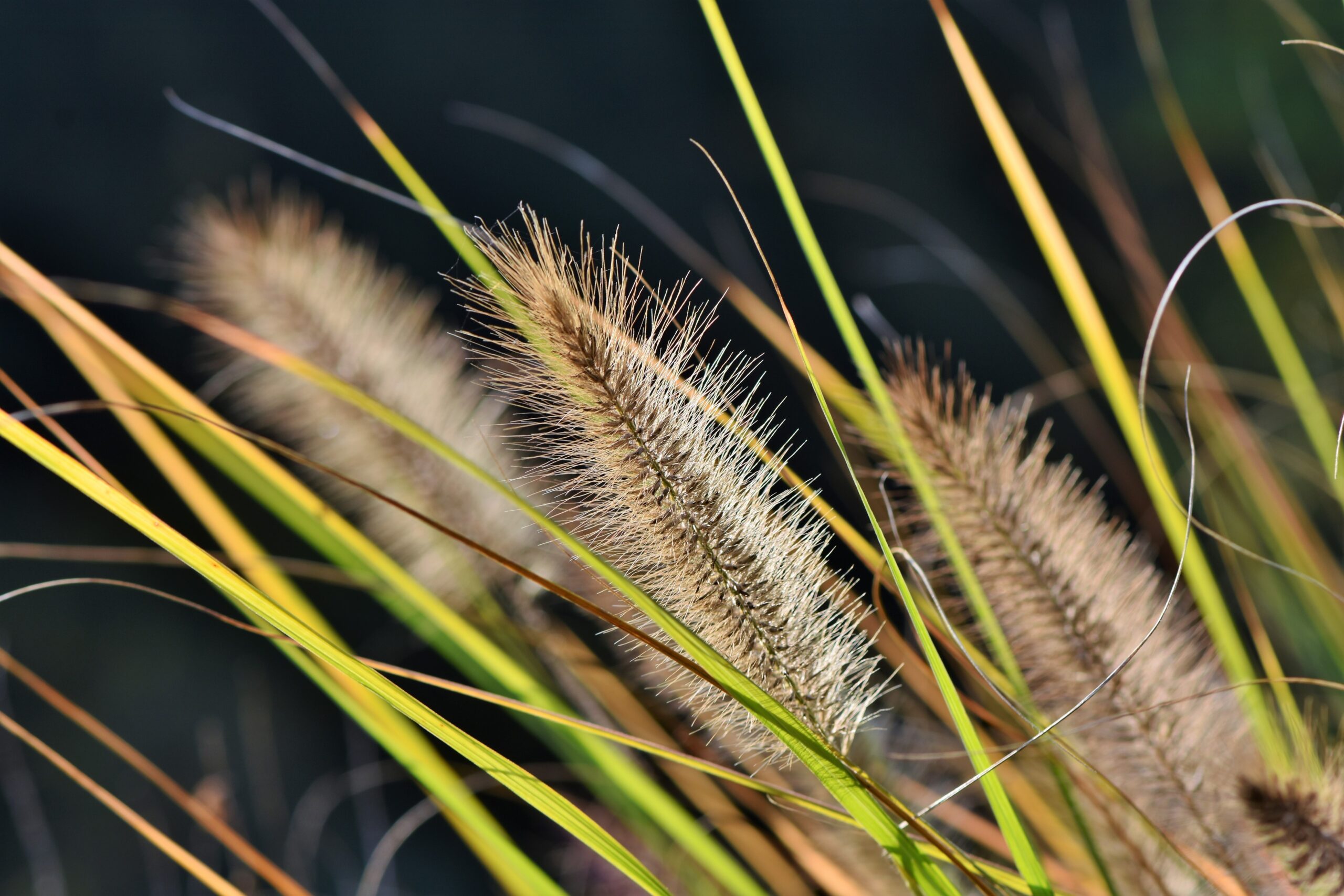
They were different from the native papyrus— taller, the stems threaded with a faint silver that caught the light in the morning like something metallic, the seed heads opening at the tips in structures she couldn’t name. They appeared first on the far bank near where she had thrown the cone, then spread over three weeks to both banks, pushing all the way from Karenda to the Mumbwa road.
The birds came first. Species she recognised from childhood field guides: African finfoot, lesser jacana, a pair of wattled cranes. The grey heron brought, in mid-December, two more. A flock of small black birds with red wingflashes moved into the reeds and could be heard in the evenings producing a sound like someone rapidly shuffling cards. Mushrooms fruited at the base of the reeds in rings so dense and regular they looked deliberate. A woman from the village named Eunice began harvesting them instead of caterpillars, and by February had a stockpile she was selling as far as Mumbwa.
And then the complaints started.
The bream and the silver barbel that the village women had netted from the Kalwanyemba for as long as anyone remembered were thinning. The reeds had altered the water’s chemistry, someone said. Families who had depended on the stream for protein were now driving to Mumbwa for dried kapenta. An older fisherman named Mwangelwa sat outside his house in the evenings and did not go to the water and when Bupe passed him, he looked at her with an expression she couldn’t read.
Crocodiles had moved upstream and appeared now at the ford. Children were told not to go to the stream. Some did anyway, to see them.
Bupe wrote it all down. She didn’t know what she was writing toward. She wrote it down anyway.
VII
The researchers arrived in February. First a botanist from the University of Zambia who walked the banks for three days and left with soil samples and a troubled expression. Then a team from Germany who set up a base at the primary school and took water samples at dawn. A journalist arrived and wrote a piece titled MYSTERY PLANTS INVADE ZAMBIAN STREAM that was widely shared and contained several errors.
No one identified the species. Samples removed from the stream deteriorated rapidly outside their natural environment — the tissue collapsing within forty-eight hours, as though the plants had some mechanism against being known in isolation.
Bupe sat through two rounds of community meetings and listened to the researchers explain what they didn’t know in careful scientific language, and to the villagers explain what they had lost in plainer terms. After the second meeting, she walked home in the dark and found Joseph on the veranda with two cups of tea already made.
“They’re saying it might be a previously undescribed genus,” she said.
Joseph drank his tea.
“And the fish?” he said.
“They don’t know yet.”
He nodded and looked at the dark where the stream was. She thought about telling him about the cone. She had thought about telling him many times since October. Each time she arrived at the point of saying it and examined what she would actually be saying— that she had bought a thing from an old man at the side of a road and thrown it into a stream and three months later the stream had changed in ways that were drawing scientists from three continents —and the sentence dissolved before she could get it out.
She drank her tea. The frogs went on.
VIII
She went to the stream every evening. This had not changed. What had changed was the stream itself, which was now flanked by the silver-threaded reeds and attended by researchers and their equipment and the orange glow of their portable lights. She had taken to sitting upstream of them, where a limestone outcrop she had found in her first year made a flat surface exactly right for sitting, and writing in the notebook she had been filling, slowly, since the bus.
She wrote about the heron. She wrote about Mwangelwa’s face. She wrote about Eunice selling mushrooms in Mumbwa and what it meant that a transformation could be a catastrophe for one person and a windfall for another and a scientific event for a third, all in the same year, all along the same water.
And then one evening she wrote something she had not planned to write, and it surprised her.
She wrote about Mr Lombe.
Mr Lombe had lived three houses from her family in Chelstone and had owned, in the mid-nineties, the only television set on their end of the street: a twelve-inch Grundig that sat on a wooden cabinet in his sitting room and which he never deliberately invited anyone to watch. He simply left his curtains open in the evenings, and the children of the neighbourhood gathered at his window and watched whatever was on, and he appeared neither to mind nor to acknowledge this arrangement, moving through his own sitting room with the unhurried dignity of a man who understood that certain things, once established, simply continue.
The film she remembered was American. A soldier in a jungle, moving through reeds with silver cones that were taller than he was, the camera low so that the reeds filled the whole screen, silver-green and enormous and swaying, and the soldier pressing through them with his arms up as though swimming. She had been seven, maybe eight, crouched at Mr Lombe’s window with her knees in the dirt, and the image had gone into her the way images go into children: completely, without commentary, into the place where things are stored.
She had forgotten it for twenty years.
She sat at the limestone outcrop and looked at the reeds across the water, swaying in the evening air, and understood that she had not bought the cone by accident. She had recognised something in it at the roadside, in the old man’s hands, in the smell of it, without knowing what she was recognising. The child at Mr Lombe’s window had carried it forward and placed it, eventually, into her adult hands on a road outside Kabwe, and her adult hands had carried it to the Kalwanyemba, and here they were.
She wrote: There are things you do for no reason that become the reason.
She crossed it out. She wrote it again.
One evening, almost a year after the cone, she was sitting with the notebook closed in her lap when she heard something in the reeds on the far bank— not the card-shuffle of the small red birds but something larger, a purposeful movement —and after a moment, a small antelope stepped to the water’s edge, a puku, which she had not seen on the Kalwanyemba since she had arrived at Karenda. It stood and drank and then raised its head and looked across the water directly at her with enormous, water-coloured eyes.
She did not write anything. She sat still and breathed carefully.
Then it turned and walked back into the reeds and the reeds accepted it without sound.
IX
In the third year, the Kalwanyemba appeared in a journal paper under the title “Unprecedented phytological colonisation event in central Zambia: a novel monocot of undetermined origin.” A small research station was constructed on the eastern bank. School children from Mumbwa were brought on trips to see the reeds.
Mwangelwa, the old fisherman had moved to Mumbwa to live with a son. Three families had received a government resettlement payment that everyone agreed was insufficient. Eunice had opened a small dried-goods stall on the Mumbwa road and was doing well.
On a Saturday in August, Bupe was sitting at the limestone outcrop when she heard a drone above her making its passes above the bend, and downstream, two researchers in waterproof trousers were photographing a section of new root exposure. The sounds they made were familiar to her now, ordinary, the professional sounds of people trying to understand a thing that continued, patiently, not to be fully understood.
She was writing, and not writing, and listening to the water, when she heard Joseph’s voice from the direction of the compound.
“Bupe. Supper.”
She closed the notebook. She sat for another moment looking at the reeds on the far bank, their silver-threaded stems catching the last horizontal light, moving in a wind she couldn’t feel.
She thought about Lusaka the way you think about a country you visited once, with genuine feeling but without the urge to go back. Each time she drove in on the highway, she recognised something in herself that recognised it. But the recognition was no longer accompanied by longing. It was simply: there is that city where I was from. Here is this road I am on now.
She did not look back at the stream. She didn’t need to. She knew what was there: the reeds, the water moving over stones, the researchers doing their work, the crane standing in the shallows, the unexplained abundance, the antelope that came sometimes at dusk, the thing she had thrown that had become this, the whole continuing, unresolved fact of it.
She walked home through the long evening light of August, and the reeds behind her went on swaying beside the water, unexplained.
Douglas Hajanika
Douglas Hajanika is a Zambian writer, chef, and farmer based in Lusaka. His fiction is rooted in the landscapes, histories, and oral traditions of Zambia — work that moves between the domestic and the mythic, the contemporary and the ancestral. A self-described psychchute, he brings the same restless curiosity to the page that he brings to the soil and the kitchen. His short stories have drawn on Zambian geography and cultural memory to explore grief, resilience, and the cost of survival.