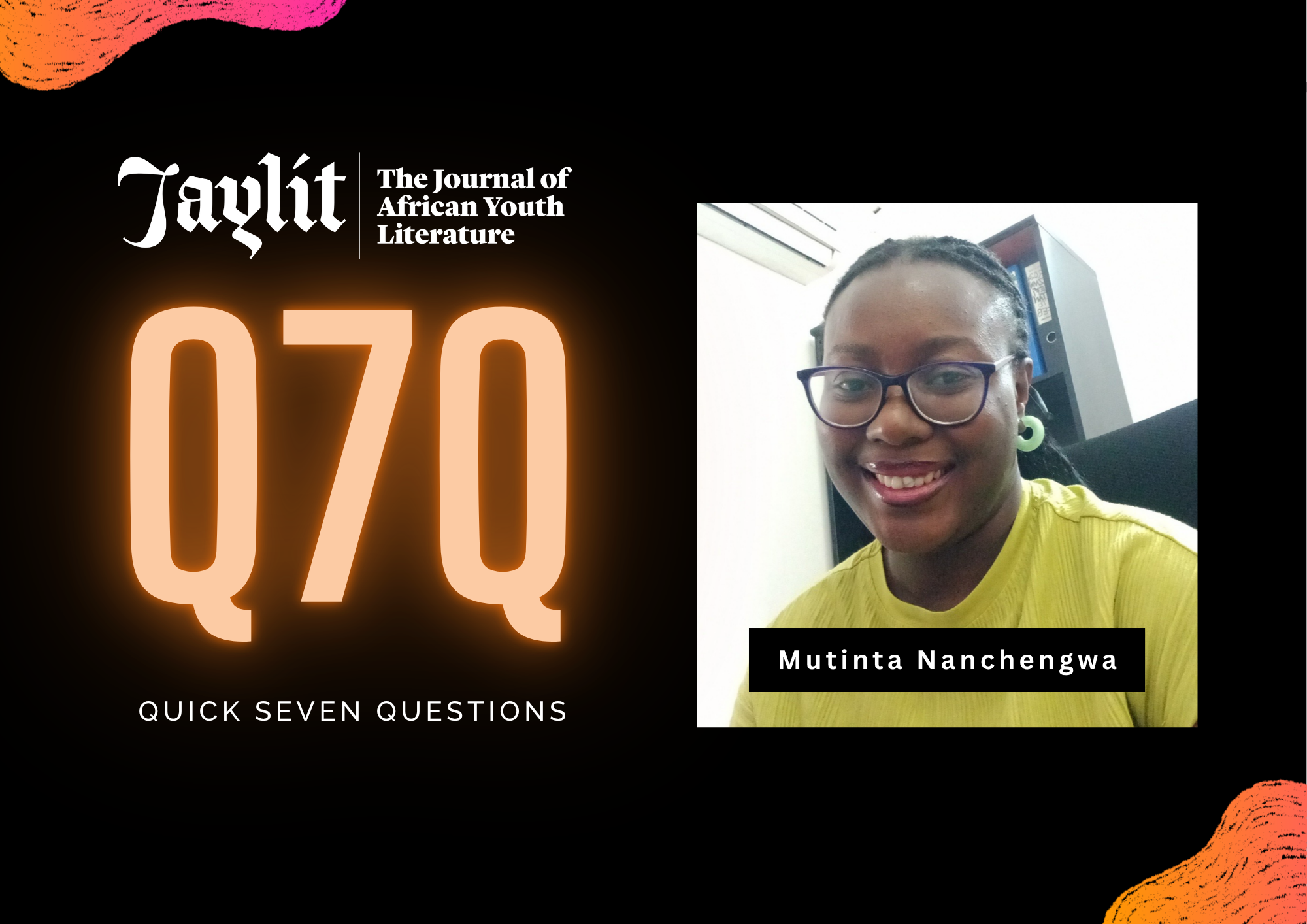
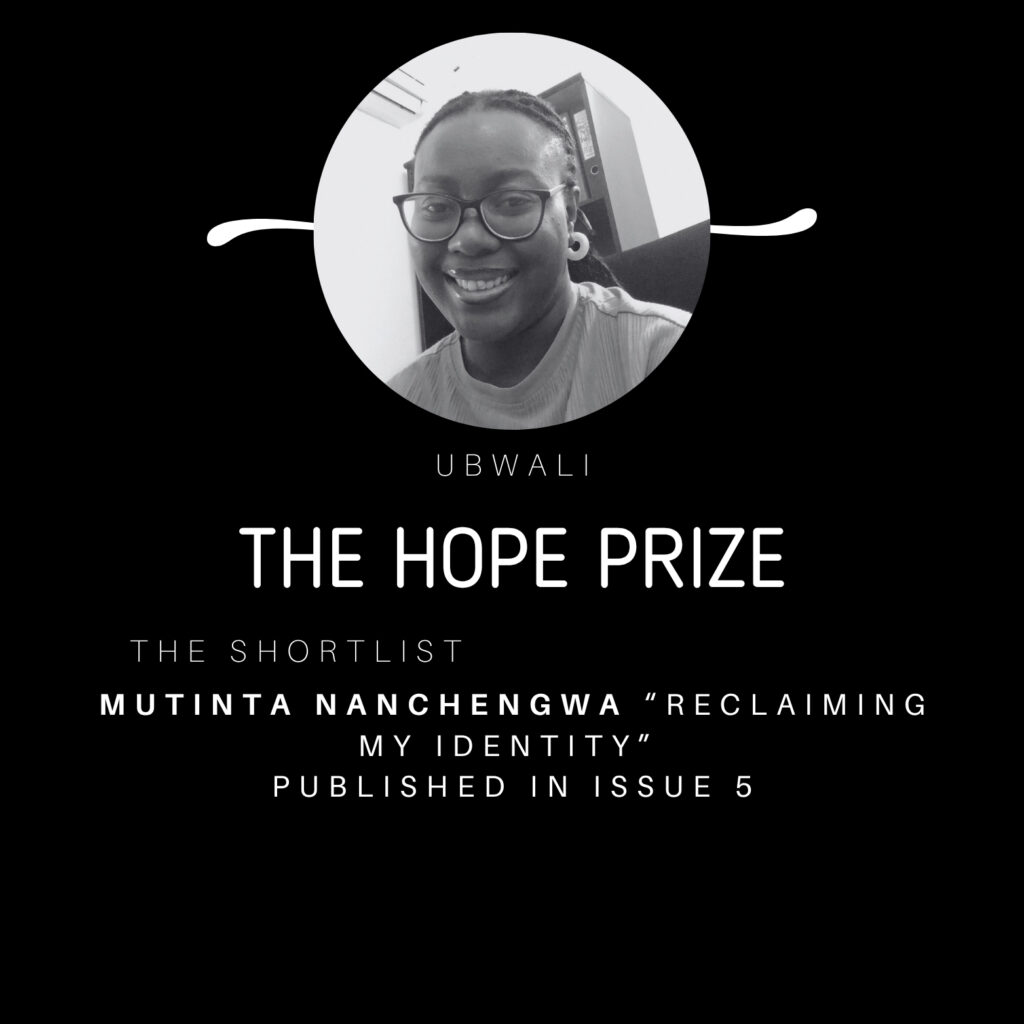
Mutinta Nanchengwa is one of six Zambian writers shortlisted for the 2025 Ubwali Hope Prize, presented by Ubwali Literary Magazine in partnership with Shenandoah. The Prize celebrates the best of Zambian prose and poetry. One winner is selected each year, receives an honorarium of $500, is featured in the fall issue of Shenandoah, has future publication in the Journal of African Youth and Literature (JAY Lit) and a year-long virtual writing mentorship with Mubanga Kalimamukwento.
Mutinta Nanchengwa was shortlisted for her essay, “Relearning My Identity”, published in Issue 5 of Ubwali Literary Magazine. The essay can be read here.
Below is our “Quick Seven Questions” interview with Mutinta Nanchengwa.
Enjoy!
~
Q1 – Who is Mutinta Nanchengwa?
Mutinta Nanchengwa, as the essay suggests, is a global African. I have grown up around Southern Africa (Botswana, and Zimbabwe) and settled into Zambia closer to adulthood. I am also currently a Master’s student in Political Science and International Relations. I have a deep passion for human beings and what makes people human. This seems distant from the hard realism of Political science, but I see that as just another tool to understand why people behave as they do. I am also passionate about human rights and practice. I think it is important that people have the ability and platform to tell their own stories, which informs my approach to writing and story telling.
Q2 – What is the inspiration behind “Relearning my Identity”?
As someone who did not grow up in my home country and having had parents of two different nationalities, I had always wondered what it meant to have an identity. For the longest time, I felt like identity was fluid and could be malleable to your surroundings, but that feeling always left me feeling empty. I had told myself many stories about what it meant to belong, but most of these stories were told to me and about me – I never took the time to figure out my own story. The inspiration for this story was catalyzed by a visit to Kenya in 2023, where I felt what it meant to belong to a place that I hadn’t really considered home. I spent a lot of time exploring maternal roots and trying to acquaint myself with the language and culture, and asked myself where do I fit in all of this? This question helped me to craft my essay.
Q3 – What hopes did you have for the essay when you were submitting it to Ubwali Literary Magazine?
I definitely didn’t expect my essay to be accepted! I really put a lot of thought into this essay and almost hesitated to submit. It is easier to write fiction (which I tend to write more), because you can easily pretend that the story is not deeply personal to you. I really hoped that my essay would touch at least one reader’s mind and give them something to think about.After the essay was published, many people reached out to me and shared their own experiences. This was so overwhelming and emotional to me! I think the greatest compliment as a writer is to have your work deeply resonate with your intended audience
Q4 – What does ending up on the Ubwali Hope Prize shortlist mean to you?
It means more than I can put into words. I am so humbled that my work was read and resonated deeply enough for this shortlist. That in itself is an achievement. They say that writers are good at handling rejection, and maybe to a degree it is true but it is always so mind blowing to know that your work carries enough weight to receive a nomination. I wrote this essay for every person who has always felt like they don’t belong and I hope that this nomination will reach more people and even help them with healing those parts of them.
Q5 – What would winning mean to you?
At the risk of sounding vain, winning this would be the ultimate validation. The essay is a deep dive on identity and belonging, and winning would truly feel like a pat on the back that says ‘your identity is valid’. But truthfully, winning this would be a tribute to every reader who has felt othered, like an outsider or like finding their sense of belonging has been a long and arduous journey. Ultimately, the real win isn’t in the award, but in the people that this essay touched or moved.
Q6 – How has this changed, inspired, motivated, or improved you, the writer?
This essay was actually my very first shot at writing creative non-fiction. In the spirit of “Relearning my Identity”, I chose to reframe the identity I had built for myself as a fiction writer. I love the ability to explore the world through fiction, but non-fiction really forces you to confront your biases, thoughts and feelings. This has definitely changed how I approach writing. I think I now approach storytelling with much more honesty. But also, fiction allows a certain degree of chaos, whilst non-fiction is careful, precise and thoughtful. This essay has instilled a stronger sense of care in how I write, choose my phrasing and narratives.
Q7 – What future plans do you have for your writing?
I have just completed a romance novel and I am super proud of it! I have passed it over to beta readers and I am now doing my first batch of rewrites. I am hoping to start the official publishing process soon. I have an idea for what I feel is an ambitious novel, which I am super excited to get back to. But aside from that, I would love to write more essays. I feel like this essay opened a Pandora’s box of all the things I want to say and I am only just getting started! I would like to turn my reflections on human nature outward and share them with the world. I also gave myself a goal to submit to more literary magazines this year, so watch this space I guess.
~
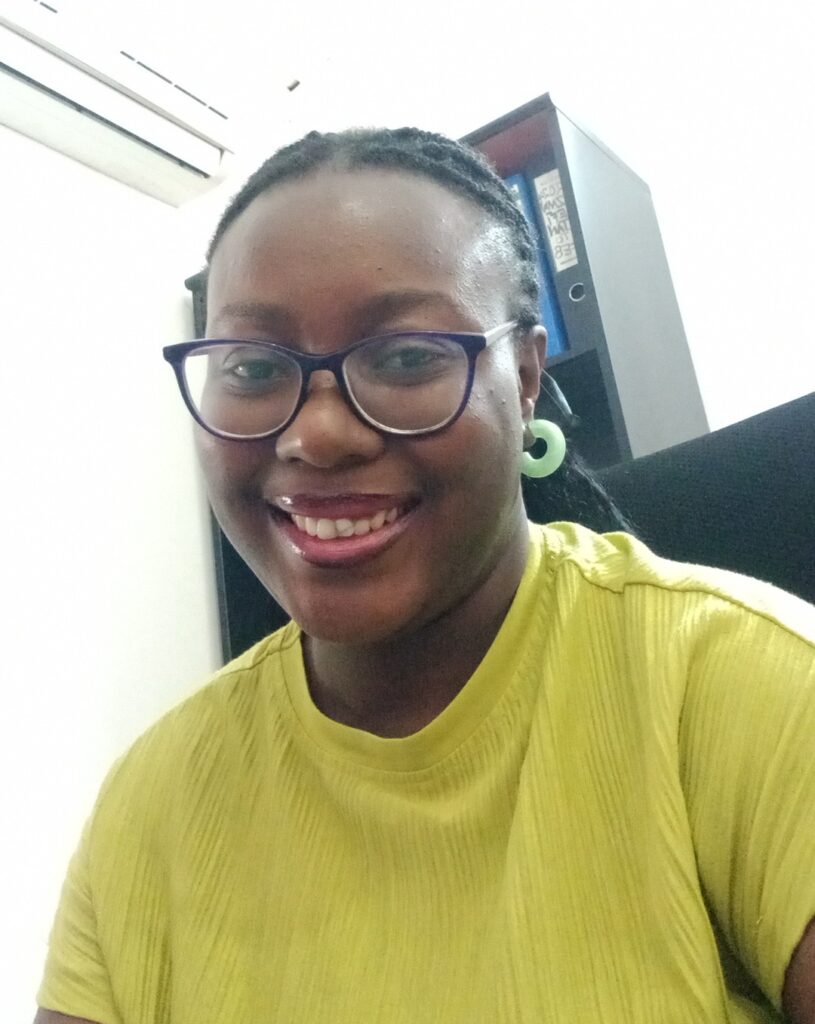
Mutinta is a writer from Lusaka with a keen eye for human interest stories. She was shortlisted for the inaugural Kalemba Short Story Prize and nominated for the 2026 Pushcart Prize. Transitioning from features writing to digital communications, Mutinta now crafts fiction that examines the hearts of humans. She is passionate about digital rights and human rights, and often weaves storytelling into her advocacy work. Whether through journalism or prose, her goal remains the same: to tell stories that matter and explore how we relate to one another.