![You are currently viewing [Featured Post] ZABAFEST 2.0: A Convergence for the Future](https://jaylit.com/wp-content/uploads/2026/05/PHOTO-2026-05-14-18-43-02.jpg)
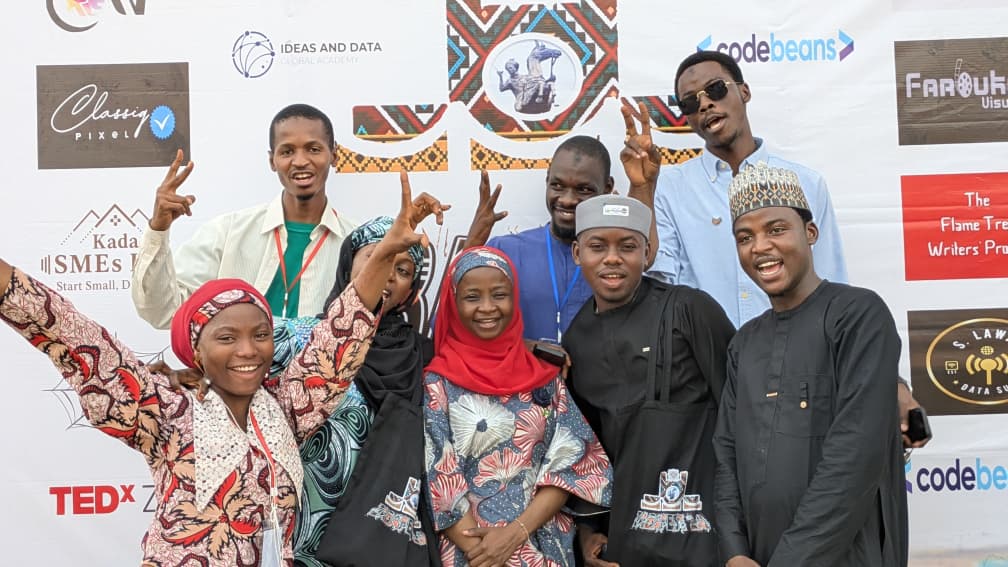
One of my most dramatic experiences recently has been working with the organizing team for the second edition of the Zazzau Books and Arts Festival, held on the 24th and 25th of April, 2026. The aim is to have a better edition than the first. As the pidgin saying goes, “Better soup na money”—funding is critical to doing anything better. We sent out proposals. Rejection, acceptance, and silence all followed. Bolstered by some positive responses, we nurtured a modest yet grand ambition. But many of the “yeses” turned out, in the end, to be little more than a promise of forty acres and a mule. This created pandemonium, forcing the festival to settle for second choices in almost every aspect, save for the guest lineup. Thankfully, even though the gospel of promise was befouled by the gospel of fulfillment, we still managed to pull off an impactful event. Largely funded and attended by young people, aligning symbolically with the festival’s theme: “Reclaiming the Future.”
Being one of the older members of the very young team places a lot of responsibility on my shoulders. I became almost the first point of contact whenever things went south. There was a bureaucratic barrier we needed to overcome at the event’s venue. A man from the Southwest, let’s call him Bola, had to be talked into granting us access to the facility for writing workshops on the eve of the festival. We spoke. I convinced him. Bola was impressed. Then, perhaps in an attempt to impress me too, he insulted the entire Hausa ethnic group. “I never knew a Hausa man,” he said, “could be this intelligent.” He smiled as he revealed his bigotry of low expectations. I was livid, in no state of calm to cut through his foolishness with a razor-sharp retort. And it would have been foolish of me to openly confront him when the festival was partly at his mercy. So I let it be.
The festival opened the next day to great excitement. At the opening ceremony, journalist and filmmaker Prince Daniel Aboki received the festival’s 2026 Lifetime Achievement Award, presented by the multifaceted artist Abdulkareem Baba Aminu, in recognition of his work bringing Hausa cinema to the global stage. His film Mai Martaba became Nigeria’s third Oscar-nominated film in the Academy’s 97-year history. In his acceptance speech, he thanked ZABAFEST for conferring the honor upon him and spoke of the potential for storytellers in northern Nigeria to reach even greater heights. “We are not disadvantaged by our intellectual ability,” he said, “but by our naivety.” He urged Arewa creatives to draw from the region’s well-documented rich history and aim for a global audience.
Following the tradition of centuries-old banter between Zaria and Kano, poets Shafa’atu Balarabe and Hidaya Mahmud performed a roast duet in Engausa (a fusion of English and Hausa language)—the former aiming at Kano, the latter taking aim at Zaria. Their performance roused the audience and breathed fresh energy into the room. The atmosphere was frenzied. Amid the cheers, some lines raised serious environmental concerns about Kano. “Kano kenan, rana zafi, inuwa kuma sai da ishara ake samunta,” Shafa’atu taunted, alluding to Kano’s scorching sun and lack of sufficient trees to provide shade. Hidaya did not directly address this point in her response. Instead, she punched at Zazzau for being small and noisy, and took pride in Kano’s boisterousness.
Shafa’atu was relentless in attacking Kano’s environmental problems, the foul air of the city, and its lousy TikTokers, while Hidaya remained adamant about reminding Zaria that Kano is big, that Kano is where things happen, and that—according to her—Kano’s scandals are more relevant than Zaria’s achievements. Responding to the attack on Kano’s overpopulation, Hidaya owned it fully and said, “Ai birnin da babu jama’a kango ne kamar Kongo” (a city without people is an abandoned building, like Kongo). Calling Kongo, an area hosting one of the university campuses in Zaria, an abandoned ruin was no small punch. The duo delivered a performance that felt both lived and understood. It was poetry, top-notch banter, and sometimes a barrage of crude attacks, but we all enjoyed it.
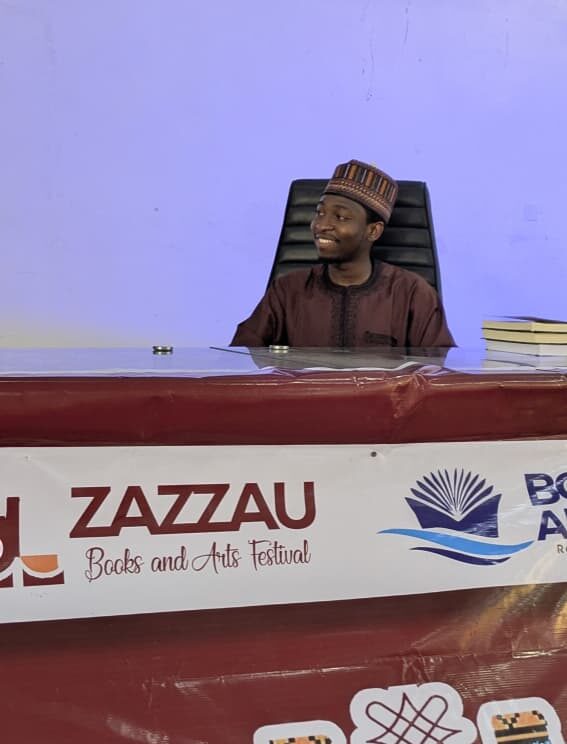
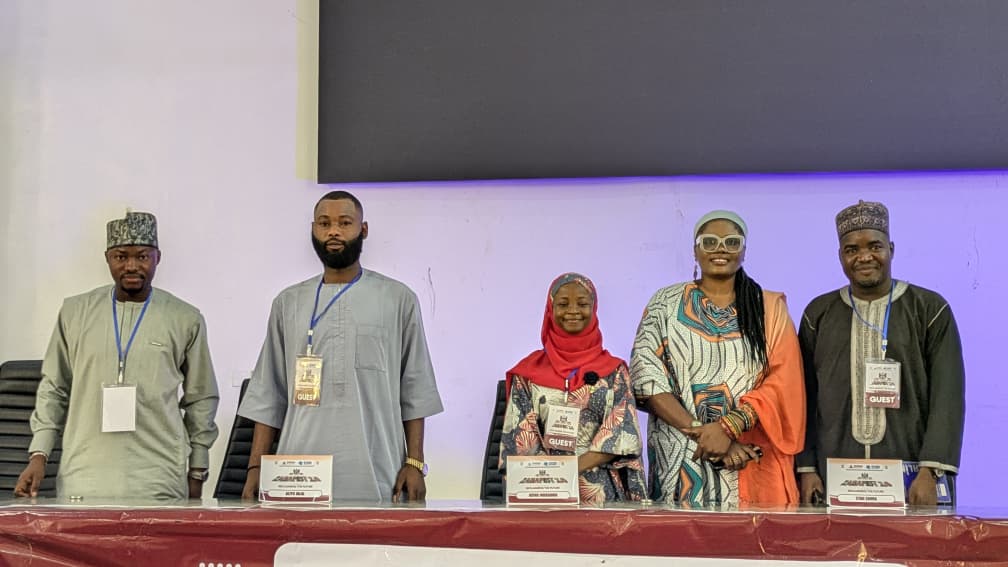
The first panel discussion of the event reminded everyone that we were in Zaria—the city of knowledge. The topic, “Conflict, Governance and Nation Building,” featured economist Abdulhaleem Ishaq Ringim, storyteller Hauwa’u Shehu Maikeffi, poet and polymath Richard Ali, and policy expert Dr. Umar Yakubu, hosted by art administrator and development expert Sulaiman Usman Yusuf. The panel gave the audience an X-ray of Nigeria’s challenges. Dr. Yakubu, his face showing concern and passion for better living conditions for Nigerians, decried the country’s wasteful spending on conflict management. “We spend more on managing conflict than on preventing it,” he said, “and we are managing it terribly.”
Ringim, who seemed passionate and enthusiastic, argued that to fix Nigeria, we need to fix our politics first. “You cannot take away governance from politics,” he said. “The elite have agreed to sustain each other, irrespective of political alliance. Let them also have an agreement on certain issues that must not be tampered with regarding the masses—things like education, security, and livelihood. Any leader who fails to deliver on these, they should gang up to oust him.”
In a calm and composed posture, yet revealing a deep-seated concern about the state of affairs in Nigeria, Ali offered what seemed like a response to Ringim’s call for poor-performing leaders to be removed from office, but he shifted the responsibility for doing so from the elite to the masses: “We need to tell Nigerians to stop pretending that they do not know the value of their votes.”
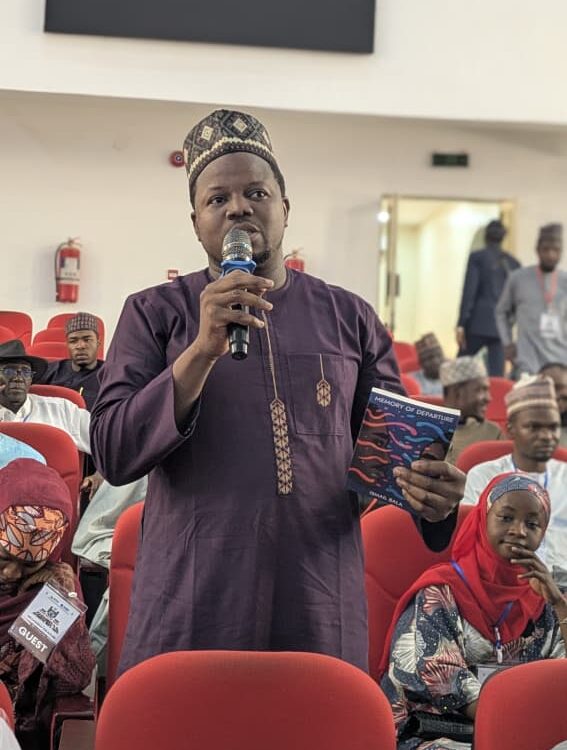
Maikeffi highlighted the role of storytelling in nation-building as a conscious awakening strategy and a systematic call to action through protest and advocacy. Thanks to its brilliant host and terrific panelists, this panel captivated and educated the festival’s predominantly young audience. They asked questions—most of them directed at Ringim, likely because of his role as a political appointee of the Kaduna State government, or his astonishing performance on the panel, or both.
The next panel, “Arewa Women in the Digital Economy,” featured tech-savvy Hauwa Ibrahim and Zainab Farouq Sambo, a cybersecurity expert and digital literacy advocate. This duo was the festival’s youngest panelists, hosted by acclaimed author Halima Aliyu. Like a slow-burn piece of fiction, the panel started slowly, built up tension, and exploded into a conversation where almost everyone in the audience wanted a turn with the microphone. It discussed the unique barriers faced by women and the girl child who aspire to a seat at the table of the digital economy. It also featured a conversation on digital security and the vulnerability of women in digital spaces. Speaking from the audience, filmmaker Prince Daniel Aboki—himself a player in the digital economy—encouraged women to enter fintech, noting that very few Nigerian women are in the field.
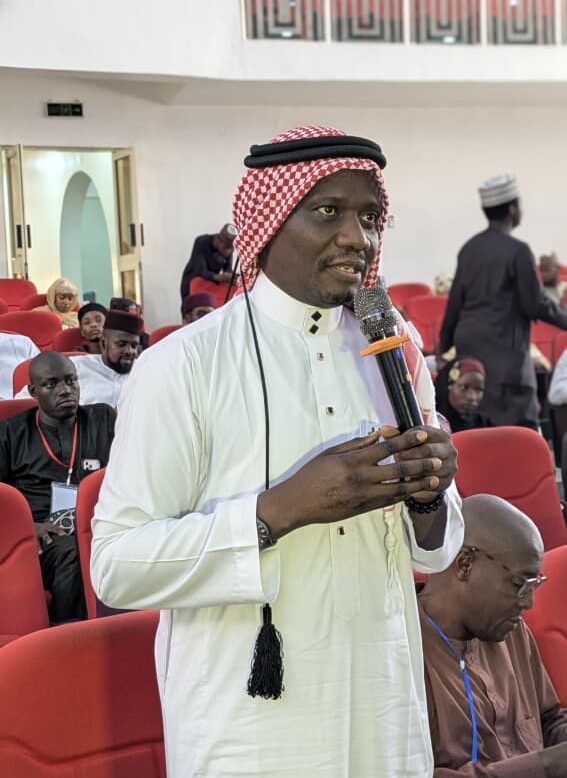
Remember Bola? He showed up at the end of this panel, this time for a chit-chat. He had been in the audience all along. He removed his glasses, a look of shock on his face, and asked, “How were you able to gather such brilliant people?” I don’t remember my response.
The next panel was a convergence of stars. The topic was “Screening Power and Culture.” The agile and energetic journalist Samira Usman Adam hosted multifaceted artist (and journalist) Abdulkareem Baba Aminu, along with filmmaker (and journalist) Prince Daniel Aboki. When asked about his venture into screenwriting, journalism, visual arts, and literature, Aminu simply said, “I don’t know why people like to restrict themselves to just one field.” The response was short but enough to stop Samira from probing further. The panel discussed the power of the screen to shape perception, the potential of the creative economy, and talent management. On the latter, Prince Daniel Aboki talked about his recent attempt to bridge the income disparities between northern and southern creatives through his talent management agency and lamented how the first outing was a disaster. He spoke bitterly about his first signee’s attitude, and an audience member tried to pacify him and begged him to continue with the project.
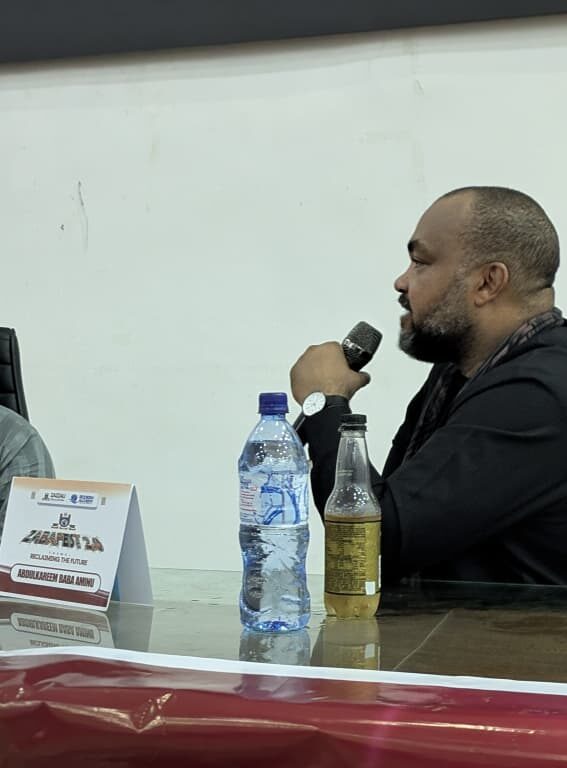
The last panel of the opening day—which, sadly, I couldn’t stay to witness because of an urgent logistics matter I had to attend—featured New York Times reporter Ismail Auwal, educator Jecinta Egbim, and people with special needs expert Aisha Ibrahim, hosted by Muhammad Shamsuddin (the “climate Alaramma”). The topic aligned with the festival’s main theme: Sustainability: Reclaiming the Future.
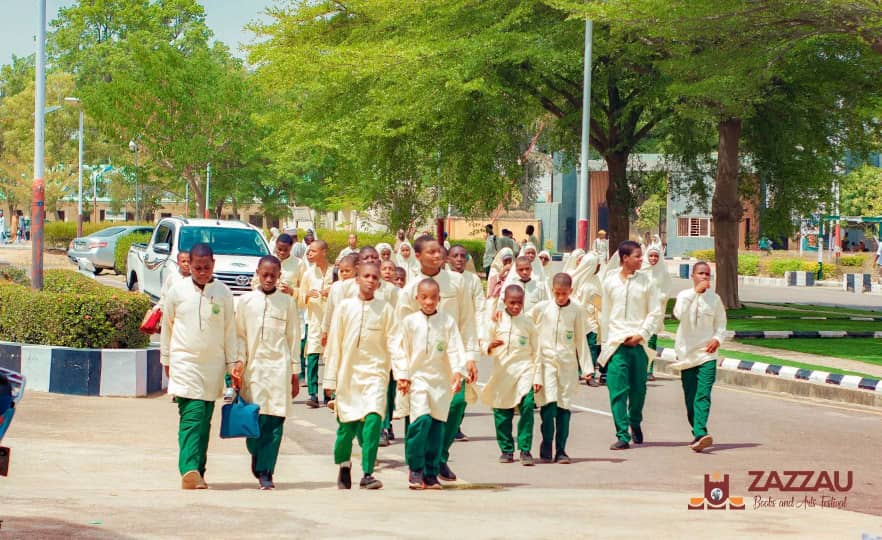
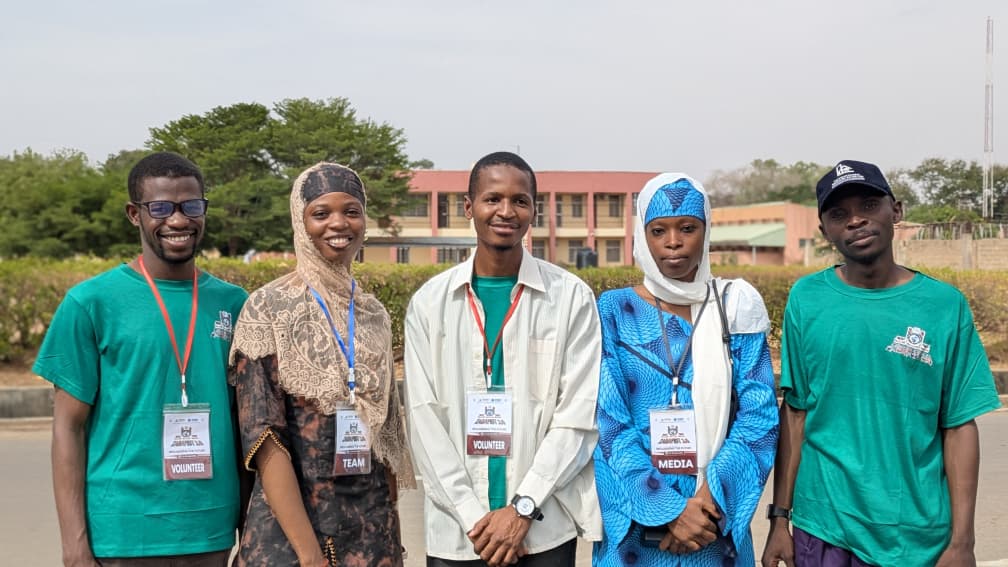
On the second day, relaxed after the pressure of day one, I noticed the sartorial awareness among the festival guests and attendees. It merged beautifully with the National Institute of Transport Technology’s environmental consciousness, offering a feast for the eyes, chief among them the greenery.
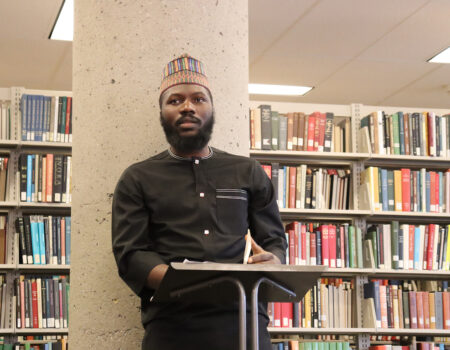
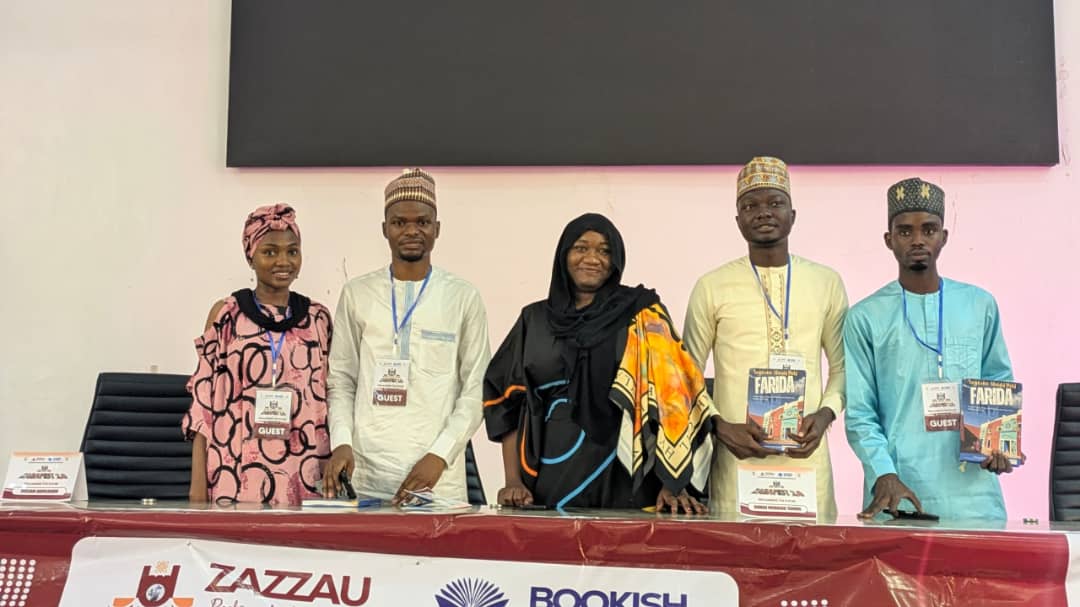
Four contributors to the anthology Someone Should Hold Farida—Nana Sule (“The Interview”), Hussani Abdulrahim (“Big Head”), Ameh Odachi (“Realms Higher Than Us”), and I (“A Trail of Blood and Fire”)—were hosted by the award-winning young writer Mujahid Amin Lilo to mark the beginning of the day’s activities. We discussed the Flame Tree Writers Workshop, the stories, and the trajectory of emerging prose writers. During the conversation, I argued that much needs to be done to save the genre in the North, especially now that many young writers are more concerned with social media likes than with winning the Caine Prize. We also discussed the projects we are working on before making way for the next book chat.
Abduljalal Musa Aliyu hosted Ismail Bala and Ba Sabouke for a combined book chat on their newly released collections: Memory of Departure and Waistbeads and Rosaries. “I can’t be myself here,” declared Ba Sabouke, “I will be Abdulaziz Siraj today.” This hinted at his decision to refrain from the no-holds-barred conversation he was known for, obviously because of the school children at the festival. The master of transgression (occasionally a doppelganger of Satan) censored himself—most notably when he turned his back to the audience during Dr. Bala’s reading of lines from his collection that carried erotic connotations on the surface. The atmosphere was energetic, and the audience competed for the mic to comment or ask questions at the end of the session.
One of the most remarkable panels of the event took place afterward. Aliyu Danladi, a writer and speaker with the Gombe State Youth Parliament, hosted poet and fashion designer Star Zahra, writer Aliyu Jalal, poet Aisha Indabawa, and one of Africa’s finest young intellectuals, Sani Muhammad, under the topic “Art for the Future: Focusing on Young People and Women.” The audience was thrilled and enlightened during this panel, which was moderated by Aliyu’s sharp questioning and the panelists’ well-rounded responses. Star Zahra said that to save humanity, the world must pay special attention to children, while Sani Muhammad argued that creative storytelling is the best strategy for sustainable advocacy—far more effective than policy papers.
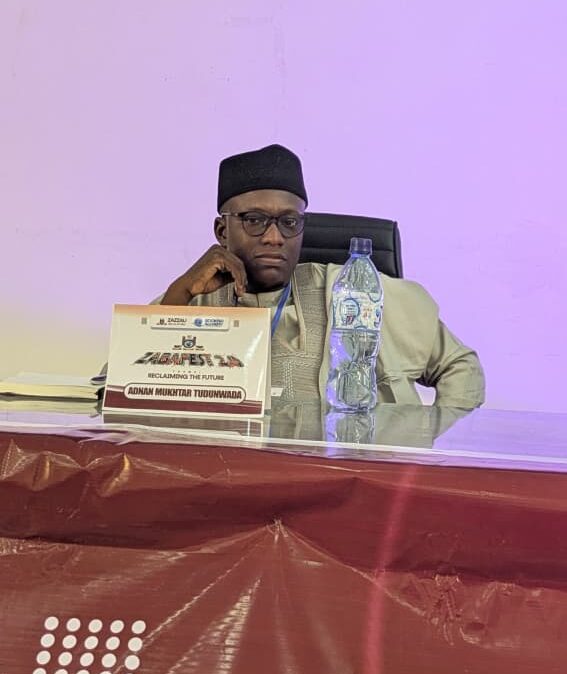
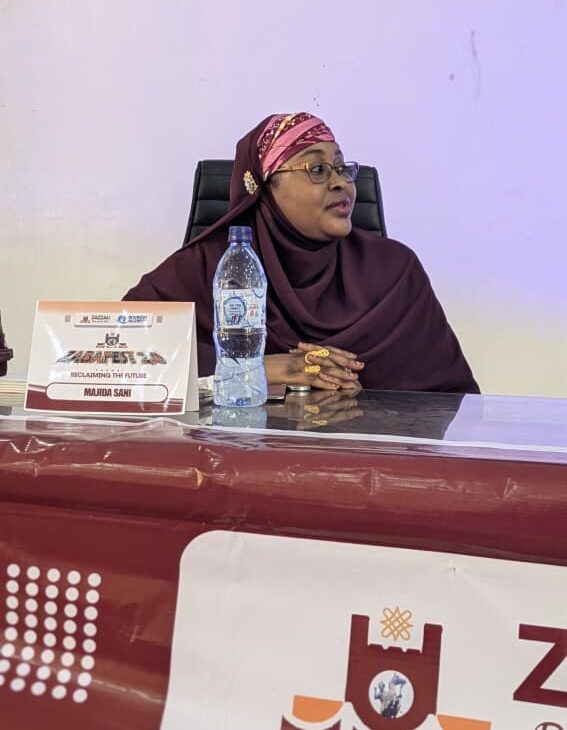
In terms of resonance, attention-grabbing, audience participation, and even excitement, the panel that followed was perhaps the festival’s climax. Under the topic “Digital Politics and the Data Boys Economy,” digital rights activist Muhammed Bello Buhari hosted lecturer, journalist, and politician Adnan Mukhtar Tudunwada; marketing expert and political communication enthusiast Hassan Yakubu; and politician Majida Muhammad Sani. After establishing the definition of a “data boy” as someone who promotes—without shame or principle—the whims of political officeholders for peanuts or even nothing, the panel examined the incentives sustaining such digital culture and collectively condemned the practice. Where the panelists significantly disagreed was when Majida Sani insisted that there are positive data boys, despite the dominance of the unreasonable ones.
Many people in the audience had to be restrained from participating. Abdulhaleem Ringim faulted the topic as lacking an intellectual premise or context. Others insisted on the conversation’s relevance as a direct exploration of the human condition in the digital space. The panelists recommended that the government provide a level playing field for all youth to strive and thrive, as a way forward in curbing undignified and poorly compensated labour, one of which is being a data boy.
After lunch and prayers, the event reconvened with a book chat on Umar Yakubu’s trilogy—The Shadow State: Public Sector Corruption in Nigeria; Nigeria Reimagined: Anchoring a Future on Integrity; and Shielding the Heartland: Rethinking Nigeria’s Border Security—hosted by the insightful Abdulhaleem Ishaq Ringim. Diplomat Prof. Ibrahim Gambari had described the three books as a vehicle offering Nigeria “a roadmap to renewal.” As Ringim engaged him on the books, Dr. Yakubu argued that Nigeria’s malfunction is deeply rooted in tribalism and traced every state failure back to it, suggesting that tackling tribalism could be the antidote to the country’s failures. The conversation then shifted to Nigeria’s porous borders and the need to secure them as a matter of national urgency.
Salim Yunusa hosted Nana Sule for a chat on her bestselling and critically acclaimed Not So Terrible People as Nana’s mother watched from the audience. Hauwa Bala Marafa then hosted Nathaniel Bivan for a chat on his Afrofuturistic novel, Boys, Girls and Beasts.
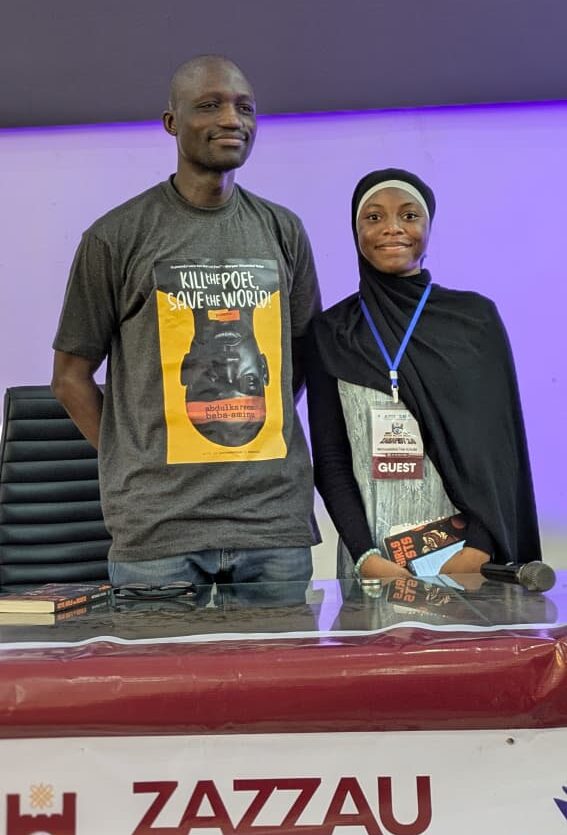
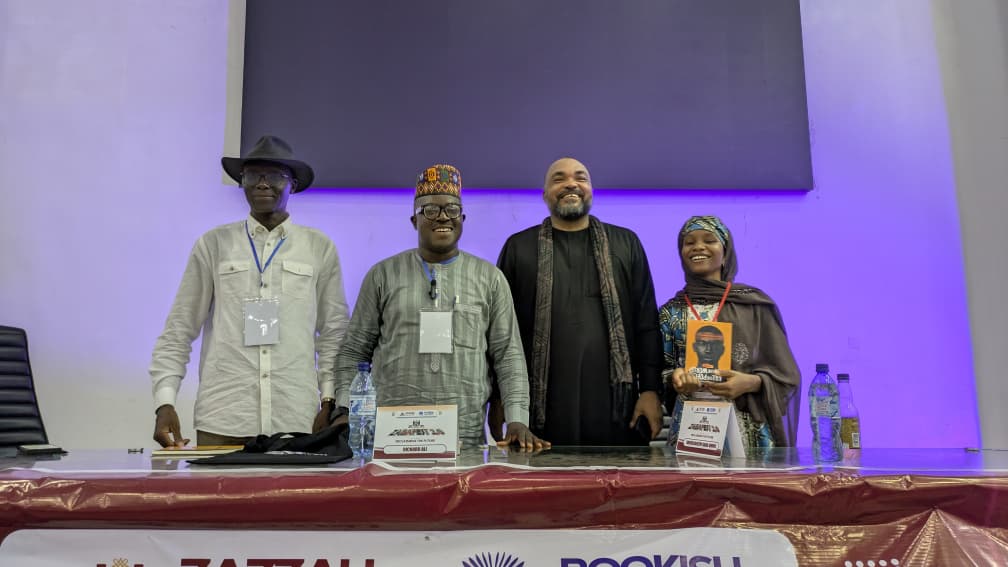
The final book chat of the festival was a rendezvous of three stars, discussing two books that represented a convergence of the past and the future. Richard Ali hosted the joint book chat of Ahmed Maiwada’s Soprano and Abdulkareem Baba Aminu’s Kill the Poet, Save the World! Maiwada’s Soprano is an elegy bemoaning Zaria’s glory, soiled by colonialism, which reduced the city to being under Kaduna, once its vassal area. In sharp contrast, Aminu’s Kill the Poet, Save the World! refuses to be haunted by the past, focusing instead on an uncertain future. The chat was a befitting climax to two days of dialogue and networking that lay at the heart of the festival.
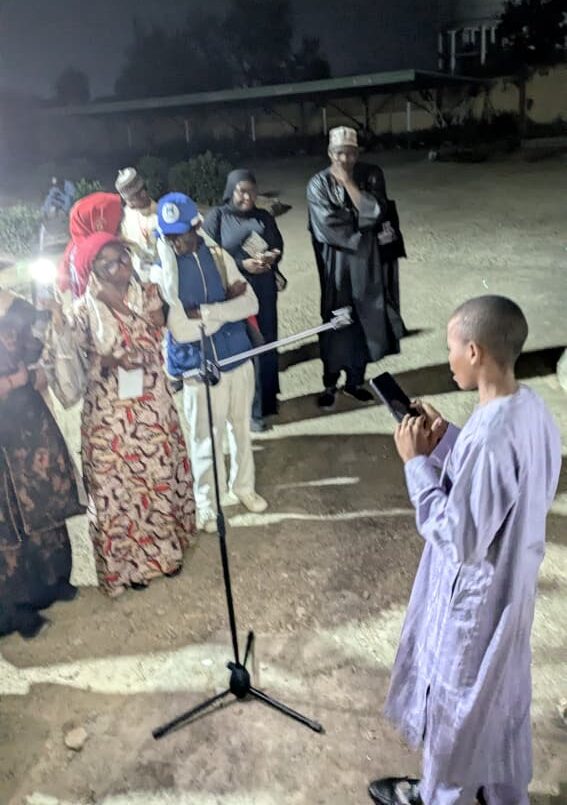
I wasn’t present for the poetry night. But the audience couldn’t get enough of it, so much so that a stage was set up outside the hall for the performances to continue even after the event officially closed.

Ahmad Mubarak Tanimu
Ahmad Mubarak Tanimu is a freelance book reviewer and fiction writer based in Kano. In June 2024 he was selected for the Flame Tree Project that aimed at bringing new voices in Northern Nigerian literature, facilitated by two past winners of the NLNG Nigeria Prize for Literature, Abubakar Adam Ibrahim and Chika Unigwe. He was a finalist in the book review contest of the festival books of the 26th edition of Lagos Books and Arts Festival (LABAF)
![[Featured Post] An Exploration of the Animated Film, Nate & John](https://jaylit.com/wp-content/uploads/2024/07/NAJ_titlecard-450x350.png)