Bruce Chisanga drilled a new hole into his tan-coloured belt using the sharpened point of his granddaughter’s compass. The belt was a gift from his wife on their twentieth wedding anniversary. He had lost weight. His belts needed holes further and further away from the buckle. But he saw a plump man this morning as he stood in front of an old wardrobe mirror. Something else his wife had bought.
Bruce’s cheeks had hollowed in, and it made him look gaunt in bright lighting. His face usually made the front page of the News Diggers Newspaper. No one would liken his face to an angel’s. His eyes looked larger in his thinner face. They almost looked feral in each picture of him.
He’d been a quiet man in his younger days. He’d only kept around two long-term friends. He didn’t like being the centre of attention in any setting. Patricia, his deceased wife, had once called him a gentle giant with an angel’s face.
Bruce was a persona now, an activist, a freedom fighter. Patricia would chuckle if she saw him now. And worry too.
His cause had started a year ago. Retired for close to 15 years, he had begun to frequent Pension House, and as days went by, the faces he met became hostile. It had all come to a screeching halt after a shouting match with one of the front desk officers. He was banned from entering the building.
Bruce continued his weekly trips to Pension House; he now sat outside. But he wasn’t alone; men and women, some in their sixties, some in their seventies, and some in their eighties, all sat outside the building without fail. He learnt from them that when you were banned from the building, your name would be placed further down the list, and your pension would likely be collected by your child.
His huge frame and booming voice got him the attention of the other pensioners. He came up with the plan: instead of Pension House, they would picket outside the Ministry of Justice. They called themselves the Former Government Workers Association.
~
Bruce moved in with his daughter, Susan, four days ago. Susan insisted on it when political cadres failed to break into the house Bruce had called home for forty years. They spray-painted the pale brick fence with the words, ‘MAPOLO TIZAPWANYA. RESPECT YOURSELF OLD MAN.’ A drawing of a stick figure with a hammer in his hands aimed at the crotch of another stick figure was beneath the words. It was either Susan’s house or his son, Kalanga’s. Kalanga was the new mayor of Lusaka. Bruce chose to stay with Susan.
“Tell me you are not going out there. It’s raining!” Susan shrieked. Bruce paused, turned, and looked at her. She had both hands on her waist like she did when she was scolding one of her daughters.
His hands trembled in his pockets. He ignored them as he’d done for the past two months.
“I’m not a child,” Bruce said. He’d taken to repeating these words to his children for weeks now.
Susan sighed, “I’ll drop you off on my way to the girls’ school.”
Bruce stopped walking, turned, and came to sit beside his daughter. Susan was his beloved Patricia reincarnated. He’d a hard time saying no to her wishes from the day she had come into this world. Susan inherited her almond shaped eyes, a pert and petite body from her mother. The only thing she inherited from her father were her dark skin and large feet, mismatched from the rest of her body.
“It’s not safe for you to be out in this rain, it’s not safe for any of you,” Susan pleaded.
“Maybe they’ll listen this time. The sun was worse, and we survived it.”
~
When Susan’s car sped off, Bruce raised his hand to wave goodbye, but she was already looking forward, concentrating on driving back into Independence Avenue. The hawkers with different types of fruit were already at the traffic lights, Bruce thought of getting some bananas. Instead the aroma of flour and hot cooking oil beckoned him forward. Vitumbuwa would do just fine, he thought. He now concentrated on locating his usual crowd.
Ministry of Justice, a towering grey building, had police officers guarding it now. Two plain-clothed policemen were among the protesting pensioners. Green-uniformed officers were leaning against the building. Watching the Pensioners. The rest of the green-uniformed officers were on horses stationed at the main entrance. Lawyers and the Attorney General were disembarking from their shiny cars as Bruce strolled.
“Look at you. Mulemeka nokomeka. You will burn one day!” The pensioners jeered as lawyer after lawyer dashed into the building. Some female retirees copied how the female lawyers dashed into the building in their elegant high heeled shoes. All the lawyers didn’t dare to make eye contact with the pensioners. It was like they were not there. This angered Bruce, the people who worked in the grey building were getting used to them.
He saw his friend, Peter Mukelabai, a small man, with a voice which carried over the open space at the Ministry of Justice on most days. Today, he sat alongside the drains that ran beside the building. Peter’s eyes were closed; one would think he had fallen asleep. But Bruce saw the upturned corners of his mouth.
Today, another man, younger, spoke above the still noisy crowd.
“Vengeance is mine, says the Lord!” he thundered. “The Lord is asking you people, are you going to wait on him to act for his children?”
Chawezi, son to Lameck Phiri, was supporting his late father and mother’s protest. As a pastor at one of the shiny new churches, Bruce had welcomed Chawezi to the protests. His connections to the clergy were an added advantage to the cause, Bruce thought.
Chawezi’s mother, Lucy, stood beside her son and interjected with hallelujahs and amens at the right times. The women joined her with shouts of ‘I receive!’ and ‘Amen!’ while the men grunted out amens.
A few people greeted Bruce as he ambled through the crowd. A news crew was setting up their equipment, and the journalist among them looked at him and smiled. He would get to be featured on the evening news.
“Ba chongo ba bwela lelo,” The noise makers are all here today, Peter Mukelabai said as soon as Bruce settled beside him. “Why did we agree to let the boy come?”
“He’s Lameck’s boy. He’s his father’s son. You and I both know we are going to spend years here if we don’t get help,” Bruce said.
Peter yawned, stretched his bony limbs out in front of him, and turned to Bruce.
“It will start raining again. Are you ready?” Bruce asked.
Peter pointed at the yellow raincoat on his lap.
“We have the horses today. Someone must have tipped them off.”
“Kalanga?”
“I haven’t spoken to him since the election,” Bruce said.
“Four weeks ago?”
Bruce ignored the question. His relationship with his children had deteriorated ever since their mother’s death. They had not grieved together in a way, not in private. They had both returned to their lives as soon as she was buried.
They were both staring ahead now.
Bruce and Peter met in their twenties as newly minted secondary school teachers. Bruce taught Physics while Peter taught Chemistry. They had raised children side by side, had faced the Chiluba years together, and had buried each other’s wives one year after the other. They considered each other closer than brothers. In ways that mattered, they were brothers.
“Good morning, sir. We are almost at the hour. Are you ready?” Chawezi’s croaky voice asked.
Chawezi stood before the two men. He moved to sit beside them, but Bruce waved him away.
Bruce struggled to get up, “One thing they don’t tell you about old age is when you sit down, there’s no standing up without a Mazembe’s help,” Bruce joked, while copying a forklift’s upward motion.
“Are you sure you want to speak today? I can…” Chawezi trailed off.
“You are the guest. I’ll speak after you are done holding the prayer meeting.”
“Okay. Twenty minutes. Prime TV wants an interview before you speak.”
Chawezi strutted away when Peter looked beyond him and snickered.
His mother, Lucy Phiri, knelt on the ground, chanting the names of the people in the building in front of them.
“Are you still sure we made the right choice giving in to Mai Phiri?” Peter asked as soon as Chawezi turned his back.
“We needed something to boost morale. The old kachesas are getting tired,” Bruce, now exasperated, said. “A protest is supposed to disrupt. We are becoming a comfortable sight for these people.”
“Who would have guessed? The brilliant physicist fighting for people’s rights?”
“I want to thank you. I know you got your benefits months ago. Susan told Namakau,” Peter said. His daughter had been angry. He chose not to disclose that to Bruce. “And you are still here with us.”
“I’m not doing anything that any one of us wouldn’t do for each other. We started together; we’ll see to it that we end on the same good note.”
~
Susan sat in her living room. Her brother, Kalanga’s terse greeting and asking to see their father, had warned her to stay close.
She picked a seat in her dining room, where it would be easy to eavesdrop or get quicker to the two men. She considered them calm in most circumstances, but this was a different time.
“How are the children and Hope doing?” Bruce asked.
He seemed oblivious to the mood of his son. Susan moved her chair closer to the wall separating the living room from the dining room.
“Everyone is fine. You know I’m not here to talk about my wife and children, Dad,” Kalanga’s voice vibrated through the walls.
“Of course, Mr Mayor. What did you come to trouble this old man with?”
“You can’t continue on with your one-man crusade. They paid your pension in November…”
Bruce laughed, a deep belly laugh that Susan and Kalanga had heard three years ago, before their mother’s death.
“And how did my pension get paid before Mukelabai or Chawezi’s father?”
“I don’t work at Pension House,” Kalanga replied.
“You don’t think I know that you asked Pension House to put my name before everyone else?”
Silence.
“Mr. Phiri died before he could get his pension. He retired ten years before I did…”
“I wish mum were alive,” Kalanga blurted, “She made you reasonable.”
“You haven’t answered my question.”
“Some of those people have already been paid. The government paid them through their lawyers, and they still parade outside a respected office.”
A long pause followed, only the sounds of the television, Doc McStuffin’s on her adventures, came from the room. Susan knew the two men better to think that the conversation had ended.
While Kalanga had taken after his father—his giant frame, the soft facial features, and dark skin were all—their similarities were not skin-deep. It had caused friction between father and son for years. When Kalanga had won a scholarship to study in Cuba, Bruce had been expecting a doctor, and instead Kalanga placed an economics degree in his waiting hands. Kalanga’s mother, Bruce’s wife, had been the bridge between them for years after, but since her death, Susan had started her own bridge efforts. Susan’s bridge had cracks beneath the dark abyss of water. Susan had promised her mother to take care of them like she had, to draw from a well of love when they butted heads and couldn’t see reason. She had firmly been a daddy’s girl growing up, but now, she didn’t understand the man anymore.
“Chawezi hasn’t agreed to come with me to Goma associates. It is one of the law firms listed on government pension pay-outs. Goma associates represented his father.”
“Uubomba mwibala alya mwibala,” The one who works from the garden eats from the garden, Bruce lamented, instead in reply. “You are a politician, a young politician, but still the same. You know what that misunderstood proverb means for your colleagues. Do you think those people are lying when they say they haven’t seen a single Ngwee of the same money?”
“That’s between them and the law firms they hired,” Kalanga retorted.
Bruce let out a sigh; he didn’t sound amused anymore. He sounded sad. Susan closed her eyes against the memories that had started fading. The memories of her mother’s funeral. The only time she had seen her father cry.
“Mr Phiri tutored you in accounts. He accompanied us when we went to apply for your Cuban scholarship. He visited me without fail, when your mother passed away.”
“I appreciate what he did for us, but he left his children and wife in a bad situation. While he was playing Father Christmas for other people’s children, his own children didn’t go beyond computer classes. What I’m saying is…”
“Mukelabai made sure that we had everything we needed during your mother’s funeral. He brought firewood from the farm, he rallied our friends,” Bruce whispered. He had lowered his voice so low that Susan had to strain to hear him.
Susan knew her father was restraining his temper. “These people are our friends, our family even. You grew up knowing them. If you are my son, you should at least empathise with people who have been there for you.”
“I know where you are coming from, dad. But when do we hold people accountable for their own choices? Mr Phiri had a better salary than you. He could have built a house, houses even,” Kalanga said.
“He left his wife destitute. His children are not better. I was Chawezi’s classmate. His grades were okay, but look, he’s begging for money from his congregation to feed himself. When will we admit that some of the loudest complaints are coming from people who didn’t manage their working days and salaries well?”
“You have never listened to me. We won’t agree on this. I am going to bed. You will greet the children and Hope for me,” Bruce said in a resigned tone.
“You have lost weight. Susan told me you had a fever two weeks ago, and you didn’t bother to tell me. Why do you want to complicate your life in old age?”
“Last time you were complaining that I needed to lose weight, now it’s that I’ve lost weight,” Bruce chuckled. “Get home safely, Kalanga. Good night. Susan must be somewhere around here.”
Silence followed Bruce’s receding footsteps. Susan let out a sigh, loud enough to get the attention of her brother in the living room. Kalanga sighed too and stood from his seat.
“What happened to the man we grew up with?” Kalanga said as he stepped around the corner where Susan sat, slumped in her chair. “The one who seemed satisfied with us? His life?”
“People change?” Susan shrugged.
Kalanga shook his head.
“He has raised two successful children. We haven’t neglected him the way he makes it sound.”
“Of course, we haven’t. We have also been busy. Your campaign took a lot of your time, my promotion took mine. Maybe… Maybe we have not been there as much in person, especially after Mum. Do you think it’s a mental breakdown?” Susan whispered the words. Her eyes darted around the room like their father would show up and scold her for implying he was losing his mind.
“Maybe. I’m starting to believe it. How does a person change so drastically? Dad has always been more of a follower than a leader.”
Susan looked at Kalanga like she would a misbehaving child.
“Don’t look at me like that, I’m trying to make sense of a father we don’t know,” Kalanga thundered.
“We are both tired. Sorry. You should get home,” Susan mumbled.
“It’s fine. Say hi to my Mulamu. Where are the kids?”
Susan screamed her daughters’ names; she’d shooed them away from the living room an hour ago. They came running to say bye to their uncle. The sight of her brother scooping up her daughters for goodbye kisses eased some of the heaviness in her heart.
“We have written letters, over ten times, to the president, but those letters vanished into thin air. What kind of leaders are these? They don’t listen to the cries of the people. We are hungry and old. We have been here from August. This is January,” Lucy Phiri’s voice cracked. “Ba coloured ba minister passes us every day with his expensive suits and full stomach, and nothing has been done. If they don’t listen to us, who will?”
“Elo if they don’t listen, God will fight on our behalf. I’m not cursing anyone, but we have been here, crying and begging. Zuba yatipeza pamenepano, mvula nayo yagwa yalema…” The harsh sun found us here, these heavy rains have started, Lucy Phiri continued.
“I thought she knew what our talking points are? Why did you allow her to talk?” Peter fumed. He and Bruce Chisanga had moved away from the chatting crowd and the news crew around Lucy Phiri.
“This is not a dictatorship, Mukelabai naimwe. We found this group existing,” Bruce replied.
“They are amateurs. We brought some sanity to the organisation, look…”
Bruce stopped shuffling the papers in his hands and looked ahead to where Peter pointed. Chawezi was the centre of attention now. He had rolled on the ground, right into a puddle, suit and all. His croaky preacher voice had risen to an almost alarming octave. He prayed against the spirit of corruption that elected officials had fallen under. He called upon the wrath of God to a sky that had turned menacing with rain clouds and thunder.
“See? Who can even take us seriously when they watch that on the news tonight? You need to do something.”
“I am doing something. I’m filing these documents,” Bruce replied.
“And they’ll get lost again. Like the ones you filed a month ago or two weeks ago.”
Bruce Chisanga walked away with his head held high. He held on to the last strings of hope in him.
The whispered words he had heard from a dark corridor between his children, ‘Do you think it’s a mental breakdown?’ and ‘I’m starting to believe it is,’ taunted him.
“He has a fever. Again. Yes. No, I don’t think it’s a good idea for you to come right now. I’m staying home with him this week. I got sick leave from work,” Susan whispered from outside Bruce’s room. “There’s something else. The doctor wants to conduct a test on him. He didn’t say what test, it’s the shakes he’s been having in his hands.”
“I’ll be coming by in the afternoon. It’s time we put a stop to this,” Kalanga’s muted voice replied. Bruce smirked as Susan’s voice faded. He took another spoonful of the groundnut porridge Susan had just brought for him. He had a feeling he wasn’t going back to the protests; he was sure that the doctor would find something in his tests that would make Susan and Kalanga hold him hostage until his death.
Bruce was preparing himself to spend another day at the Ministry of Justice when a persistent cough and his lungs rattling like they had a river gushing through them frightened him. It didn’t take long for Susan to get him to the hospital. He fought against an overnight admission. Susan agreed with him. The last hospital admission had been during her mother’s illness and death. An event still fresh on their minds. She didn’t like hospitals either.
Against orders to sleep, Bruce opened his electronic Daily Mail. He shuddered. Chawezi made the front page, in one photo, he was rolling in a dirty pool of rainwater, and in another, he was kneeling in the puddle with a fist raised to the sky.
‘Pastor and rising politician Chawezi Phiri has pleaded with the government to release Retiree money.’ The headline read.
Bruce browsed through the op-ed piece, he considered it as such. Like he considered each piece that had been written about retirees in the past. The media didn’t understand the motive that lay behind the protests. His motive was anger at first, he had worked diligently for decades, then loyalty to his friends and family and to a country ruined in his eyes by greed and playground politics.
‘Papa is seeing a business opportunity in our beloved old mothers and fathers. Let them get their monies, they will know street tithing! They will give him ten percent each for standing with them in the rain. This world!’ One commentator wrote after the article.
Bruce chuckled. He didn’t entirely agree with the commentator or disagree, for that matter. Everyone had a motive. Uubomba mwibala alya mwibala.
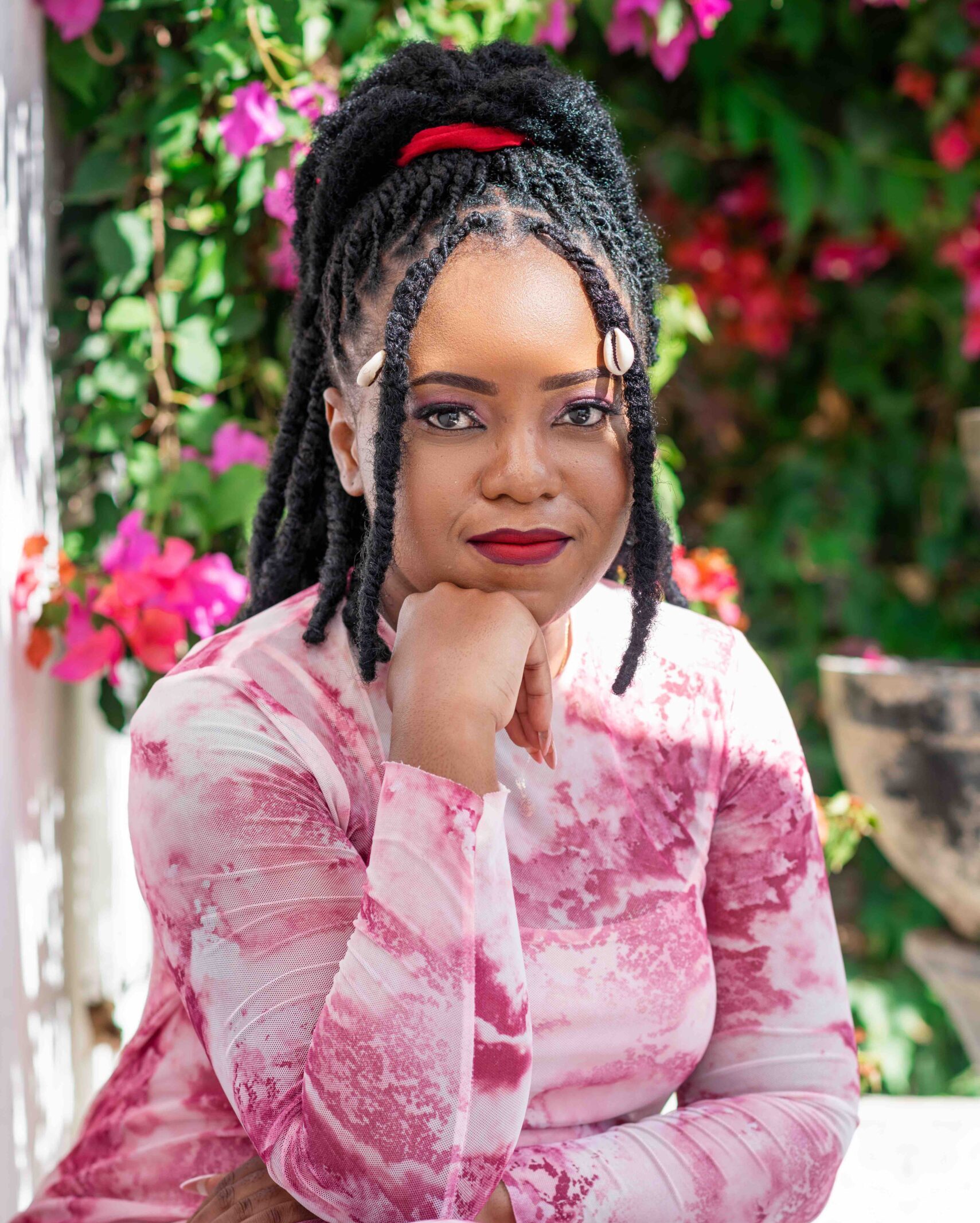
Fiske Nyirongo
Fiske Nyirongo is a Zambian author, editor, and freelance writer based in Lusaka. She is a founding editor at Ubwali Literary Magazine, where she curates creative nonfiction, including essays recognized by Afrocritik and awarded the Hope Prize in partnership with Shenandoah. Her nonfiction appears in The Kalahari Review, Meeting of Minds UK, and Urban Ivy Chicago. Her fiction includes work in Brittle Paper, Unbound Magazine, and Blank by Dirt, which published her recent short story Piety. Fiske’s writing explores identity, emotional complexity, and the shifting boundaries of belonging across genres and platforms.