The madness swelled into a cankerous beast, until I could no longer tell myself apart from the malady that consumed me. Sitting here, I ask myself, “What is real?” Like a sick child, silence vomits the answer onto my trembling palms: Alas, nothing.
~
When I enter Gran’s room, I find her twirling, jerking, squirming in front of a cracked mirror in a charmeuse two-piece lingerie, which she’d probably gotten from Madam Kodjo’s thrift sale two flats away. Its fiery red fabric screams violently beneath the glare of the afternoon sun flushing through the window, and her breasts lie limp in the lingerie’s padded cup meant for bigger, plumpier boobies. Gran arcs her old back, distorting her limbs into something that should be appealing, except this is only excruciatingly awkward. I almost forget why I’m here in the first place, to ask her if she’ll rather have her boiled yam mashed, mixed, and sauteed in the leftover egg sauce or whole and served with salted red oil. If she’ll make do with kunu because Mallam Tahir has no zobo left, not till Friday. She catches my reflection in the mirror and grabs the loungewear draped over her bedside chair, folding it unevenly around her body. My first thought is, she looks like an over-fried sausage wrapped in cabbage skin.
‘Igaghi e gbu o m na this house. You can’t kill me, do you hear?’ she squeals, squeezing the robe tighter to her chest. ‘Can’t you knock, eh? Are your fingers broken?’
I have three possible responses.
1. Not exactly my fault you’re always up to this shenanigan or that. The other day, you were trying on your old six-inch wedges, but did you forget your arthritis knees? Did you forget we’re too poor to afford the medical bills should you trip and break a part of you that’s not already broken? Did you think you were Monroe? What kind of Monroe would that make you? A week before this, you attempted splits. Splits, Gran. Where did you pick that? A kids’ karate show? You’re not Van Damme.
2. Privacy is not an old people affair. At a certain age—at your age—you become everybody’s business.
3. The door was slightly ajar, so I assumed it was okay to come in. This bit, I voice out.
‘The door was open,’ I say.
‘Asi,’ she snaps. ‘Lies! I locked it and I’m very sure I did.’
‘So how did I get in?’
‘Amoosu,’ she mutters.
I roll my eyes at the irony, Gran calling me a witch. ‘Have you used your medicine?’ I ask, struggling and failing to stifle the judgement on my tongue.
‘No, have you? If you have, you wouldn’t be here talking to me.’
I want to say something, but I hold back and let her win this round.
She starts to undress, and I ask what she’s up to anyway.
‘Practicing,’ she says, then adds, ‘I used to be a dancer,’ as if to defend herself against the doubtful mischief on my face. ‘I danced very well back in the days, I even danced for the king at the palace.’ Her voice drools in a manner I’m too familiar with, and her haloed irises glow from the excitement of retelling these events. ‘I was a fashion queen in Nkwesi where I was also a singer like Nokuzola, do you know her? What do you children of nowadays know? Who sings these days?’
At this point, I’m amused but it won’t be the first time. At how Gran recalls these things she wasn’t, but prances around the one thing she was, as if trying not to infringe on her past. But what if she’s not prancing? What if she’s really forgotten who she used to be—the life she’s lived? I realize there’s no difference between Gran’s memory and the kitchen cutlery that continue to vanish. Today, a spoon. Tomorrow, a bread knife. I’ve started storing them in a lidded jar, counting weekly, and the disappearance has since reduced. Maybe if Gran does same, she’ll remember that what she means by dancer, singer, fashion queen is harlot. And it wasn’t the magic fish she found stuck between two black rocks in the river—which she generously freed and nursed its injured fins—that granted her the miracle of relocating to the city. It was a client, twice her age, who sold fantasies of a better life to young and naïve Gran, trafficked her to Lagos, and dumped her in a local whorehouse where she birthed my estranged mother and became disease. Picked Hep B and whatever else that deemed her body a worthy host.
The first time I heard the word harlot was from our ex-neighbor’s daughter, Hafsat Adamu. We were primary school classmates, attended the public school on the parallel road, and walked home together on some days when she wasn’t stopping at the central mosque for Maghrib. On our way home one Tuesday, we’d bought agbalumo from a wheelbarrow pusher, ten for one hundred as it was the season, and we’d agreed to lick it first thing once we got home. Before ridding ourselves of our sweaty uniforms, we planted our buttocks on the balcony ledge backing the busy street, suckling on the fruit and slurping its sour juice. We scrunched our noses and shuddered in excitement.
After spitting two seeds, Hafsat said, ‘I heard something,’ her voice a mere whisper, ‘but I will only tell you if you promise not to tell your grandma.’ I’d promised, but she insisted I cross my heart, and when I did, she said, ‘I heard my mummy tell my daddy that your grandma is sleeping with Uncle Sule, and she’s a harlot.’ A harlot? ‘Yes, but do you know what it means?’ I shrugged, she shrugged, and we both suckled harder on our agbalumos, staring hard into each other’s eyes, little glittery globes nursing embers of childish defiance and curiosity. ‘You can come share my bed with me so your grandma won’t sleep with Uncle Sule anymore,’ she said. I’d nodded. We rubbed our sloppy palms against our pinafores, scarring the light pink fabric with dark patches, the only evidence of the little feast we’d just shared.
What we didn’t know was, that would be the last thing we’d ever share. The last we’d ever speak, because I’d told Gran of what Hafsat said once I stepped into the house, and Gran was furious. She’d screamed down our leaky roof, rained curses at Hafsat, her parents, and all their generation, stormed to their flat where she tore down their door with angry knocks and yanked Mummy Hafsat out by the folded hem of her wrapper, screaming at the top of her voice, ‘Onye ka i na-akpo harlot?’ Mummy Hafsat grabbed Gran by the neck as if she’d been waiting for this moment all her life and like toddlers bickering over candy, they wrestled each other to the ground until they were both naked and glazed with dust.
Then Hafsat became a person I couldn’t recognize. An enemy I had no clue how to fight because in my head she was still my Hafsat, my best friend, even though she had developed a habit of parroting to any classmate who cared to listen that I was a harlot. We were only nine and didn’t know what this meant. Didn’t know that in seven years, Hafsat would carry the child of Alfa Atif’s second son, be forced into an early marriage, and relocate far north to cover her shame and raise a family, but what Hafsat wanted more than anything was to be an engineer—to build the first ever flying car. Unlike Hafsat, I had no elegant dream and not even the slightest clue where to find one if I were to search. I’m only good at finding little conveniences: cheap groceries, unclaimed vegetables sprouting by the roadsides, and jobs befitting of girls like me who never made it out of university. Like club ushering, cleaning, or waitering at a bukka as I currently do; it’s almost time for my afternoon shift.
When Gran falls asleep, I pack her lunch and head to work through the fish market, past an outdoor saloon—a cluster of women chattering loudly underneath big umbrellas and almond canopies—bursting into the express where I walk some more to save on transport fare. There’s only a couple in the restaurant when I arrive, so I take my time changing into my staff uniform then join the others behind the food counter where Brenda’s yapping about a low-budget pool party she’d been at last night. How she caught two women kissing in a cramped messy toilet, pressed into each other, squeezing, clasping, gasping, fingering. She says the devils are rising, taking over. But the government would never allow it, thankfully. Titi calls her homophobic and throws them into a hushed argument. It’s a sin. No, it’s oppression. They’re going to hell. Who says hell is real? So, you’re lesbian and antichrist? Believe what you want. I believe you’re lesbian. Good for you. Jesus. Shhh. You’re going to hell. I’ve seen a condom in your purse, Brenda. When? Liar! We’re all going to hell. You searched my purse? How dare you?
I set the soups on a row and pour some fried meat in ofada stew to marinate, refusing to get involved. But what I really think is, it’s all messed up. The government, church, life. We’re all messed up.
Gran used to take me to church when I was younger, when she still had love for God. But after the pastor was rumored to have raped a teenage member, Gran began to have doubts. It wasn’t just a rumor, I’d told Gran. It was true, because I knew the girl—the choir mistress’s only daughter. I knew it was true because something about her changed. I saw the dread grow wilder and wilder in her eyes, replacing her innocence and enthusiasm. I felt the restrain in her shiftiness every time I tried to talk to her. Cheerful Anne? Quiet? Something awfully wrong must’ve been lurking inside of her. One day she, together with her family, vanished, but the man of God continued to mount the pulpit. Gran hated it. Gran hated it so much that one Sunday she grabbed my hand, stomped out of church, and never returned. If a man ever touches you, gwa m. I will kill him. What God cannot do. How mighty is a god that can’t protect little girls? Little girls! Tufiakwa, she’d continue to say for the next few weeks, and I continued to remember these words long after, in fragments though—as in How mighty. Is. A god. That can’t. Protect. Little girls—as if thinking it that way would dismember the blasphemous guilt I felt. Gran taught me reverence, but never how to revolt against an all-knowing, almighty that knows the beginning and the end of my so-called revolution before I conceived it. How does a girl with a measly worth stage an uprising against the God of parting seas, crumbling towers, and breached fortresses?
Brenda and Titi are quiet now. Busy. There’re customers waiting to be served. Among them is a hijabi on table six, tailing my every move with an invasive gaze. When I turn around to dish food from the cooler, I feel remnants of her stare poking the collar of my t-shirt. I turn around again, our eyes collide. She’s rocking a boy in her bosom, punctures a Ribena juice box with a boba straw and feeds it to him. She hails me, waving a gloved palm. I point to my chest. Me? She nods. Yes, you. I drop the half-dressed dish I’m prepping on the counter and head for her table to see what she wants. As I draw nearer, I’m taken by the resemblance between her and the boy I presume to be her son. The same pointy nose, sleepy eyes, and slim face. She smiles when I stop in front of her, arms tucked behind me.
‘Je ka yi wasa can,’ she says to the boy. ‘Ba zan dade ba yanzu zan nema ka.’ She rubs his short curly hair and lets him off her thighs, after which he sprints to an adjacent table, sitting quietly.
‘That’s my son,’ she says, as if it isn’t already obvious, as if this should mean something to me.
I offer a small compliment about his cute batman polo and ask why she’s summoned me, why I’m standing here and not behind the counter doing my job. If she needs anything.
She frowns but only lightly, tilting her head to the side and staring, weighing my expression. ‘I can’t believe it. First you snitch on me, then you forget me?’
‘Sorry?’ I say, confused, looking around to be sure it’s just two of us in the conversation. I watch her closely, worried that she’s playing games. Wasting my precious time. That she may be out of her mind, until I’m stunned by an oddly familiar feeling—a knowing. ‘Hafsat? Is that you?’
‘Subhan Allah, you broke my heart for a bit. Have I changed that much?’
‘Jesus, Hafsat,’ I say, struggling to regain my breath. ‘What are you doing here? How? I thought you’d gone to Taraba.’ I reach for her hand and she extends it to me, as if willing me to confirm that she’s real. Not a ghost. Not a figment of my imagination. She pulls me to sit beside her, but I hesitate.
‘Zo, sit with me. Still with those big round eyes of yours. You’ve changed but not much.’
I could never say the same for her, sitting here, watching shafts of light from the restaurant’s fluorescent lamps bounce off the colorful stones of her loose-fitting abaya and the glossy skin of her face. Her finely-drawn kohl and elaborate red lipstick that highlight her thin lips. In a way, she looks regal and rich, belonging on the cover of an elite Turkish magazine fit for display in expensive spas, or in the well-manicured hands of a trophy wife. Beauty like this should be famous. But when did you get so beautiful, Hafsat? What kind of woman have you become? What have these years done to you?
‘How did you find me?’
‘I went back to our flat.’
Our flat. Like it was still that year and we were still children, separated by a wall but united by small joys.
‘The new occupants said you work at an eatery on Coker, but they didn’t know which. I checked every one till I found you. Such hard work and in this hot sun! Remember when we used to play hide and seek? So much time gone but alhamdullilah, it could’ve been worse. How’s Grandma? I hope she doesn’t hate me anymore. We were children and kai, so foolish.’
‘Gran is still kicking,’ I say, leaving out her memory loss, and the fact that Gran doesn’t hate her, not because she’s forgiven her, but because she won’t even remember her if they were to meet right now. We talk about life. Of leaving the world behind and being left behind. Hafsat recalls her difficult pregnancy, how it was only a miracle that she birthed her son, Rahman, and how she nearly lost her life but for a skilled surgeon. The doctor advised that she doesn’t take in anymore for risk of complication. In fact, she’s considering removing her womb. A hysterectomy, she says. But they aren’t mentally ready for it yet. Speaking of her husband, he’s now a local politician, runs multiple food processing units, and has supported Hafsat in opening an orphanage and two foundations for mothers, teenage girls, and children with special needs like her son, who only spoke for the first time when he was four.
‘And his first word was ruwa, imagine? Water? Not mama, not papa, but water? Allah ya kiyaye, children will betray you,’ she says. ‘Ruwa, daga ina?’
I chuckle, wondering when Hafsat got so funny, but what I’m enjoying the most as she tells her story is the heavy Hausa accent curled around her tongue, reclaiming its territory, crowding out whatever is left of her English. Still, she isn’t hard to grasp because where her Hausa eludes me, her facial expressions and gesticulation draw me closer to her point. I want to ask her if she’s really happy, but that’s not a question to ask a woman whose teenage years were choked with the burden of raising a child, especially one like Rahman. Sometimes, happiness shrinks apart to accommodate duty, and she seems to be taking it in good faith, which makes me wonder, what have I been doing all these years? Though I sense her measured curiosity, Hafsat doesn’t pry too much about the happenings in my life, which makes me conclude that I’m nothing noteworthy. No tale worth telling. Just a motionless stone on a bustling street, watching the world go by but never really going anywhere, at least nowhere significant. I’m still in this old house, living in these old ways. With a sick grandmother and a poorly-paying job.
‘So, what brings you to Lagos?’ I ask, attempting to shift the focus from me.
‘Meetings with some potential investors from London. Ya Allah, may the reward be many.’
At the counter, Brenda and Titi cut me side eyes despite being gone for barely fifteen minutes. ‘I should return to work. It’s getting busy,’ I say. ‘We can exchange contacts.’
‘Should,’ Hafsat says, ‘but there’s something else we need to discuss.’
I signal to Brenda and Titi to allow me five more minutes.
‘It’s about your mother.’
I signal for an additional ten minutes and sit up, leaning forward, amused at the new angle the conversation has taken. Your mother. A phrase I’ve heard only a few times in my life, it now feels like a myth. ‘And what about my mother?’ The concept feels atrocious to think. A mother, my mother. A mother in whom I cowered from the world until she pushed me from her womb and her life.
‘This may sound crazy. But. I think I’ve met your mother. In Taraba.’
‘If this is a joke—’
‘Na rantse, wallahi! On my life. Ni zan miki karya? Why would I joke about something like this? If I didn’t know better, I’ll have thought she was you. But you’re here in front of me, and she’s there in the bakery. Ya Allah, looking at you now, the difference is so clear, but the first time I saw her, har jiki yana rawa. I nearly fell. I pretended to want fresh bread from the oven so we talked while waiting.’
‘And?’ I ask, impatient, nauseous, my head spinning in many different directions. The air around me dissipates into something unfit for my lungs, or maybe I’m too dizzy. Too shocked to remember to breathe. ‘And what else?’
‘She had—has—a daughter. Babu iyali, no. No family. Amma she said ba, that ‘yar ta ya kamata yanzu da tayi shekaru na. A daughter that should’ve been my age, and when she looks at me, she thinks of her. Ya rab, so strange. I told her. I told her that I know her daughter. But she said, ba zai yiwu ba. That it’s impossible and her daughter is long dead. But look at you. Look.’
It’s unbelievable, the way Hafsat makes it sound all too convincing. I imagine a woman with valiant eyes and high cheekbones. Armpit stretchmarks curling up her shoulder blades like threads of lightning. Kneading a blob of dough with slender fingers, her dense hips jiggling to the rhythm of this movement. The arms of her apron snatched around her waist and finishing into a tiny bow just above her round backside. I imagine her sheathing her palms with worn-out mittens and sliding the pans into a charred furnace. A hard worker with an honest living, could it possibly be? Somewhere out there?
‘You should meet her. Find out.’
‘And what if I don’t want to?’ What if I don’t want to meet this woman, who is more a stranger than she’ll ever be a mother? What do I say to the woman who abandoned me? Was I even abandoned? I know nothing about this woman, mother. Gran never spoke much of her.
‘You have nothing to lose. Think about it,’ Hafsat says, beckoning to her son. ‘Zo, Rahman. Taho muje gida.’ She stands and scoops him into an embrace, balancing his weight on her hip, and pecking his nose. Before she leaves, she types her number into my phone and says, ‘I’m leaving Lagos tomorrow morning at six. Meet me on Salvation Street beside the demolished water factory, if you wish.’
I watch her walk out of the restaurant with a world of possibilities shimmering around her, at the nook of her last smile. A smirk, almost. There’s a mystery meandering in her flowing abaya, but I can’t catch it before she disappears from my sight. Brenda says I look like I’ve just seen a ghost. I tell her no, not a ghost—an old friend. She tells us about an old friend of hers, too, whom she recently learnt had died of an unknown cause, but she secretly thinks her family is cursed from a great ancestral evil. She talks about exorcism and mermaids and other vaguely interconnected events until one story at a time, one serving at a time, the shift withers to an end, and I can go home to Gran, who surprisingly is still asleep, but on the parlor couch now. I kneel beside her and stroke her spongy hair. They say hair is the last part of a person to succumb to the grave, but this thing on Gran’s head, this patchy mass will not outlive decay.
I whisper Gran. Gran, I have something to tell you, but she doesn’t wake up. Not even a tiny flinch. Gran, we have to go to Salvation Street tomorrow. Gran. Gran. Wake up. I nudge her flabby arm. Gran. I pinch her eyelids, clasp my palms around her neck and squeeze, whispering Gran, can you hear me? I squeeze harder when she doesn’t respond, I squeeze till I feel the veins of my wrist pulsating, till I hear a whimper, but that’s not Gran’s voice—it’s the naggy matron with scaly unromantic palms like that of a cobbler. This person in front of me, dressed in ugly-white, holding a little needle. She’s after me again, wants to stop me, but I must get to Salvation Street, so I let go of her and run.
I’m running so fast, my legs feel like wind on a hill when something trips me. I feel hands holding me to the floor—chains circling my body. I hear voices. Stop her. Security. Security. Doctor. The matron screams at me, and I scream back. I scream harder when the needle pierces my leg, and just then the world stops. It all begins to fall apart. Gran, mother, Brenda and her stories, Hafsat and her little boy. It all begins to cave in on my bloating brain. As the darkness falls over me, I feel a tear crawl down my skin. There’s something waiting for me on Salvation Street, I’m sure, but I won’t make it this time. A mother, a friend, a dream, a light; it’s been forty-nine different things. I know the poison will wear off, and I will wake up, and I will try again for the fiftieth time. For now, I will sl—
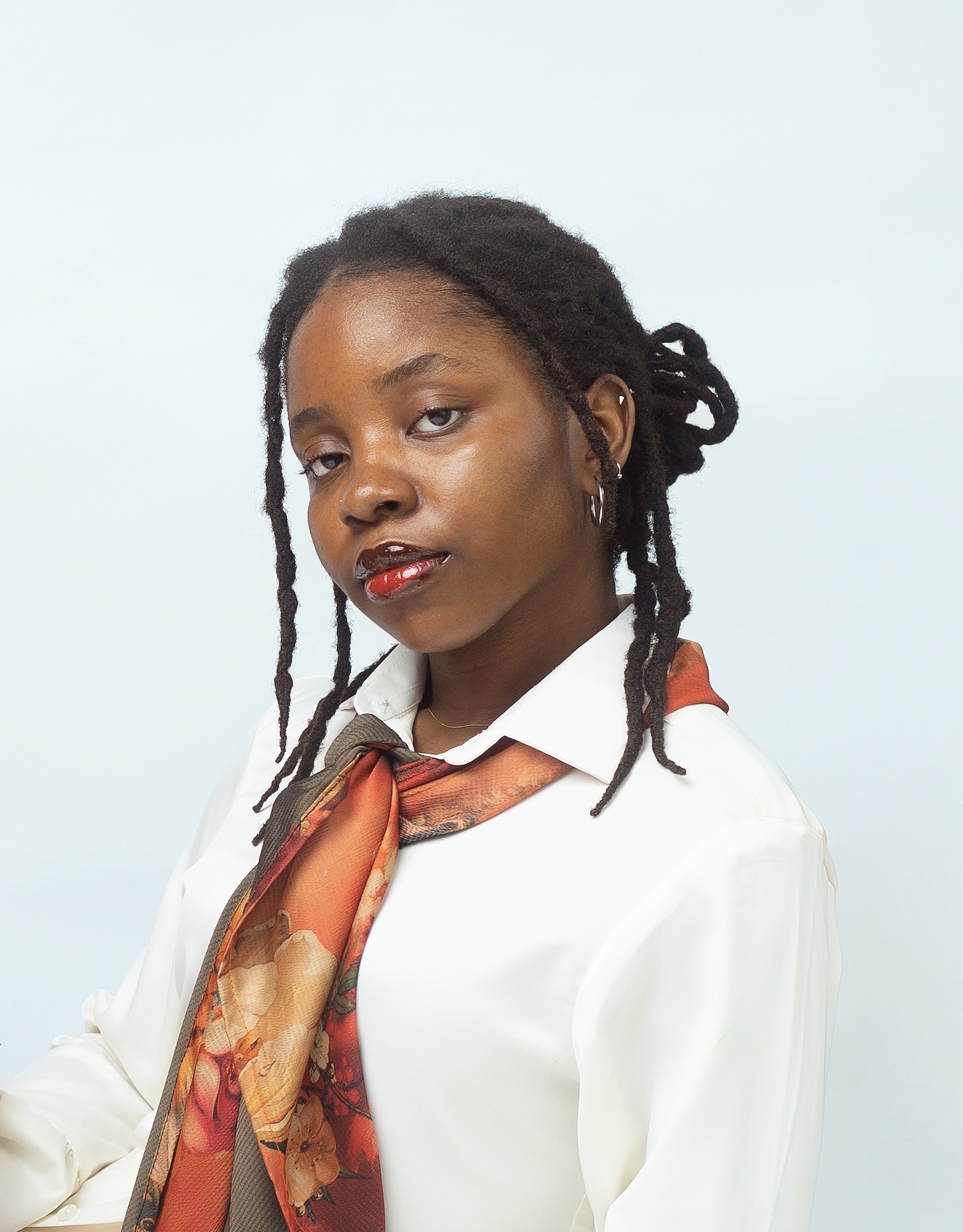
Cynthia Nnenna Nnadi
Cynthia Nnenna Nnadi is a writer, editor, and pharmacist from Enugu, Nigeria. She has special interest in feminist discourse and language studies as well as formal experimentation. A prose reader for Chestnut Review and Callaloo Journal, her stories have appeared or are forthcoming in AFREADA, JAY Lit, Akpata Magazine, and elsewhere. She is online @inkpharm.