![You are currently viewing [Featured Post] Analogy In Sensing The Self](https://jaylit.com/wp-content/uploads/2026/02/Analogy-In-Sensing-The-Self-scaled.jpeg)
On January 17th, the Henry Tayali Visual Arts Center in Lusaka hosted the Sensing the Self with Analogy Poetry Workshop, a gathering that brought together poets, facilitators, and enthusiasts in an atmosphere charged with artistic energy. Organized by JAY Lit contributor, Anna Zgambo under the auspices of the Zambia National Visual Arts Council, the workshop sought to deepen participants’ understanding of analogy as a poetic device while fostering honest critique and community dialogue.
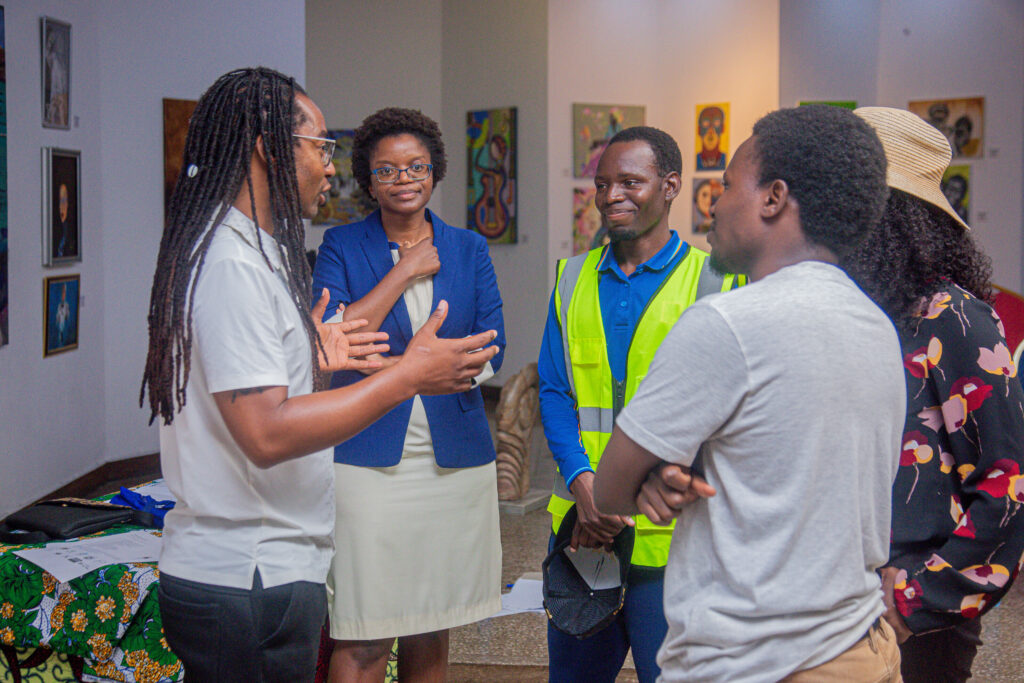
The venue itself contributed to the mood. Paintings lined the walls, and a number of sculptures formed part of the audience.
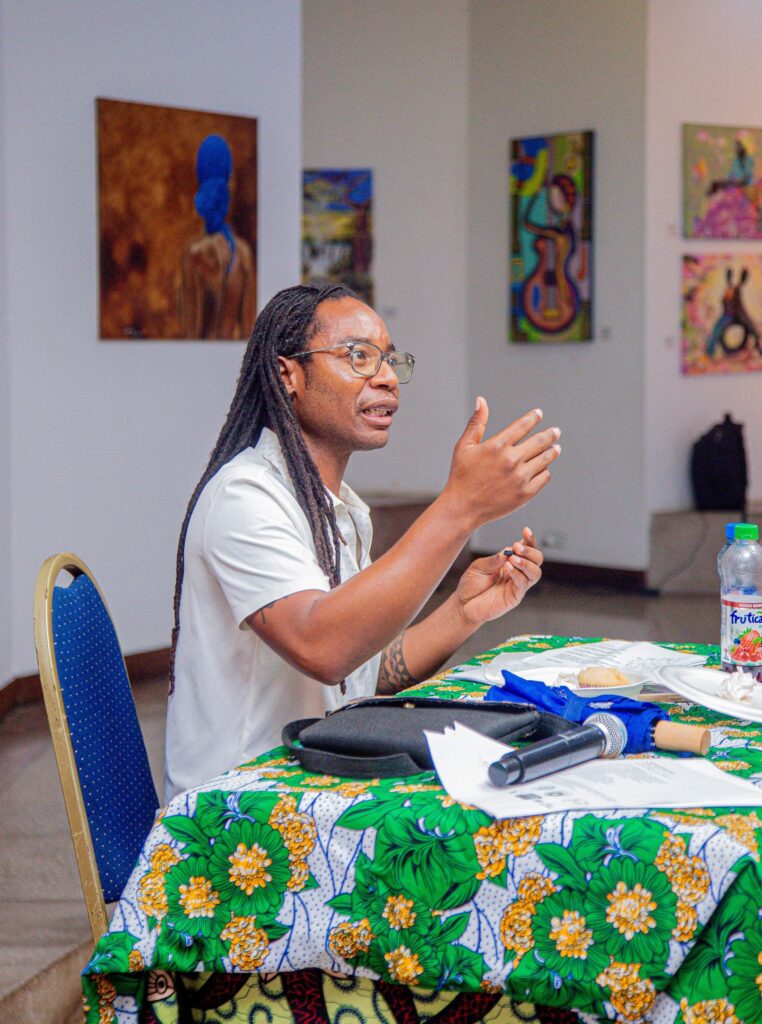
Facilitator Dr. Gankhanani Moyo defined analogy as an element or device in poetry that compares ideas by linking them to something familiar. He then delivered critiques with a blend of gentleness and bluntness. “I will tell you when your poem is trash,” he declared, a statement that drew both laughter and reflection. His approach balanced encouragement with tough love, reminding participants that honesty, however uncomfortable, is essential for growth.
The workshop was marked by candid exchanges among participants. During peer feedback, Luyando admitted: “I didn’t understand the clever lines, ” while Ernest countered with reference to his own poem, The Human In Between: “My poem doesn’t have any clever lines at all.” The exchange highlighted a recurring tension between complexity and simplicity in poetic craft.
Questions of authenticity also surfaced. Njamba asked a young participant, Victorious, whether artificial intelligence had assisted in writing her poem When My Roots Feel the Heartbeat. Victorious firmly denied the suggestion, and her conviction impressed many in the room. The moment underscored broader concerns about originality in contemporary creative practice.
Promise Simasiku’s The Power of My Self drew attention for its abundance of metaphors. Some felt the use was excessive, while others praised its beauty. Dr. Chibesakunda offered a long-term perspective:
“Give Promise ten years, to see if the fire will continue to burn as it is now.”
Patrick emphasized the distinction between performance and page poetry, noting:
“As artists, we should be able to distinguish between poems written for performance and those crafted for the page.”
Trycent Milimo’s My House sparked divergent opinions. The group debated its meaning, but Milimo himself remained silent.
“The best part is he didn’t make any comment. Some of us are still confused.”
The moment illustrated how poetry often resists definitive interpretation, leaving space for ambiguity.
Equally memorable was In Tune With You by Kaluwe Hangala. The poem was widely praised. “It was beautifully written,” one attendee noted. The poem carried multiple elements.
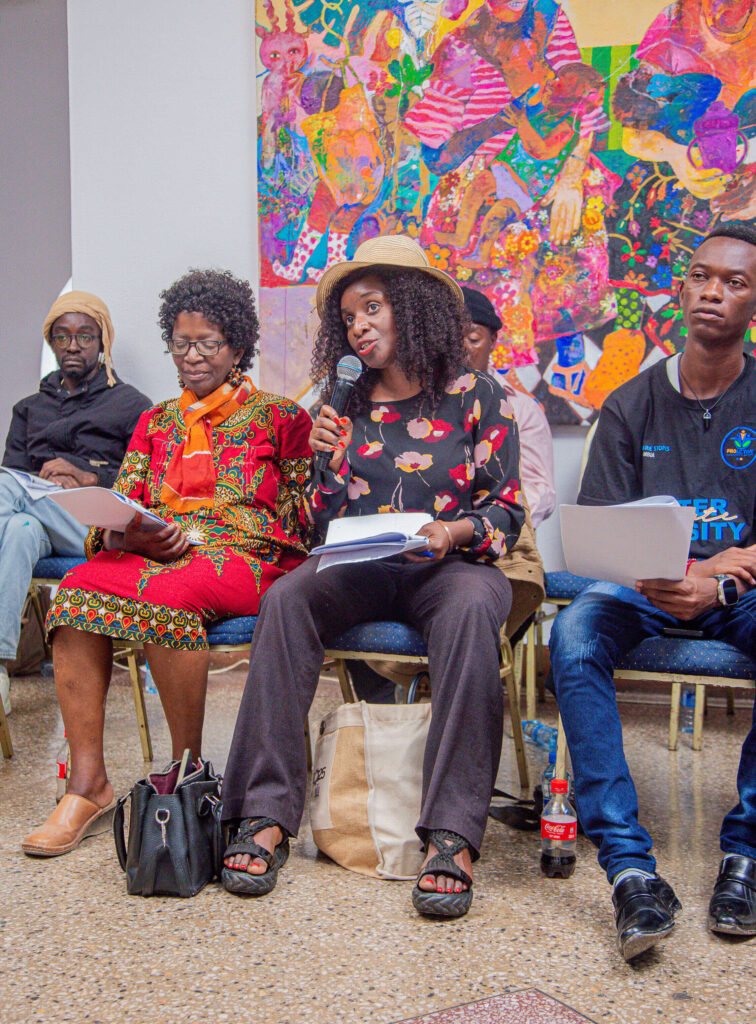
The workshop was made possible through the support of several sponsors, including Soyapi Mapulanga, Future Roots Educational Consultancy, Kuchalo.com, Juliet Lwenji, Marita Banda, and Manyando Musiwa, as well as Mwanza Changala, who provided refreshments, among others. Their contributions underscored the collective effort required to sustain Zambia’s creative community. Snacks and drinks offered comfort amid the intensity of critique, creating opportunities for informal conversations.
The presence of the guest of honour, Mr. Jimmy Katuta, added weight to the occasion, linking the event to Zambia’s wider artistic community and encouraging participants to broaden their perspectives. Equally significant was the encouragement offered by Mr. Austin Kaluba, who urged artists to be knowledgeable, to understand their craft deeply, and to practice it with discipline. His words reinforced the workshop’s emphasis on growth through both study and application.
Throughout the day, the concept of analogy was explored as an extended comparison unfolding across several lines and carrying a single idea throughout. Participants were encouraged to apply this technique in their own writing while offering constructive critique to others. For many, the workshop was as much about listening as speaking. One attendee reflected:
“I realized creativity is not a fixed gift but a discipline that requires constant practice.”
The Zambia National Visual Arts Council’s role in hosting the event was evident not only in the physical space but also in the spirit of the gathering. By providing a platform for dialogue, critique, and fellowship, the Council reinforced its commitment to nurturing artistic growth in Zambia.
In the end, the workshop was more than a technical exercise. It was a space where vulnerability and courage coexisted, where critique was both sharp and constructive, and where community was strengthened through shared meals and shared words. Participants left humbled, inspired, and eager to continue their creative journeys.
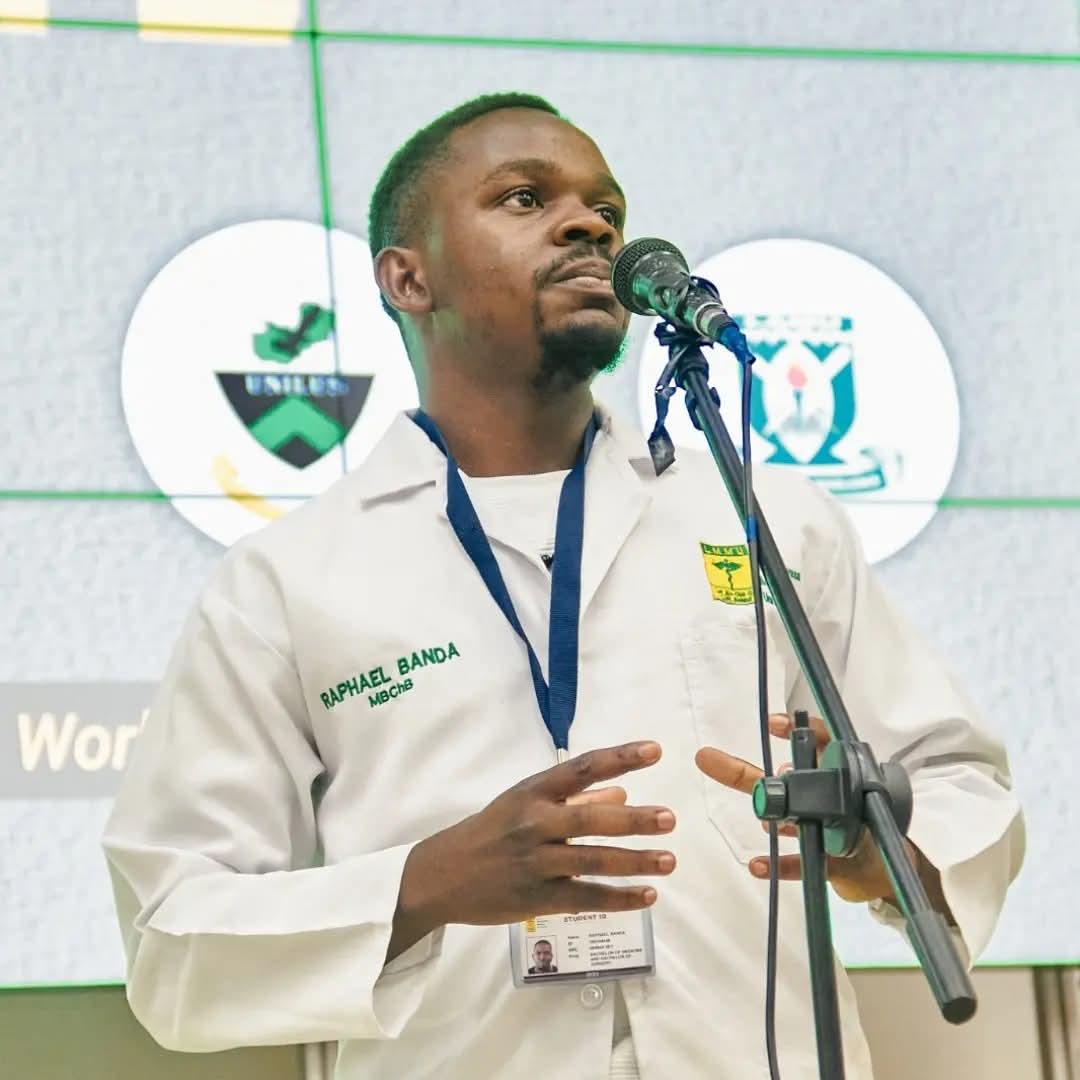
Raphael Banda
Raphael Banda, best known on stage as KREED, also answers to "The Statesman" or "The People's Poet. " As an award-winning spoken word artist and multi-slam champion, he has captivated audiences, conquered stages, and wielded microphones to deliver impactful performances. Having performed in board rooms, the streets and all the way to catching the stage at state house. Currently a medical doctor, Raphael masterfully balances his career pathway with his commitment to the arts. His journey has afforded him the privilege of collaborating with numerous organizations and youth movements, including the United Nations, ActionAid, Centre for Trade Policy and Development, Word Smash Poetry Zambia, Lead Me Back Foundation, The Cliquer's, Loud Ink, Heal Organization, GOPY, YMCA, Colour Culture, and Word Mine.