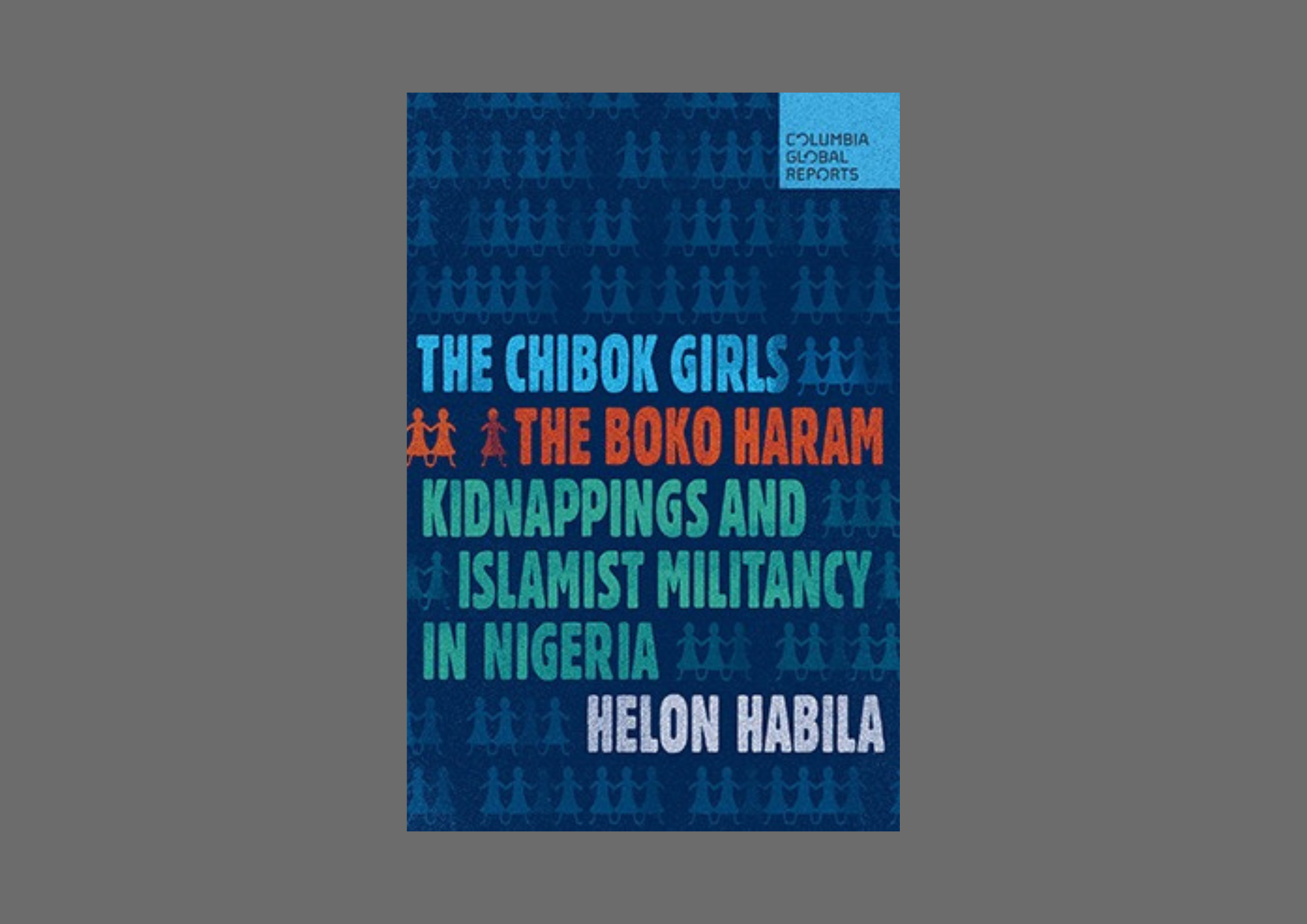
Helon Habila approaches the 2014 mass abduction from Chibok not as an isolated cataclysm but as a lens on modern Nigeria: state dysfunction, politicking of insecurity, and everyday mechanisms—roads, schools, checkpoints—through which Boko Haram and the state interact. Its core claim is also epistemic, especially in a spatiotemporal setting where access is policed and information is strategic. Therefore, the debate over “what happened” becomes not only part of the narrative, but remains at the centre of the discourse.
The book’s principal strengths are ethical restraint, scene-based clarity, and journalistic rendering with the use of a first-person omnipresent narrative voice. This, to a large extent, asserts the credibility of the recorded events. Also, a classroom-friendly design is enacted through the use of maps, notes, and further reading sections in the book. A central contribution is the conversion of abstractions into legible representation. The checkpoint scene that yields “Professor Americana. Why not” (p. 22) is not merely anecdotal; it dramatizes how access, identity, and bureaucratic mood condition what can be known and said. Additionally, Habila resists turning the girls into pure emblems by embedding them in family and community ecologies, while also showing why the kidnapping became publicly “symbolic” (p. 29), especially given the government’s responsibility for their security and safety. The afterword sustains this ethical reasoning by treating uncertainty and hope as political facts: “Everyone hopes so, but no one knows if it will ever happen” (afterword, p. 125) regarding the girl’s full returns.
The main weakness in the book appears to be the limited space allotted to insurgent-side internal politics and for competing analytical models. Although Habila, through historical references, alluded to the Maitatsine group (a quasi-terrorist bloc), there was never an instance where the insurgent group had a direct voice in the text.
The literary piece presents 8 chapters in three parts, in addition to other sections such as Acknowledgements, Further Reading, Afterword, Notes, etc. The author blends reportorial nuances with a novelist’s flair for dialogue and scene together to capture both present experiences and harrowing historical trajectories. Essentially, the text is framed as a hybridity of politics and poetics.
More crucially, the book’s thrust is foregrounded structurally. Part One – “Chibok” – begins with the author’s attempt to access a militarized and media-sensitive town. Part 2, titled “Inside Boko Haram Heartland”, relocates the readers to the insurgency’s regional landscape. Lastly, Part 3 “Return to Chibok” recaptures the kidnapping through aftermath, global intervention/mediation, and survivors’ narrations.
Chapter One (“Professor Americana”) shapes travelling into argument. Environmental details (“Harmattan, a wind that blows in from the Sahara,” p. 15) depict the theme of visibility and obstruction. The chapter’s most precise political diagnosis is the multilayeredness of everyday scenarios: roadblocks are “a place where you paid your taxes at gunpoint” (p. 18). As a result, everyday governance is recalibrated as intertwined with corruption and bribery in Nigerian society. It also proposes a key interpretive scope—narrative control—stating that checkpoints “controlled the flow of the narrative” around the kidnapping (p. 22).
Chapter Two reilluminates the night of April 2014 through local testimony. A pastor recalls that attackers posed as protectors—“don’t run, stay in one place” (p. 34)—before loading girls into seized vehicles and heading toward the forest. The chapter projects how parents’ pursuit, fear, and rumour made the rounds in the absence of official response from the government.
Chapter Three (“A History of Violence”) establishes a broad view that encompasses Nigerian national history and political economy, beginning with demographic-economic scale and then moving through independence, [counter]coups, and unresolved political violence. Apparently, the author positions all these as providing a rich background for insurgency to thrive. Chapters Four and Five navigate northeastern cities and towns, using descriptive images of burned schools, displaced villages, and election disruptions to show how insurgency targets education while the state’s protection remains erratic. Chapters Six–Eight return to aftermath and representation in particular military convoys lining the road, families waiting in hope, and the internationalization of a local tragedy. The text describes early official skepticism and attempts to dominate messaging (p. 96), while global visibility through the Bring Back Our Girls campaign forced the event into a different political register.
Stylistically, the book’s primary evidence on the one hand is field-based — travelling under escort, interviews with community figures and families, and conversations with survivors and witnesses. On the other hand, its secondary evidence is documented in the notes, where it presents submissions through triangular views: news reporting, official statements, and reference works. Specifically, one interview session dissolves when local gatekeepers insist on “clearance from the authorities” (p. 52), illustrating how knowledge about the kidnapping is itself securitized. The “Further Reading” section functions as intellectual modesty: it directs readers to historians, security analysts, and reporters for deeper accounts, positioning this book as a springboard rather than a comprehensive monograph.In sum, the book is well-suited for high school students, undergraduate courses, literary enthusiasts, and public scholarship generally. This is because it strings narrative immediacy with explicitly curated pathways for deeper study. It is not a definitive academic history of Boko Haram. Instead, it is a rigorous gateway narrative that makes the abduction intelligible as both lived experience and structural symptom.