![You are currently viewing [Featured Post] Travelogue: My Rongo Experience as a First-Time Resident](https://jaylit.com/wp-content/uploads/2026/09/Sarah-Adeyemo-at-Rongo-Residency.png)
I woke up before cockcrow on 21st of August, 2026 to catch the first bus from Ado-Ekiti to Benin City. The joy of being a first-time resident and first-timer in Benin City has been bubbling in me since I got an acceptance email from Rongo Artist Residency. Reading it, tears of gratitude lurked in my eyes. It was my second residency acceptance, and I was super excited that the residency schedule wouldn’t clash with my final-year examination and project defense (I couldn’t attend my first residency at MAAR in January because it clashed with the final-year first-semester examination). So, with joy and gratitude, I set out for Benin City in a white eighteen-seater bus. We were jolting all through the journey, so I couldn’t read a single poem from the collections with me. Instead, I stared out the window, admiring the work of God. Upon seeing a huge mountain as we drove through Akure, I hummed a song, “All things Bright and Beautiful……”

The bus was heavy with silence until a Yoruba man broke it, complaining about the potholes and the president wasting money on the 2027 election. Other passengers joined in, their voices pouring out frustration about the Nigerian government. I kept quiet throughout the journey, maybe because I was the only female on the bus. After a six-hour stressful drive, we got to Benin City. I dragged myself off the bus, my eyes heavy with tiredness. My body ached. My stomach rumbled.
I called Abby, Rongo’s Program Manager, about my arrival. She described how I would get from where I alighted to the residency location. As a Johnny Just Come (JJC), I was scared of being overcharged by Benin drivers. A fellow passenger, who alighted with me, offered guidance. He helped me board the bus, gave the description, and paid the driver. Of course, I was very grateful for his kind gestures.
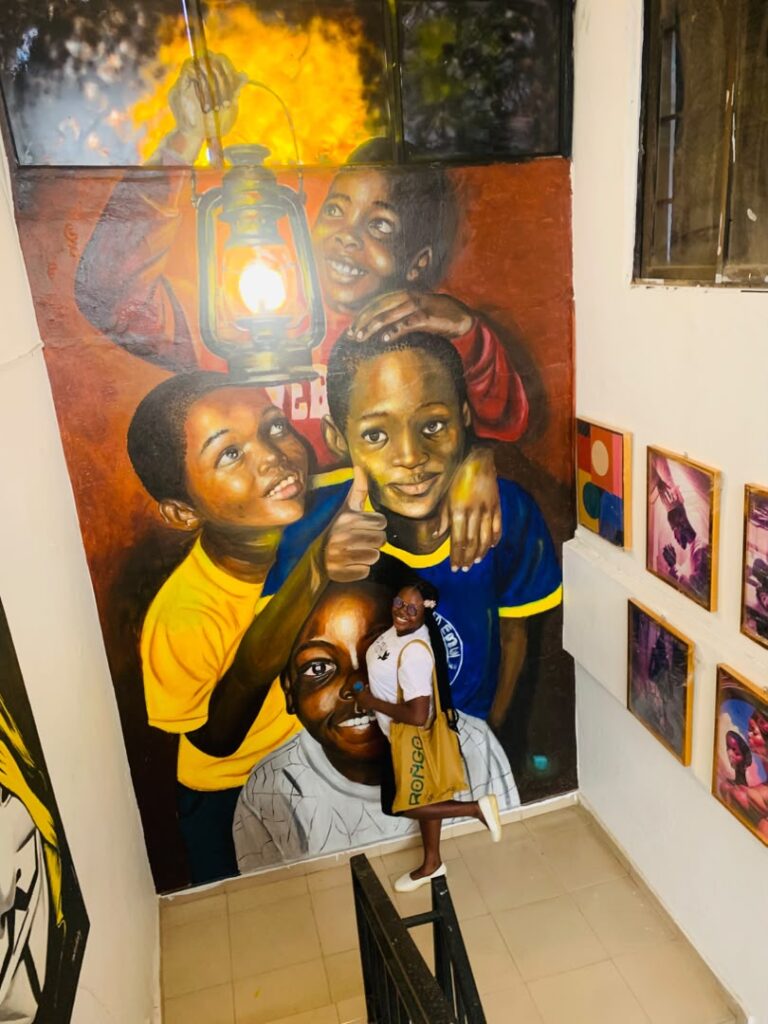
I savored the smell of roasted corn at the beginning of the street where the residency was located. I couldn’t buy one because my luggage was heavy, and tiredness had built a castle in my body; all I wanted was just to be on my bed after a shower and a good meal. I was using all the strength inside me to climb the stairs when Testimony, the Program Manager and fellow writer, met me with a warm greeting and helped me carry my luggage to my room, a well-furnished, ventilated room with four student beds and a wall decorated with artworks. She asked about my journey, and I said it had been stressful. She told me to take my shower and come to the parlour for an introduction and dinner.
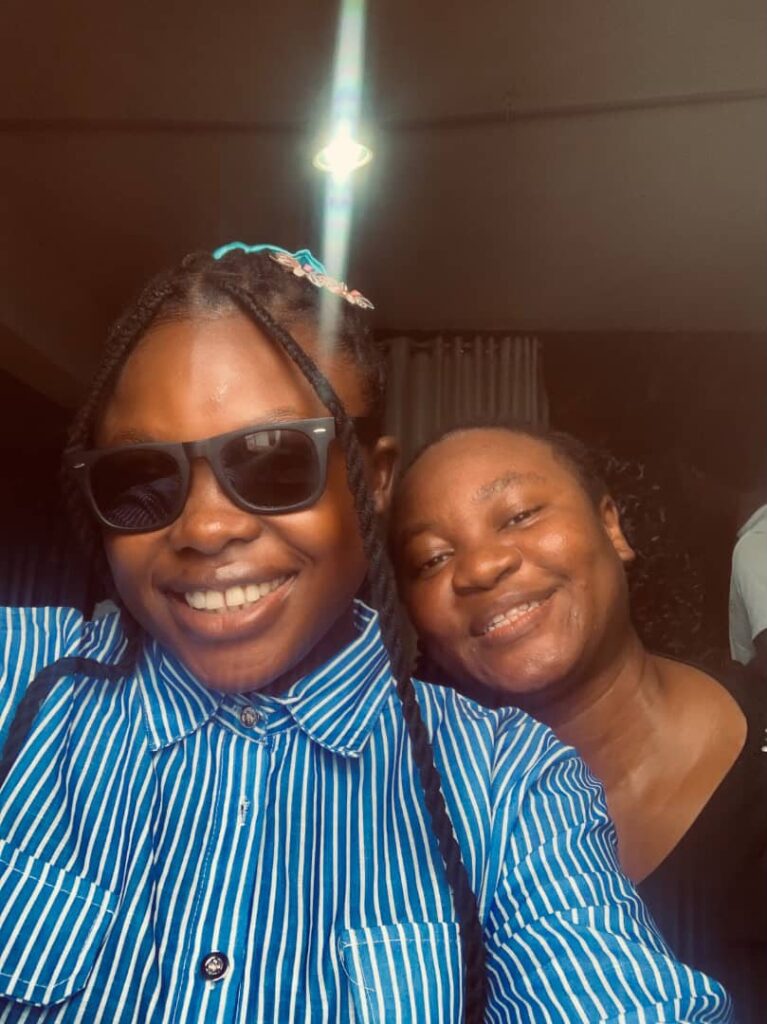
I met Sunmisola and Isaiah in the parlour, and we kept looking at each other as the strangers we were. I was told the other three residents were on their way. Well, I broke the silence by asking Isaiah about the chapbook my friend, Joel Oyeleke, sent me, and that’s how our communication started. Even though I had known Isaiah for about five years on Facebook, we hardly chatted, even on WhatsApp. He went into his room to bring the chapbook, and we continued from there. Testimony was surprised by how long we talked about the Nigerian literary scene and life as student writers.
The following day, other residents arrived except Ridwan Fasasi, who was traveling from Sokoto. Testimony shared the residency schedule with us on a WhatsApp group, asked about our plans for the residency, and paired us with a fellow resident as accountability partners for our personal projects.
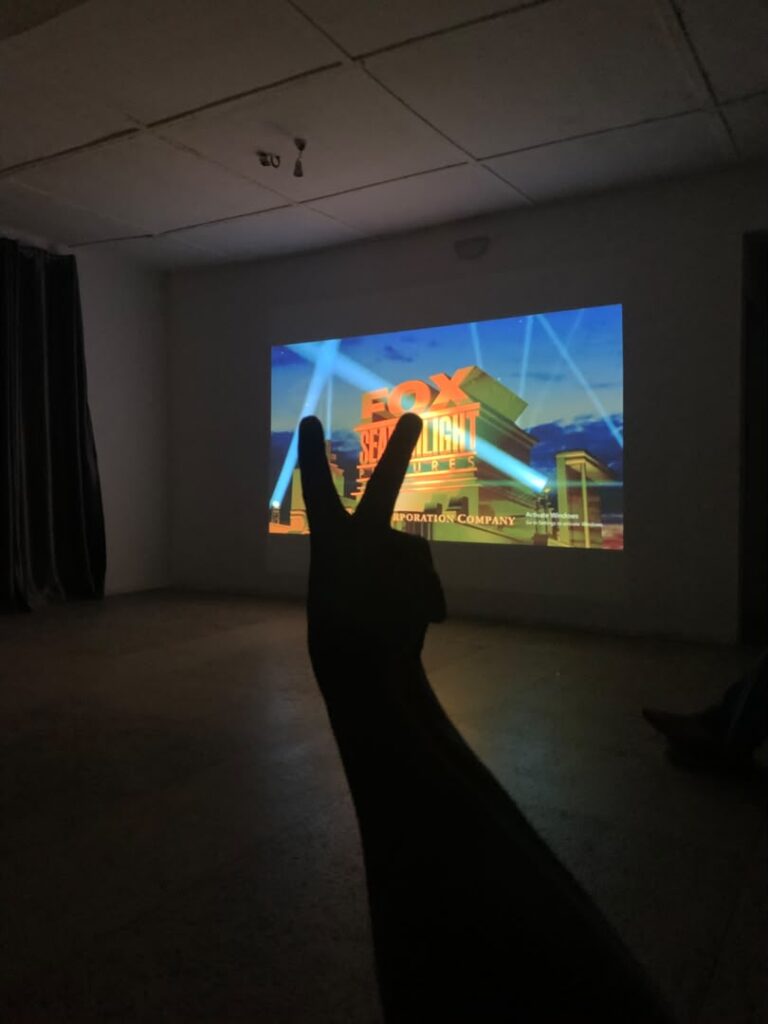
Our lives revolve around the schedule, which I call “Time Table”. Game night remains one of the most indelible moments of the residency. One night, after dinner of yam with garden egg sauce, we wrote random things on paper, carefully folded them, gathered them, and shared them among ourselves. One person would unfold their paper, read what was written, and we would all guess who wrote it before the actual writer raised their hand. I can’t remember who picked a paper, but after reading, everyone pointed fingers at me as the writer. I said I was not, but they were so confident that I was the writer that I had to roll on the floor for minutes, laughing and laughing that I couldn’t stand up. The more they said I was the writer, the more I laughed. We continued the game till we were exhausted from laughing. I also remember the psychological thriller movie we watched together in the wide parlour. Being someone who doesn’t like movies, I found motivation from my fellow residents as we sat on the couch with folded arms, watching what would unfold in the next scene.
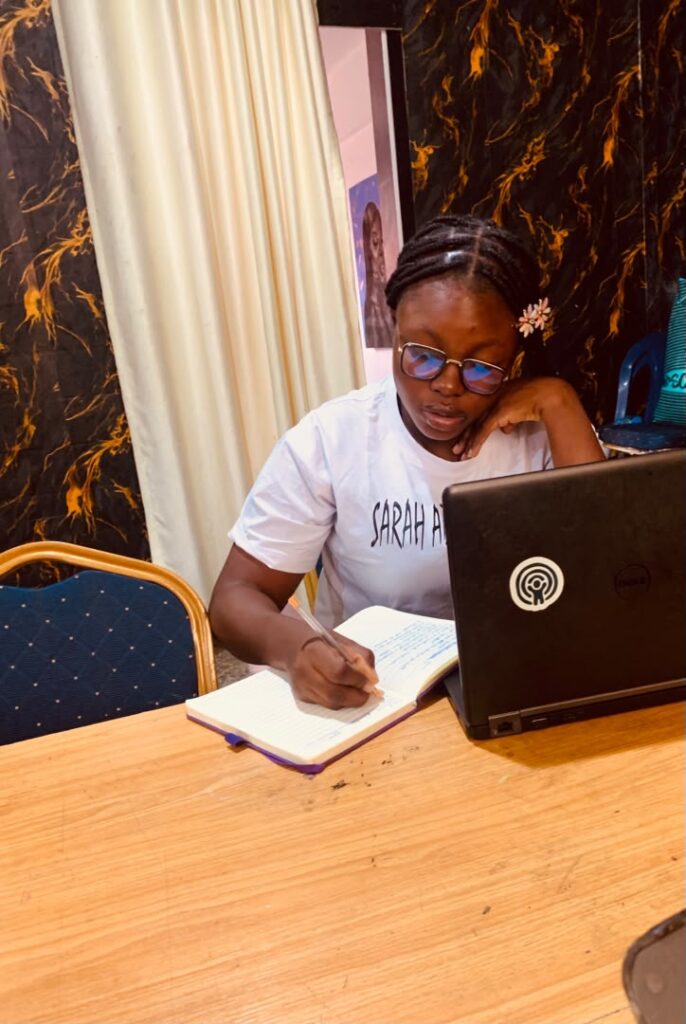
I began working on my project during the first night in Benin City, despite the tiredness from a stressful journey. My project, “Beautifully Bruised”, is a collection of poems that explores the experiences of the female gender in society through the lens of memory. I set myself the task of writing two poems a day while rounding up a manuscript I had been working on before the residency. Even though I couldn’t meet my daily task, I was glad I made significant progress.
As the literary enthusiast that I am, I dragged my fellow residents into creating literary content. Blessing and Sunmisola were camera-shy, but I convinced them that it was something simple, creative, and interesting. I told them to master ten names of authors and their books, and they all agreed to feature in my content. The following day, I met Ntui writing the names of authors with book titles down, and I laughed out loud because, to me, it is not something that requires writing down since you are a writer, and I trust you have read more than fifteen books over the years. As easy as I thought it was, I was surprised when we began. After listing five authors, my head went blank. Books ran out of my head, and my confidence betrayed me. We then switched to listing authors’ names turn by turn while standing. This was the most amazing and interesting part because the person in front would say what was on my mind, and when I got to the front of the camera, I wouldn’t know what to say other than laugh and make way for the next person. I remember Isaiah and Sunmisola mentioning names and books I had never heard of. So funny how Testimony mentioned all the books of Chimamanda Adichie and Ntui mentioned books of Chinua Achebe at every turn.
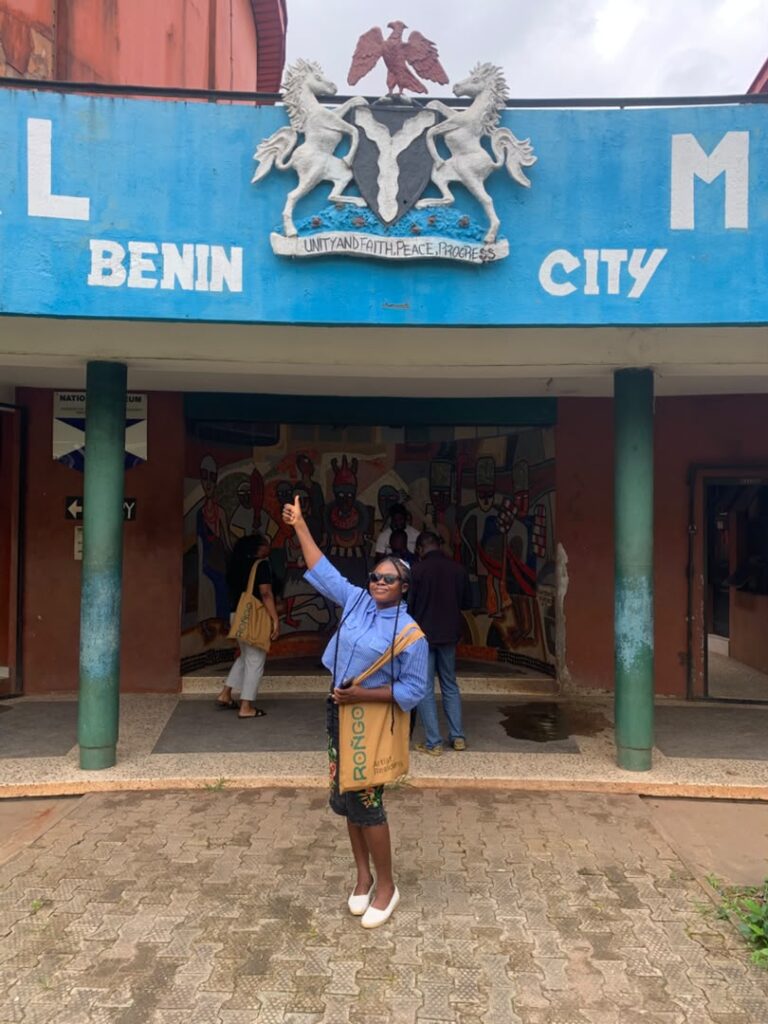
Aside from the daily routine of eating delicious meals, writing, capturing moments, and reading our work-in-progress to our fellow residents for feedback, we had a city tour. I was really excited about visiting the National Museum in Benin City. The co-founder, Ruona, boarded a private ride that took us to the museum. On our way, I was fascinated by the busy but beautiful city life of Benin residents. Sitting beside the window, I saw a food seller pushing a long truck with coolers of different dishes. I couldn’t believe people still eat rice inside leaves in this era, but I saw it vividly in Benin City. Well, if I had the chance, I would have tasted it and definitely taken pictures before devouring it.
We drove past the beautiful palace of the Oba of Benin, but before I could take my phone for a snap, the driver had driven past.
When we arrived at the National Museum, we bought tickets, and the attendant began sharing the stories behind each exhibition. She is such a good storyteller that I had goosebumps when she narrated the story of the British invasion of the Old Benin Kingdom. I was sad by the havoc done to the people’s tradition and heritage.
That same day, we visited the Institute of Benin Studies. The first thing the program manager did was use the trending video of a man boldly saying the people of Benin practice incest, including their king. As a Benin woman rooted in Benin culture and tradition, she challenged the man’s unresearched claim and urged us to always do thorough research when writing, especially about people’s culture and tradition, in an era when people believe whatever goes viral. She also taught Creative Writing, though she didn’t go deep, because she believed we were already writing and making waves with our craft.
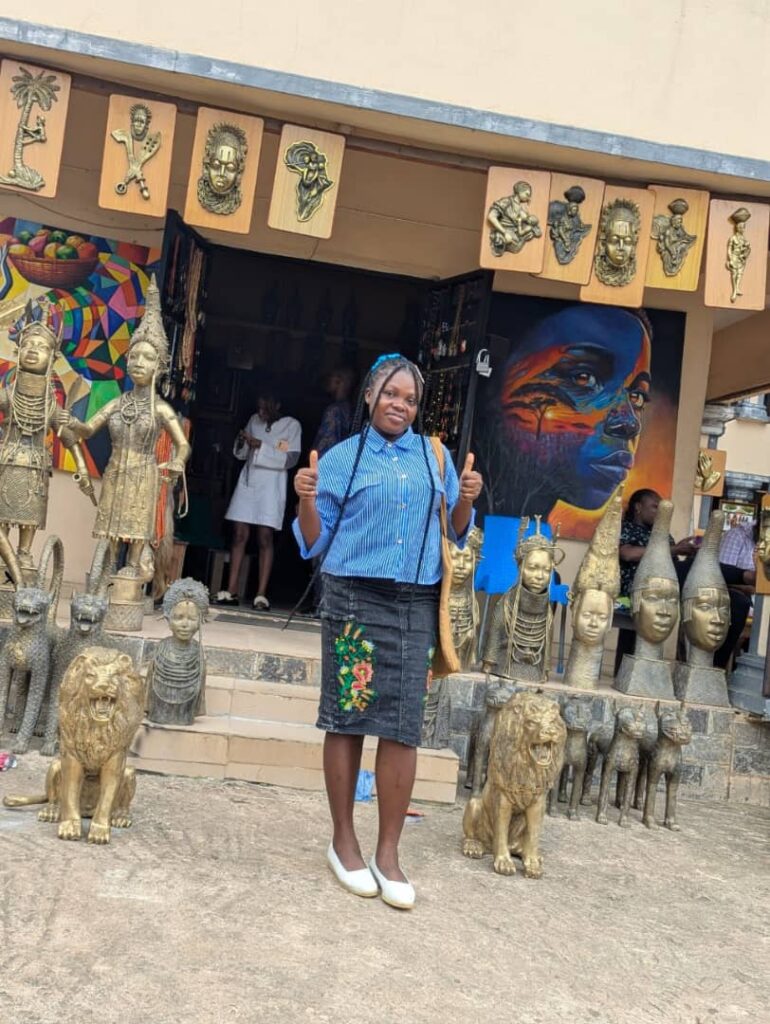
We took beautiful pictures and drove to Igun Bronze Street, where bronze products such as bracelets, statues, artworks, and other decorative items are sold. I enjoyed seeing different animals, objects, and beads made from bronze. I saw a Hausa trader who sells yam with a wheelbarrow. Because I can speak some basic Hausa, I spoke with him, and he even agreed to take pictures with me.
What is residency without suya? One night, Ridwan and I stepped out for a stroll, roaming Mission Road Market. At the beginning of the street, we met a Hausa man selling suya. I greeted him in Hausa and told him to give me a piece to taste before buying. He gladly sliced a piece, coated it with “yaji” and gave it to us. The sweetness made me want to buy ten thousand naira suya, but I wouldn’t try that if I didn’t want to walk back to Ekiti.
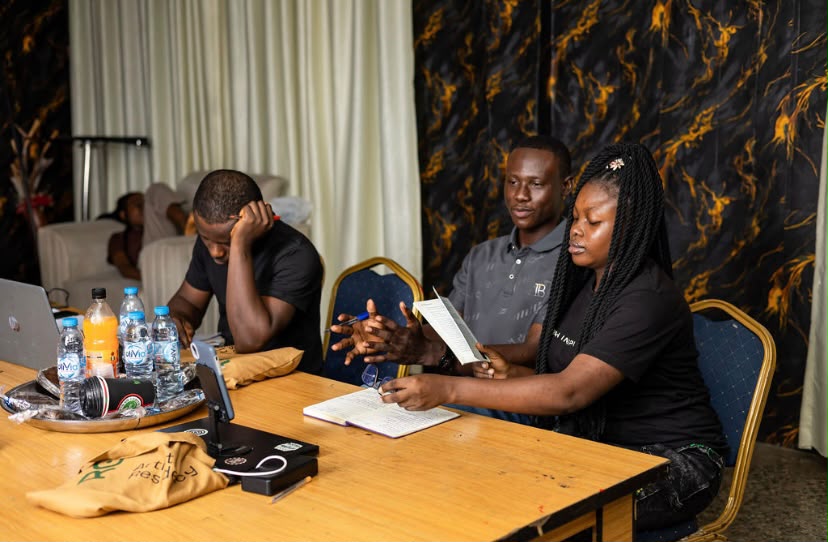
On the last day of the residency, we had a talk-circle experience with the CORAL Literary Circle. All residents read their work and received feedback and suggestions, which sometimes led to arguments. The reading was spiced up with games, debate, and refreshments. After the session, we had a table discussion with Ruona, the residency’s co-founder, where we shared our experiences, expectations, and progress on our projects. We also had an interview session where we shared our experiences so far and said something about our projects.
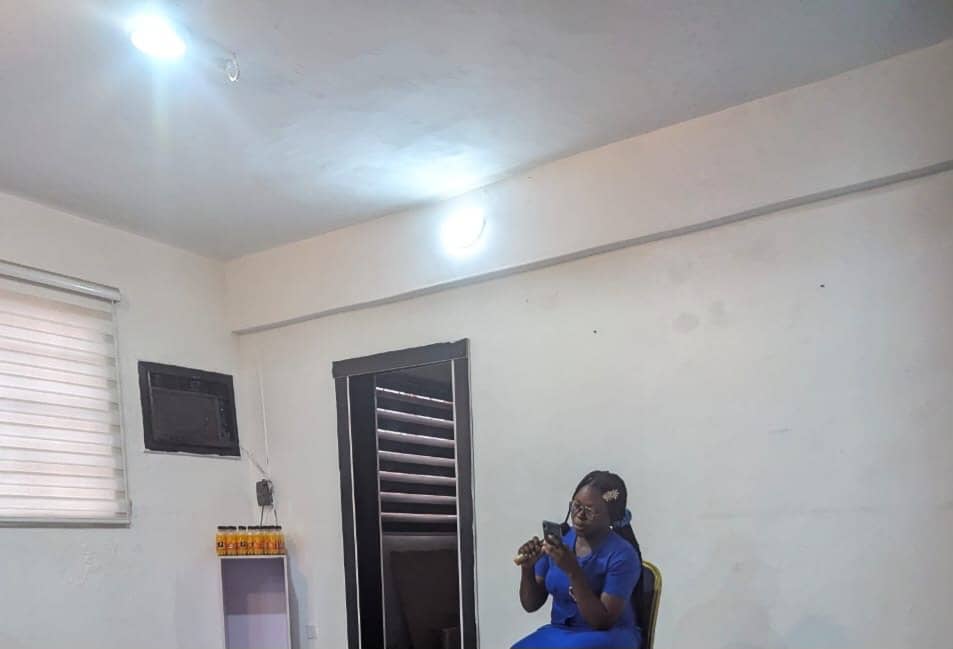
During our Bond Time, I felt like the residency should not end because it feels like home. For seven good days, I bonded with amazing writers whose work is fantastic. Blessing read a short piece that contains her thoughts about everyone in the residency. Tears of gratitude rolled down my cheeks when I read the part she wrote about me. “Be on the lookout, though, for here she comes with her camera in your face, and in the next minute, you’re up on the Gram!”. I felt like I could have stayed two more weeks in Benin with my fellow residents, but every journey has an end.
The Rongo Artist Residency really impacted my writing career. As a writer and literary enthusiast, it gave me the privilege of being tutored by Edwardson Ukata, the space I needed to write, and the opportunity to visit Benin City to immerse myself in history, works of art, and, lastly, connect with great writers. The residency also gave me the privilege of meeting my long-time friend, Ridwan Fasasi, whom I usually bombard with literary gist.
The Rongo Artist Residency is a unique residency in Nigeria. It is a home that nurtures artists with resources, time, and space to grow, experiment, and share their works with the global audience. On this note, I am deeply grateful to the co-founders, Elizabeth Ejiro and Ruona Idjenughwa, for this great movement. And to everyone who made my residency memorable, God bless you.
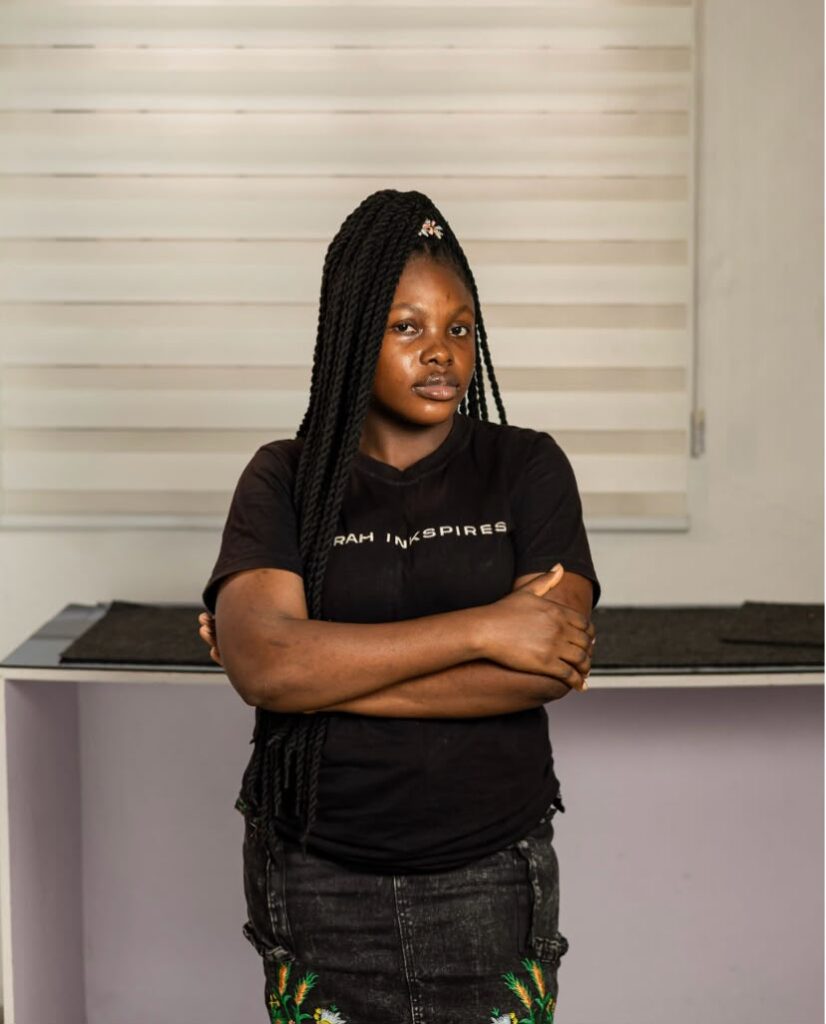


Sarah Adeyemo
Sarah Adeyemo is a poet, writer, editor, and spoken word artiste from Nigeria. She is a fellow of the SprinNG Writing Fellowship. Sarah has work published or forthcoming work in ANMLY Lit, D’Iit Review, The Fiery Scribe Review, Con-Scio Magazine, Sevhage Review, Okiti Literary, Synchronized Chaos Magazine, Pepper Coast Magazine, The Weeds Review, Akpata Magazine, The Shallow Tales Review, The Muse Journal, The Weganda Review, Everscribe Magazine, Afrillhill Press, TV-63 Magazine, Poems for Persons Interest, Northern Writers Forum Journal, Eboquills, Rinna Lit. Anthologies, and elsewhere. Her works have been shortlisted for the 2025 Labari Prize for Poetry and longlisted for the 2025 Eriata Oribhabor Poetry Prize. She serves as the Managing Editor at Words-Empire Magazine, a Poetry Editor at Yarnz Magazine, PFPOI, and a News & Feature writer at the Journal of African Youth Literature (JAY Lit). She was a writing resident of the Rongo Artist Residency in 2026 and is currently a writing resident at the Ebedi International Writers Residency. She is a member of The Swan Collective. A dramatic poet who tweets @sarahinkspires.