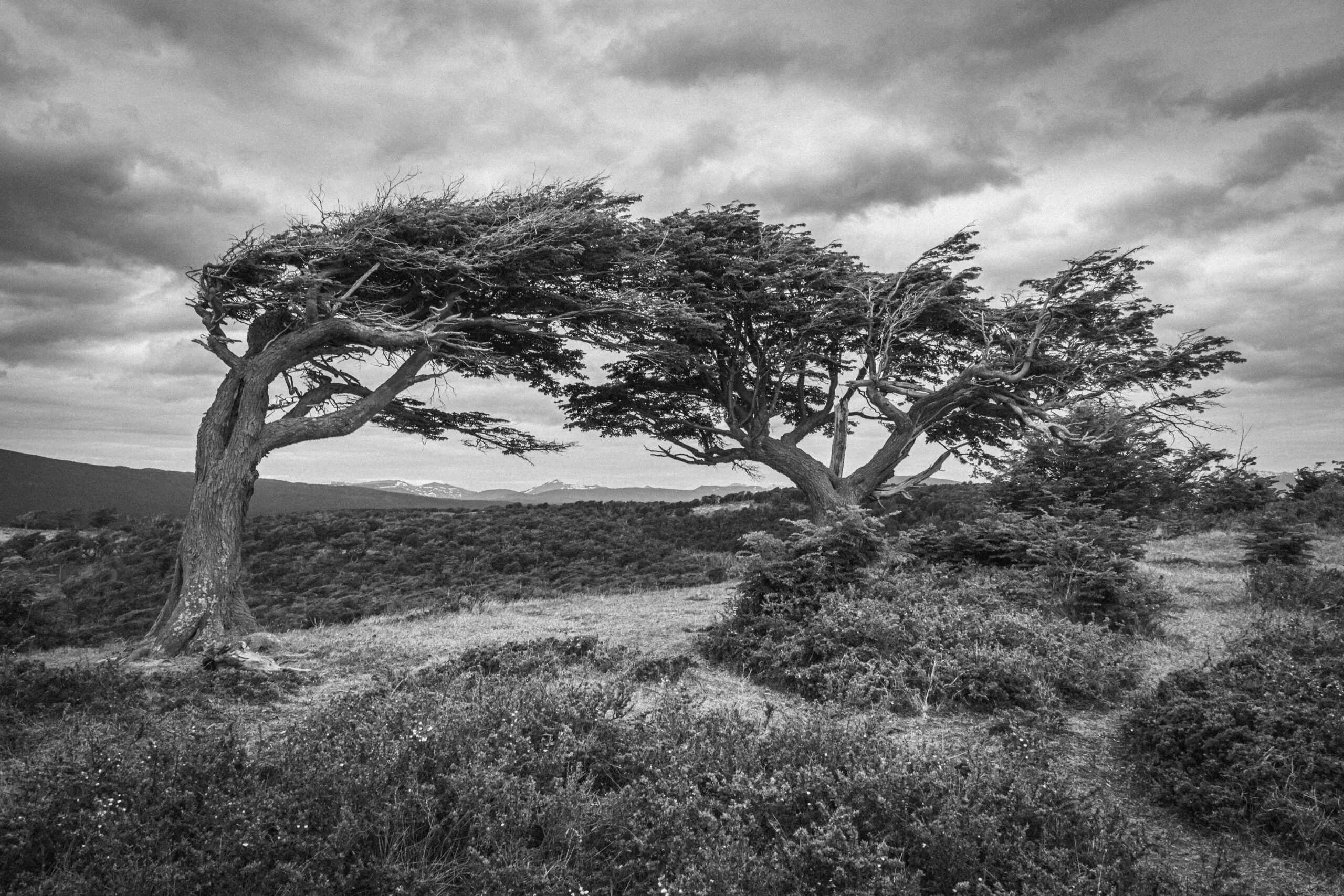
The wind screamed through the trees, rattling the straw fence of Ako’na’atu’s hut. Dust spun in frantic eddies, lifting the kitchen curtains high before they flopped back, lifeless. Dark clouds sagged low, heavy with rain. The hut crouched, braced against the shifting climate that had turned their sanctuary volatile.
Gusts slammed like an animal at the walls. Bark cloth snapped on straw lines; Beshani yanked them, clutching the bundles to her chest.
“I’ll be right back,” Ako’na’atu’s voice called through the turmoil, firm, unbent.
Beshani peered out. “Where are you going in this, Grandma?” she yelled.
“To the rocky hills. We need to gather lengana herbs.” Ako’na’atu answered, shouldering a straw sack. “I’ve run out. If I wait, the storm will trap me for days.”
Outside, the wind clawed at their skirts as they threaded narrow paths. At the mountain’s base the clouds hung like a curtain. Ako’na’atu’s grip tightened on the sack; she climbed with a tremor in her shoulders.
Beshani watched the sky darken, the air thick with the threat of mud and ruin. “Rain used to be sacred, renewal,” Ako’na’atu said, grief and steadiness coiled in her tone. “Then it became a cover for evil.”
Thunder rolled, low and fierce. Lightning slashed, catching Ako’na’atu’s face in a spare, soft light—lines of age eased by her smile. “The storm waits for no one,” the older woman said.
Beshani squeezed the herbs tighter and, against the howl, whispered to the wind, “Let the storm carry us through.”
*
Miles away, the storm met Crown Prince Larmaani as he broke out of the palace yard. He rode into the wide dirt field studded with grass; the mountain loomed, slopes threaded with mahogany and acacia bent low in the wind. The guards formed loose circles and held back, careful to give him the solitude he sought from the suffocating pressures of the crown.
He rode the field in repeated arcs, each gallop carving deep tracks into the wet earth. The field’s wild beauty mirrored the tempest inside him, a raw, dangerous symmetry.
Then the guards, uneasy, closed in. “Stay back!” Larmaani roared.
“The rain is too heavy, and this area is prone to mudslides!” Kagbnfuli cried, his panic palpable.
Larmaani set his mouth, knuckles whitening on the reins. The wind wrapped around him like a living thing—fierce, familiar. He leaned into it, meaning only to stay a moment longer.
*
The descent began for Beshani and Ako’na’atu, manageable—rain slick underfoot, the track a gleam of mud. Beshani curled her hand around Ako’na’atu’s, the other arm braced around the sack. For a moment, the world was wind and the steady slap of their feet.
Then a sound like a tree breaking split the air, sharp, cracking. The earth lurched. Beshani looked up and the mountain was moving toward them.
“Grandma!” she screamed as the boulder rolled, picking up speed with every lurch.
It slammed down with a hollow, bone-sick thud and pinned her grandmother beneath a mahogany. The old woman’s breath hitched into a thin, ragged sound. “Beshani… help,” she whispered, voice frail against the storm.
“No, no—” Beshani threw herself at the stone, palms scrabbling on its wet flank, legs burning as she pushed. The rock didn’t budge.
Panic ripped through Beshani. “Stay with me!” She slapped rain and mud from Ako’na’atu’s face, clearing her mouth. “Wake up. Can you hear me?” Her voice broke into a sob that the wind swallowed.
The boulder’s slick skin burned her palms; rain poured down in sheets and the world blurred. She stumbled back, slipped, then scrambled upright, driven by a single raw, animal need. “Help! Somebody, please!” she roared, voice ragged, lunging down the slope.
By the rock she collapsed, breath heaving, mud streaking her cheeks. “Don’t go, Grandma. Please don’t leave me.”
The storm answered with a howl and the mountain with its indifferent weight. Beshani held on as if holding the world’s breath itself, as if sheer will could unstick it.
*
A voice, raw, ragged, cut through the storm like a blade. Larmaani cocked his head, cupped an ear against the wind, hunting the sound. “Did you hear that?” he barked.
“Yes, Your Highness,” Kagbnfuli shouted over the thunder. “The storm’s fierce. We should withdraw.”
Larmaani didn’t move. The sound had sliced something open inside him—too human, too close to ignore. “Not thunder,” he said, his voice tight. “Listen. There it is again!”
He surged forward without hesitation, horse hooves skidding on the slick slope. He dropped, his cowhide boots sinking in mud, drew his bow and notched an arrow more from habit than intent.
Wind whipped his face as he charged up the ridge. Mud hooked at his cowhide boots; lightning sketched the world in cruel white. Then the voice rose again—closer, frayed by fear.
“Help! Somebody, please!” a girl screamed.
For a breath Larmaani stood, the rain mute around him. Then he spun toward the sound. Whatever lay ahead, he could not, would not, turn back.
*
“I hear voices! Grandma, hold on. Help is coming!” Beshani shouted, voice ragged with hope and fear.
A shape moved out of the dark—towering, deliberate, arrow notched, figure cutting the rain with the ease of someone storms obeyed. Lightning flashed and for a breath she saw him, bark cloth clinging to a muscled frame, limbs honed by labour or ritual, the rain running off him in beads.
Behind him surged others, all bows and taut silhouettes.
The leader stepped fully into view—tall, angular-jawed, broad-nosed, lips set. For a startled instant her breath snagged on a useless, foolish admiration.
The taller man’s gaze lingered on her a beat longer than politeness allowed. “You there. Are you all right?” His voice cut through the rain, brisk and steady. “What happened? It’s not safe to be out here alone.”
Beshani’s breath locked. She pointed with a shaking hand to the left, where Ako’na’atu lay pinned beneath a great stone.
Lightning revealed the scene and the man’s face tightened. He dropped his bow and strode to the boulder, shoulders braced, hands pushing with a force that seemed to bend the rain.
“Right here!” he shouted to his men.
They slipped and shoved in the mud, and with a terrible, thunderous crash the stone broke free and rolled away.
A man beside her shifted. “What are your names? What village do you come from?” he asked, voice sharp with urgency.
Beshani did not answer him. She turned instead to the one she perceived as the leader. . “I’m Beshani,” she said. “That’s my grandmother. We live outside of Kadeigbain, near Nyankpambi village.”
A beat passed. “And you?”
The man beside her bristled. “Show some respect—.”
The leader’s hand lifted. Not abrupt. Not angry. Enough. Silence settled, rain filling the space it left behind.
Then he turned fully toward her, his posture easing, attention narrowing.
“I’m Crown Prince Larmaani,” he said simply. “These are my men. We’ll take your grandmother to my palace infirmary; your village is too far.”
The Crown Prince. Shock chased the freezing rain from her veins, followed instantly by a sharp spike of terror. She braced herself for a reprimand, but as she looked at his rain-slicked face, a profound awe anchored her.
Beneath the terrifying weight of his title, he was kind. Steady.
She bowed, one hand braced on her knee. “Thank you.”
He moved to lift Ako’na’atu, and Beshani instinctively reached to help. Their hands scraped together, skin on skin, a jolt of fire through the torrential cold.
Beshani flinched, the contact a shock that silenced the storm.
The prince flinched back as if seared, his hand pulling away instantly. His features, moments before composed, suddenly seized up, the blood draining away to leave his lips stretched tight and faintly pale against his skin.
An awkward hush bloomed between them. Their eyes met, and instead of command there was a brief, private recognition—no words, only a shared, involuntary intake of breath. The towering figure of the Crown Prince vanished, leaving only a man whose gaze held hers in sharp, undeniable focus that terrified her.
“Koosha,” the prince said quietly, “take the girl.”
The man who had spoken earlier helped Beshani into the saddle while Larmaani bore her grandmother.
The Crown Prince’s palace gate yawned open. Torchlight licked wet stone. Crossing into the courtyard was like stepping into another world.
Despite her panic, the sheer scale of the palace grounds stole Beshani’s breath. The flickering torchlight revealed a sprawling, meticulously ordered village of its own. Lightning flashed, briefly illuminating massive silhouettes, an expansive yard humming with unseen workers, and a towering central residence that seemed to swallow the sky. The impossible wealth and rigid structure of it all was terrifyingly grand, completely unlike the wild, muddy village she knew.
Larmaani carried Ako’na’atu into a modest thatched house. He laid her on a bench with careful hands. “Save her,” he told the healers, voice low and urgent. “Do everything you can.”
The healer moved quickly, steaming a pot, a calabash, medicine to the lips. Ako’na’atu’s grip on Beshani slackened as her breathing slowed.
“A sedative for the pain,” the healer answered, meeting Larmaani’s steady gaze. “A broken leg. She’ll sleep and we can treat her without pain.”
Beshani let out a breath she hadn’t known she held. She wiped at her face and looked up; Larmaani knelt beside her, their shoulders nearly touching.
She smelled woodsmoke and rain, a scent utterly unlike the palace herbs. He exhaled—barely audible—and leaned his head back against the clay wall.
For a rare moment, his composure loosened. Their eyes met; neither spoke. She looked away first, unsettled by how his quiet seemed to find her.
Then he rose, face unreadable, and the warmth of the moment lingered between them.
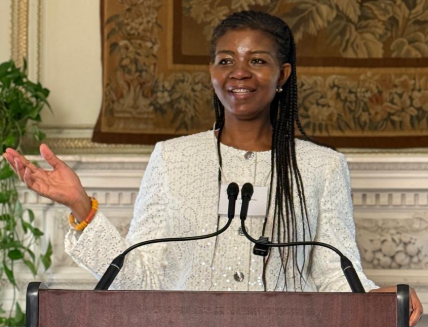
H. K. Yahaya Jawula
H. K. Yahaya Jawula writes Epic Fantasy Romance shaped by resilience, leadership, and inheritance. After losing her father early and seeing her education end, her relentless self-determination led her to become a 1999 FIFA Women’s World Cup player and earn a scholarship to the US. Now a two-time Athletic Hall of Fame inductee and corporate finance professional, Jawula brings athletic discipline and emotional depth to her storytelling. Drawing from West African mythos and ancestral traditions, her work explores governance, emotional restraint, and endurance. “When the Rain Became Ruin” is adapted from her forthcoming debut novel, Shade From A Wilted Tree.
Her website is hkyahayajawula.com. Follow her on Facebook: H.K. Yahaya Jawula, Instagram: @hkyahayajawula, and LinkedIn: Kulu Yahaya-Jawula.