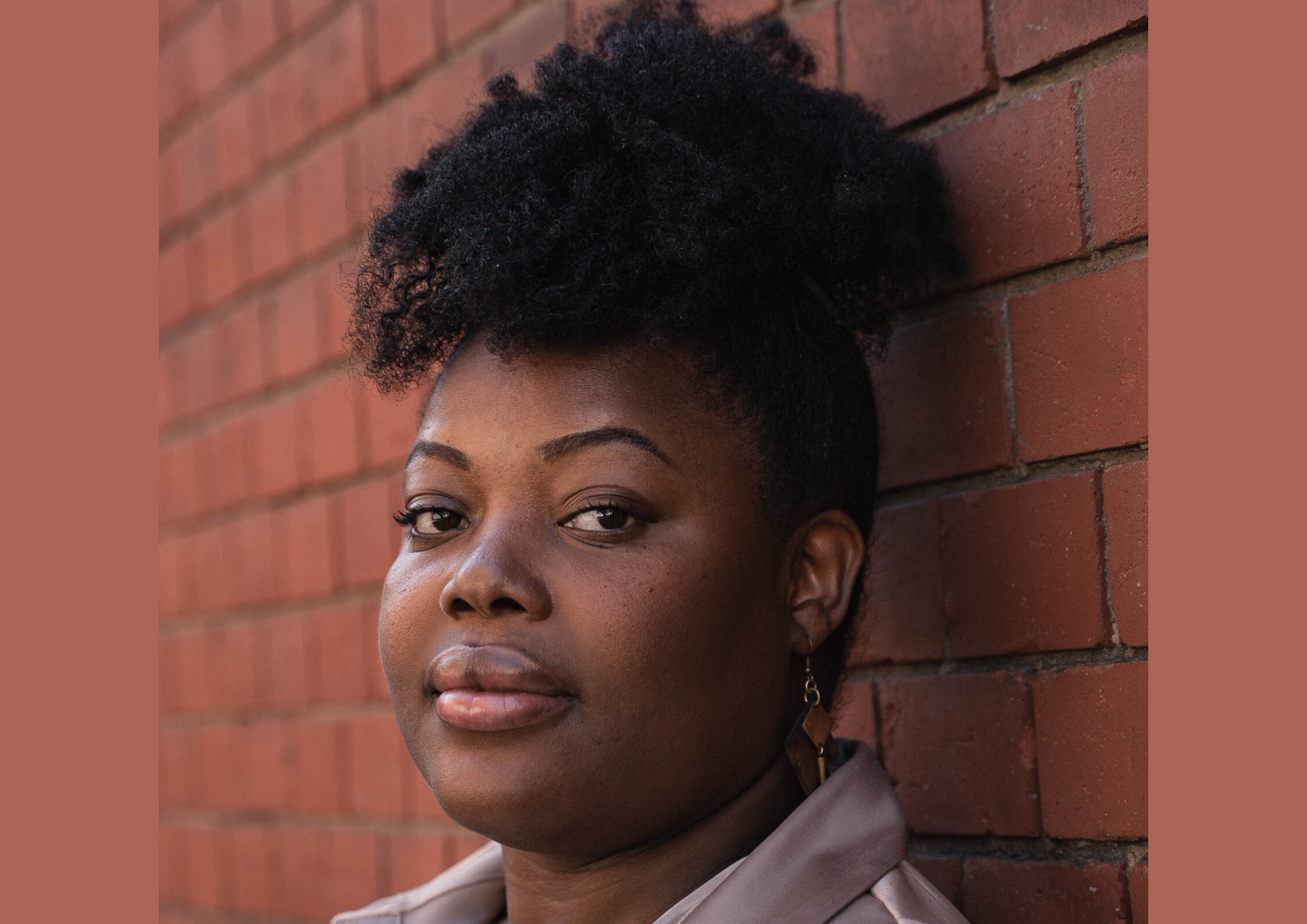
Cave Canem has announced Awuor Ouma as the winner of the 2026 Cave Canem Prize for her manuscript, Blue Hands, Brown Skin.
The prize recognizes exceptional first manuscripts by unpublished poets from the African diaspora. Since its launch in 1999—when Rita Dove selected Domestic Work by Natasha Trethewey, who went on to serve as the Poet Laureate of the United States and win the Pulitzer Prize—it has remained a key institutional pathway for emerging Black poets.
Reflecting on the win, Ouma said:
“Winning this prize feels like being welcomed into a lineage, a community that has carried and expanded the possibilities of Black poetry. It’s both affirmation and inheritance, reminding me that language can still be a form of refuge, resistance, and rebirth. It also feels deeply personal and a quiet confirmation that the years of writing in obscurity, of doubting and beginning again, were not in vain. It is both a homecoming and a beginning.”
The manuscript itself is rooted in mourning. Written in the wake of her father’s death, Ouma traverses motifs of identity, memory, and states of exile. Her works explore a constant cycle of shedding and rebirth. Professionally, she works as a global healthcare consultant, where her practice informs her writing and allows her to intertwine the sciences with the art of storytelling.
In his judge’s citation, D. S. Marriott said:
“Awuor Ouma’s Blue Hands, Brown Skin opens in the immediate aftermath of the death of the poet’s father, and the need to learn to breathe again in exile and in mourning; and the poems go on to enact the very visceral difficulty of such learning for a self ‘when every scar’ evokes a memory of ‘a language I hadn’t learned yet,’ and the homeland is now ‘the wrong accent’ requiring documentation of ‘things we don’t translate.’
‘Like something beautiful/ that had travelled too far/ and forgotten how to hold itself,’ each poem establishes the truth of exile within each word, where what is held is ‘a memory too dark to name,’ and the most profound grief finds itself silenced in English, or in German.
Ouma wrestles with how translation can make the poem into an exile from itself; the poems here thus have to learn to ‘carry your name like smuggled salt’ as they cross ‘into mourning without a map,’ in an effort to find a way back to the self, when each attempt to name those left behind in silence—which is to say, to ‘send a name/ that still remembers/ how to pronounce me’—has to turn away from the homeland, else die in the longing for it.
Which is to say, each poem is a constant reminder, in hope and regret, and despite the realities of migrant life in Europe, that ‘grief must be declared/ translated.’ These are powerful, truly consequential poems, and they make a poignant argument for why every translation also necessarily reveals why the untranslatable is not what perishes, but that which must not perish: ‘Your mouth is not my home,’ Ouma insists; ‘And I—I am the wound you cannot name, the country that/ closes at dusk, the prayer that chokes if said without permission.’”
About Awuor Ouma
Awuor Ouma is a Kenyan poet and writer living in Berlin. She writes from the spaces between faith and fatigue, love and leaving, memory and migration. After years of writing in obscurity, she turns ordinary conversations about ordinary people into something worth remembering. Her work appears in Doek! and The Kalahari Review, where she explores belonging, loss, and the fragile beauty of ordinary lives.
Ouma’s Blue Hands, Brown Skin will be published in Fall 2026 by University of Georgia Press.
Congratulations, Awuor Ouma!