![You are currently viewing [Featured Post] Introducing A Dying Giant in the Palm of Your Hand: A Novel](https://jaylit.com/wp-content/uploads/2026/01/Adelehin-Ijasan.jpg)
Adelehin shares thoughts on his debut novel, A Dying Giant in the Palm of Your Hand, out today from Masobe Books
Every story has a beginning—both literal and figurative. A kernel of an idea. A dream. A line of poetry. An image glimpsed in a rear-view mirror, or an obscure painting encountered by accident. Something stirs, usually bleary-eyed at first, then ravenous, until it grows into the thing we call a work of fiction, a work of art.
But I could not tell you where this story began.
It might have been Gabriel Okara’s Call of the River Nun or the picturesque boy I once saw standing by a creek, one hand resting on his navel, his thumb in his mouth. Or it could have been the first time I heard of the town of Odi, and saw that searing photograph of the Anglican church still standing amid rubble and bodies. Or perhaps it was a dream: gas flares burning in the distance like a dragon’s breath against the night sky. I honestly cannot say when the kernel of inspiration dropped into the abyss I dare to call my mind.
Some stories know what they are from the start. They arrive as novels—confident, fully formed—and step into the world with a kind of self-assuredness. Others begin as short stories, tentative and afraid, like Kehindes sending Taiwos out of the womb first, unsure of what the world will do to them.
This book has been both.
It began as a novel, then collapsed into a short story that was nominated for the Commonwealth Short Story Prize before expanding again into a different kind of novel altogether. Like a yo-yo that stretches long, then snaps back short, occupying contradictory states at once. Who knows what shape it will take in time.
With this book, I wanted to write about ecological devastation, greed, power, and the vagaries of the human condition. I wanted to render a peculiar Niger Delta town through the eyes of a child. Capturing that voice felt like wielding lightning on every page.
It was Jorge Luis Borges who said that art is fire and algebra. This book is all fire. No algebra here.
On the surface, it is a coming-of-age story about a boy trying to set a captive merman free in a village where oil bubbles in wells and rivers carry more poison than fish. The story moves back and forth through time not as a literary gimmick, but because it came to me that way: in fragments, like memory. It is not linear because myth and memory are rarely linear. It unfolds the way a dream does.
If the role of literary fiction is to inform and educate, then speculative fiction is its most effective vehicle. It smuggles difficult truths into the body like bitter flagyl folded into morsels of eba, or viral vectors carrying transformative genes.
In this story, you will find a merman, a poisoned village, and a child who becomes a moral witness to a post-extraction landscape. What you will also find is defiance, a refusal to look away.
* A Dying Giant in the Palm of Your Hand is now out from Masobe Books and can be bought here *
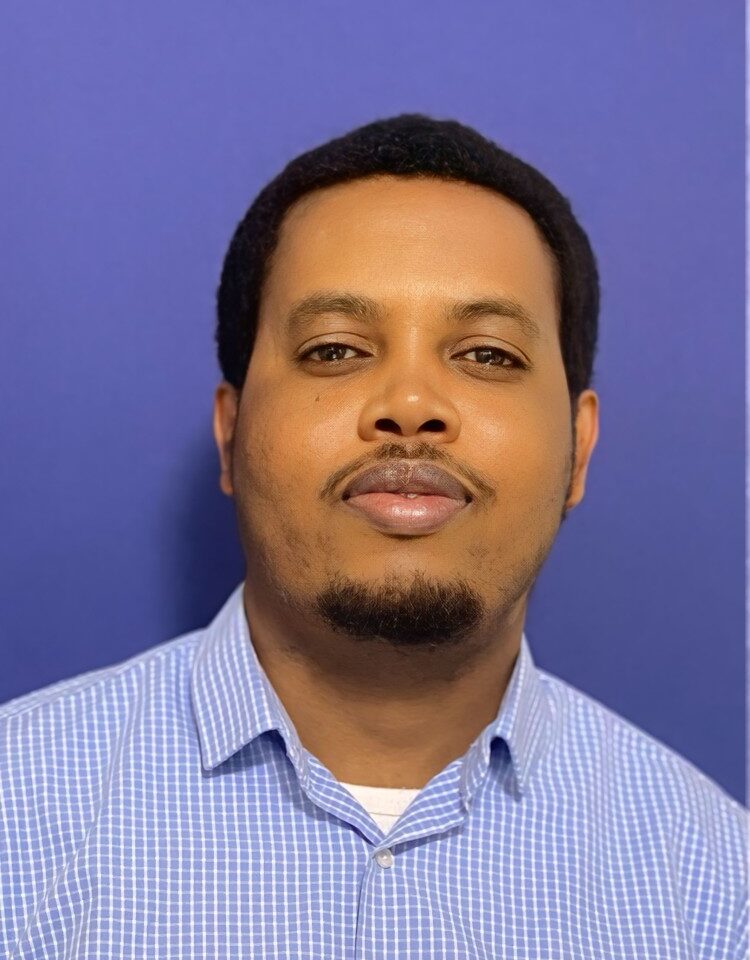
Adelehin Ijasan
Adelehin Ijasan is a writer and an eye surgeon who lives in Scotland. His short fiction has appeared in Lightspeed, Fiyah, IZ Digital, Drabblecast, The Year’s Best African Speculative Fiction, The Year’s Top AI and Robot Stories, and other venues. He is one of the co-creators of the Sauútiverse, a sci-fi fantasy shared world, and has stories upcoming in Sauúti Terrors and other places. Adelehin has been nominated for the Commonwealth, Nommo, and BSFA Awards. You can find him on adeijasan.com or @adeijasan on X.